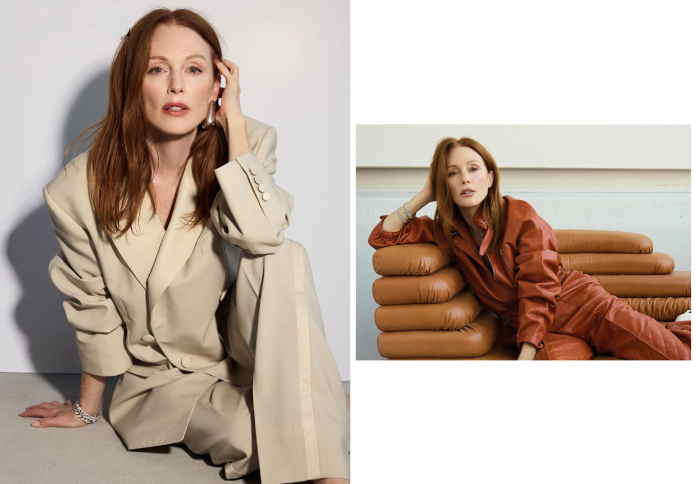
Julianne Moore's 2026 Women in Motion recognition at Cannes offered a rare occasion to consider a career through the relationships that sustain it. The actor spoke publicly about the representation of women in film and the choices behind her performances. Those concerns have followed her across decades of work, from intimate family dramas to roles that place women in morally ambiguous circumstances. Her career provides evidence that female friendship and collaboration are not peripheral to cinema: they can determine which stories are told, whose point of view survives an edit, and what audiences come to regard as a leading role. The conversation is about the work on screen, not a generalized celebration of celebrity.
The Work That Makes Room for Women
Moore's filmography includes Still Alice, Far from Heaven and The Hours, in which interior experience matters at least as much as external events. Such parts resist the idea that a woman must be either likable or inspirational to command a story. Her Cannes appearance brought an industry discussion into focus: the need for roles that remain complicated across age and genre. Her work also shows how much depends on writers and directors willing to build those characters.
A Cannes Conversation About Choice
At the 2026 Kering Women in Motion talk Moore addressed women’s representation and how she decides what to act in. She suggested that in an unsettled world she had little appetite for movies dominated by explosions and guns. That is an artistic preference rather than a formula for judging other people's work. It points to the emotional demands audiences bring into theaters and to an actor's agency in selecting material.

Collaboration Is an Artistic Record
Moore's creative history cannot be separated from collaborators such as Todd Haynes, whose films have made space for desire, social codes and private costs. Her longstanding friendship with designer and filmmaker Tom Ford illustrates another aspect of relationships around cinema: the ongoing conversation between costume, visual language and acting. These associations are valuable because the individual projects are distinct, not because a shared promotional photograph looks glamorous.

What Recognition Can Actually Measure
Awards can mark a moment of reflection but cannot encompass all the performances that precede them. Moore's recognition at Cannes works better as an invitation to look at the scripts and production choices that shape women’s experiences on screen. Female relationships need not always be portrayed as harmonious to be meaningful. Conflict, care, rivalry and solidarity are all credible material for characters when an industry allows them sufficient narrative space.