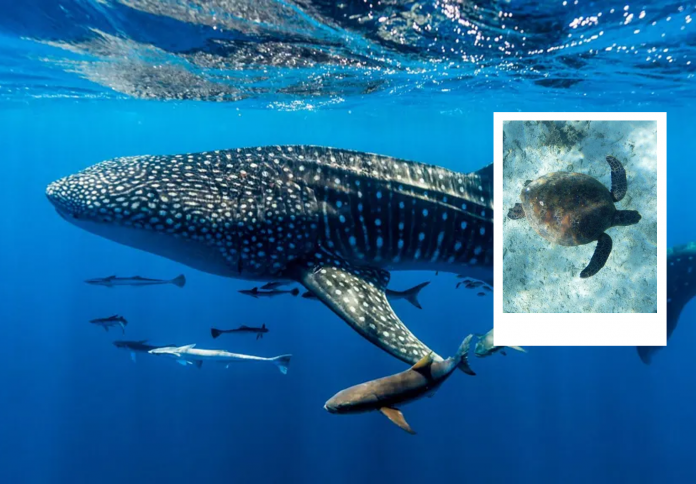
It began quietly—barely perceptible shifts in temperature, a calm sea mirroring a burning sky. But beneath the surface of Australia’s treasured coastlines, a different kind of fire was spreading. Ningaloo Reef, the lesser-known twin of the Great Barrier Reef, is now suffering a mass coral bleaching event caused by marine heatwaves, threatening one of the world’s most vibrant marine ecosystems. For the first time, both coasts of Australia are bleaching simultaneously—a stark, silent crisis turning turquoise seas ghostly white.
A reef on fire without flames
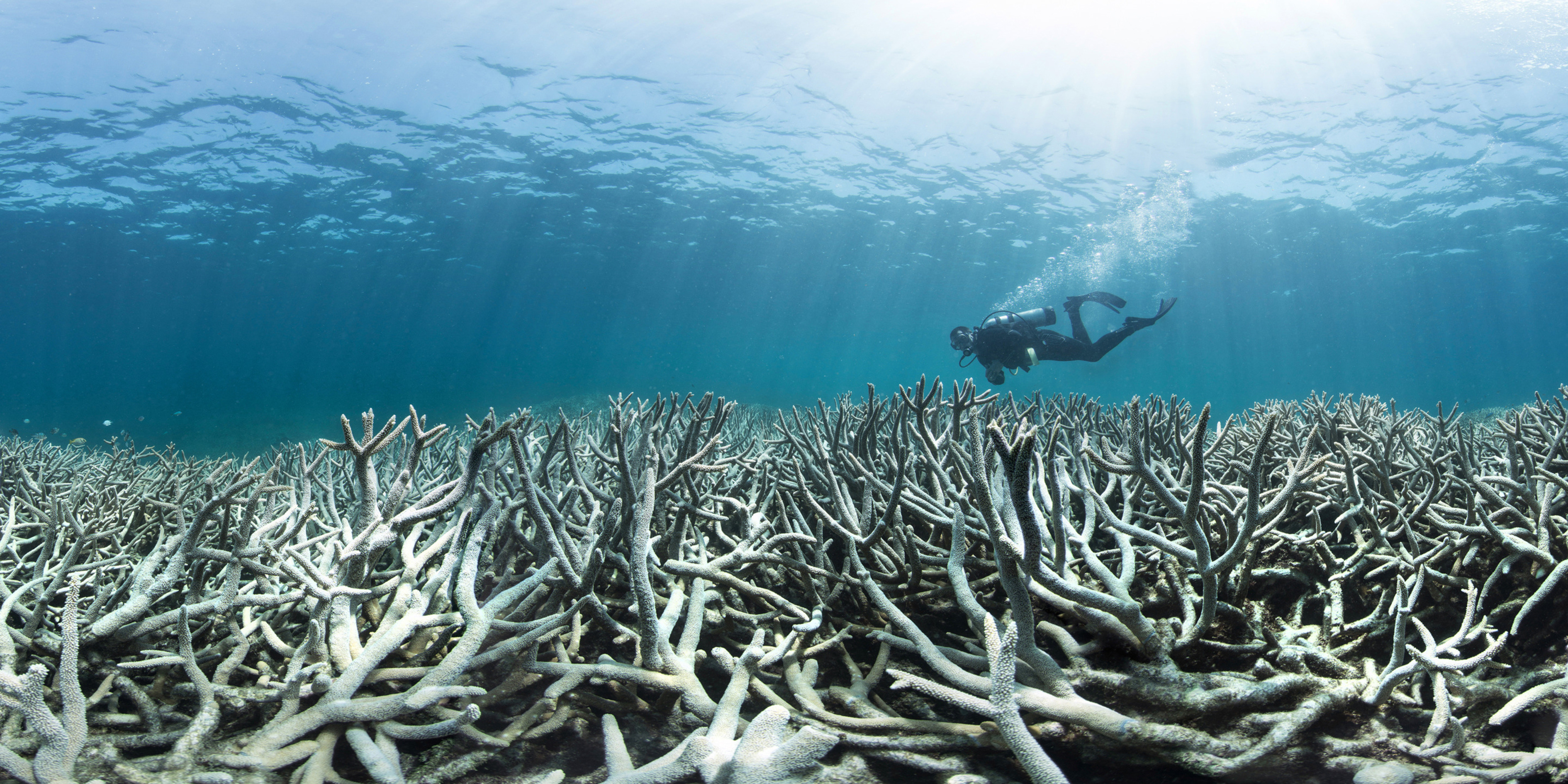
To scientists and conservationists, the damage at Ningaloo Reef resembles something catastrophic: a bushfire beneath the waves. “It’s like a raging underwater bushfire that has persisted for months,” says Paul Gamblin from the Australian Marine Conservation Society. The description isn’t metaphorical—it’s visceral. Coral reefs, alive with complex interdependencies, are being cooked by unusually persistent marine heatwaves that began halfway across the world.
Unlike terrestrial fires, there’s no smoke—just silence. The vibrant purples, oranges, and electric blues of healthy coral are fading into bone-white structures, starved of their symbiotic algae by extreme heat. This algae not only feeds the corals but gives them their color. Without it, they become both visually and biologically barren. While some might recover, the prolonged warming this year offers little optimism. Water temperatures, which usually drop by April, have stayed high, creating ideal conditions for mass mortality.
A global pattern, with local heartbreak

This isn’t an isolated event—it’s part of the fourth global coral bleaching event. Starting in the Caribbean in 2023, the marine heatwave moved across the Pacific, leaving a trail of destruction. In 2024, Ningaloo was spared. This year, it was not. More than 80% of the world’s coral reefs have been affected, and Australia’s dual-coast bleaching is unprecedented.
Dr Kate Quigley, principal research scientist at the Minderoo Foundation, likens the coral-algae relationship to the human gut. “If we get a stomach bug, our whole system falls apart. It’s the same for corals. Their biological processes go haywire when the water is too hot,” she explains. What alarms scientists even more than the bleaching is its duration. Brief warming periods allow coral to bounce back. But prolonged exposure, like this year’s, often spells death.
Government teams are tracking the damage, but nature doesn’t always follow predictions. Dr Tom Holmes from Western Australia’s biodiversity department says some corals may appear bleached for months yet still survive. “We just need to play the waiting game,” he says, but even he admits the odds are thin.
Witnessing a world fade to grey
For tourists and locals, the loss is both emotional and tangible. British-South African visitor Jenna-Rae Clark described snorkeling along Ningaloo as “like floating over a corpse.” The colors were gone. The silence was total. Gone too were the tell-tale crunches of parrotfish gnawing coral. The reef was, simply, lifeless.
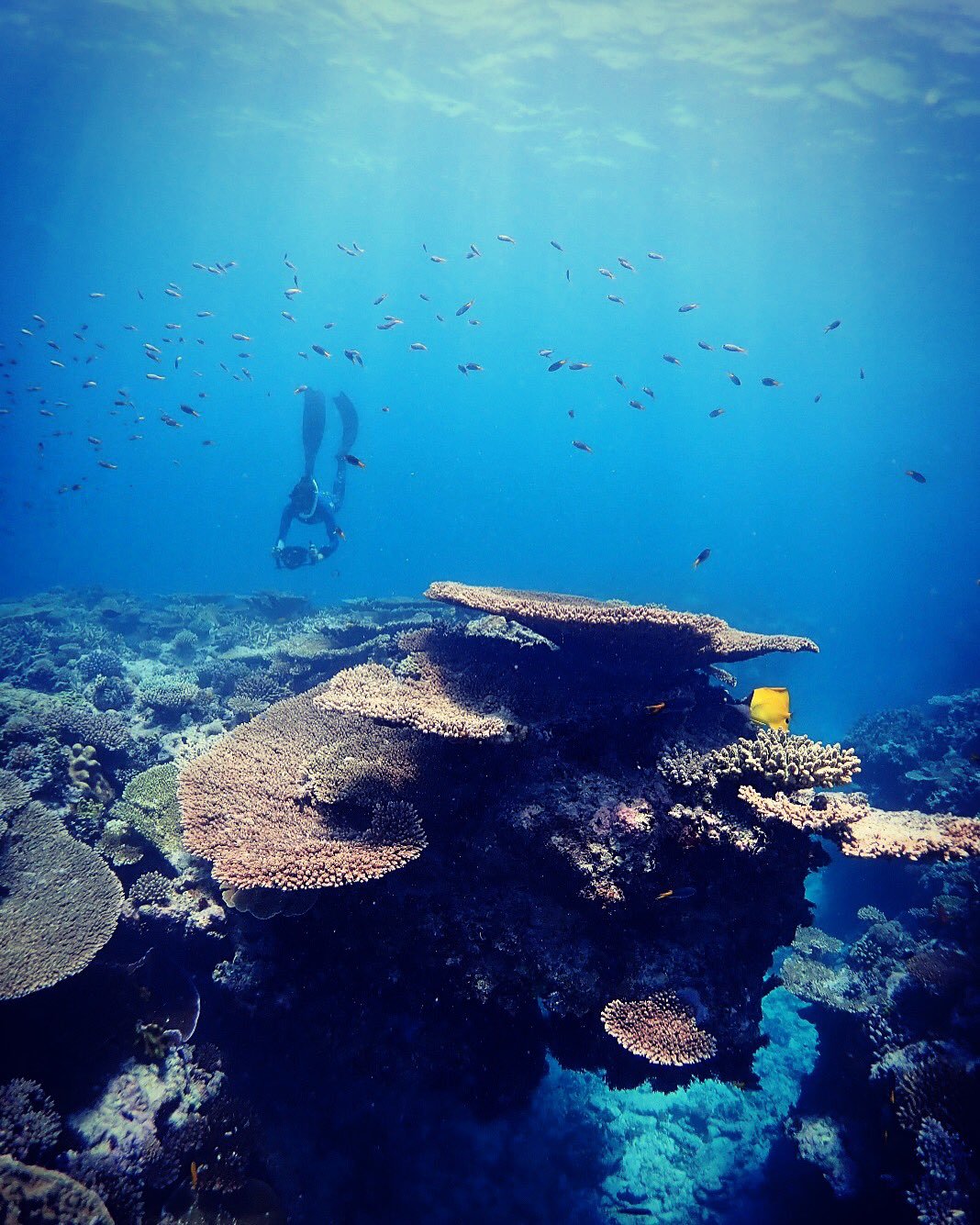
Residents like Sara Morgillo, who moved from Perth to be closer to the ocean, say visitors have left the water in tears. Dive tours continue, but now carry a sense of mourning. “It’s important to witness what’s happening,” she says. “There are still beautiful parts of the reef, but people need to see the damage.”
That damage has not only environmental but economic implications. Ningaloo draws 200,000 tourists each year. If word spreads that the reef is dying, those numbers could dwindle, impacting livelihoods and weakening public momentum to protect these vital ecosystems.
A clash between profit and preservation
The destruction isn’t simply a result of distant warming. Just north of Ningaloo sits one of the world’s largest fossil fuel operations: the North West Shelf gas plant. In May, the Australian government extended Woodside Energy’s license to operate the plant until 2070. The same company is pushing for new development in the Browse Basin—Australia’s largest untapped gas reserve.
That juxtaposition is infuriating to conservationists. “It’s incomprehensible,” says Gamblin. “You have these irreplaceable wonders—Ningaloo, the Great Barrier Reef—suffering from climate change, while the government expands the very industries accelerating that change.”
Despite government claims of monitoring and sustainable development, many see this as a stark conflict of interest: the fossil fuel industry drives Western Australia’s economy, while marine tourism, though valuable, holds less political weight.
What can be done now?
While large-scale solutions remain politically fraught, scientists are working at the micro level to build coral resilience. At the University of Queensland, Dr Chris Roelfsema’s team is mapping the reef in high resolution—linking underwater images with satellite data to track changes over time. Their goal: understanding what survives, where, and why.
Meanwhile, Dr Quigley’s lab is attempting assisted evolution. By selectively breeding coral from varied genetic backgrounds, they aim to identify heat-tolerant strains. These coral “babies” are then tested and eventually reintroduced into the reef. The method is promising, but far from scalable.
“Realistically, this isn’t a global solution,” Dr Quigley admits. “We’re treating the symptoms, not the disease.” That disease, of course, is carbon emissions. “We need to cut emissions drastically and immediately. This isn’t just about coral—it’s about the planet’s lungs, its coastlines, its biodiversity.”
As sea temperatures climb and bleaching events grow longer, deeper, and more frequent, Australia’s reefs are sending a signal to the surface. Whether or not anyone listens may decide the fate of not just these underwater worlds, but of the ecosystems and economies that depend on them.