After a nine-year hiatus, Mexico’s iconic Tequila Express train is back on track—ushering travelers into the vibrant world of tequila with sweeping views, cultural depth, and a touch of agave-fueled magic. As tequila tourism booms, this boutique journey offers more than just drinks: it’s an immersive ride through history, craftsmanship, and national pride.
All aboard the agave express
As the sun rose over Guadalajara’s railway station, I stepped into the newly relaunched Tequila Express. A mariachi soundtrack hummed softly through refurbished carriages, while bartenders prepared cocktails with showman-like flair. In one corner, a charismatic guide gripped a golden microphone in one hand and a tequila bottle in the other, narrating the origin stories of Mexico’s most famous spirit to a captivated group of tourists.
Gone were the wild, raucous party train scenes I’d witnessed in cities like Berlin or London. This was a refined affair, where even the more enthusiastic passengers were more interested in sipping than staggering. Despite its name, the Tequila Express today isn’t just about indulgence—it’s about connection. Connection to the land, the people, and the enduring cultural force of tequila itself.
The train first launched in 1997, born from the rise of “tequila tourism” in its namesake town of Tequila, nestled in the agave-dotted valleys of Jalisco. While it ceased operations in 2015 and briefly returned through a different partnership before the pandemic hit, 2024 marked its official return. This time, the train is running with a renewed focus on heritage, supported by roughly 170 million pesos (£7m) in tourism investment and renewed interest from both locals and visitors alike.
A ride through tradition and terroir
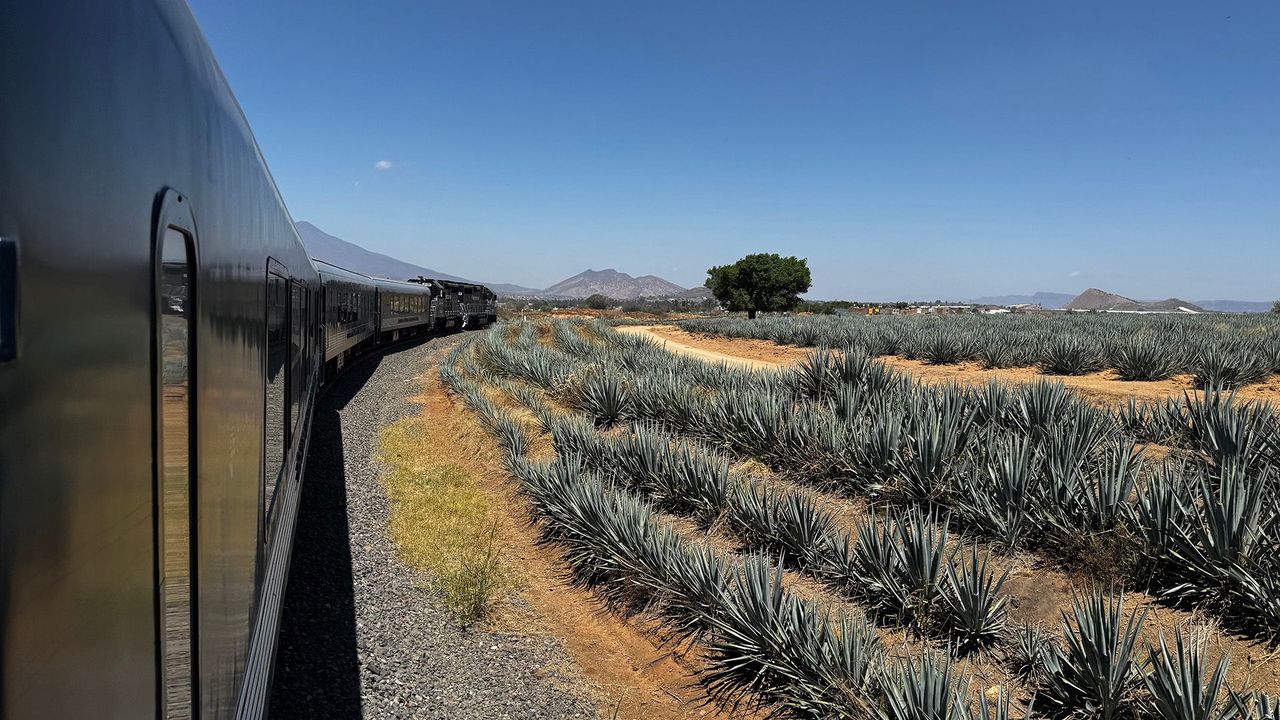
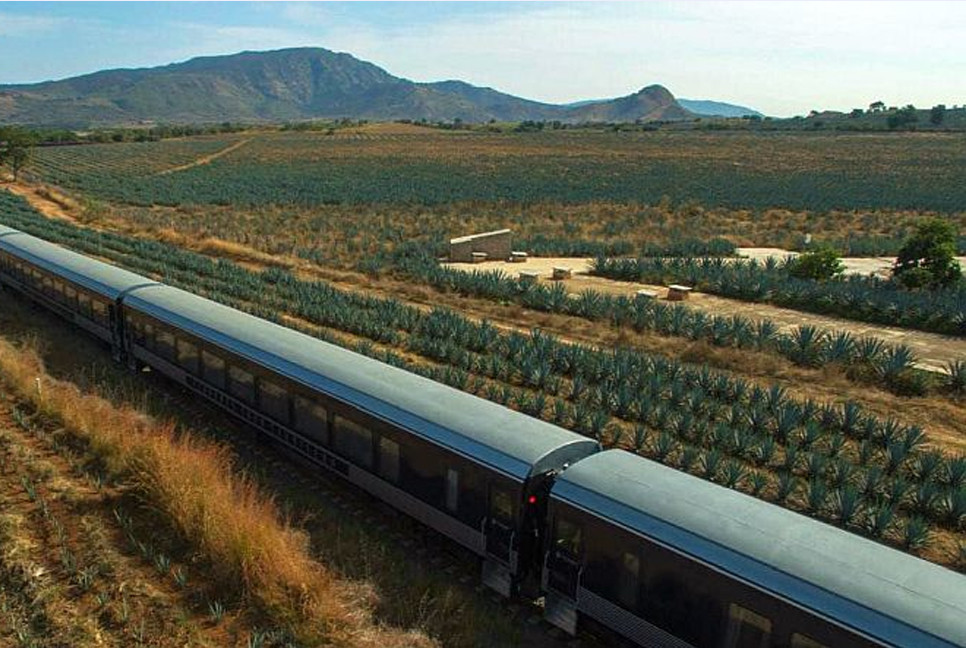
For two hours, the Tequila Express rolls through an increasingly golden landscape—fields of Agave tequilana (blue agave) stretching across hills like spiky blue sentinels. Beyond the train’s enlarged windows, Jalisco’s mountains stand watch as we trundle toward Tequila. Regulations dictate that tequila can only be produced in this region and a few designated towns in four other Mexican states, a geographical rule that makes this specific route not just scenic, but essential.
Onboard, I met Antonio Cabrera, a first-time train traveler from Mexico’s northern border. “We don’t drink much tequila up north,” he admitted with a laugh, sipping a Corona as a bartender placed a creamy cocktail—garnished with herbs—on the counter nearby. For many Mexican travelers like Cabrera, the Tequila Express is more than a scenic journey; it’s an introduction to a part of their heritage they may never have explored before.
Though the train offers a full bar, it leans more into storytelling than excess. With each stop, passengers hear not only about flavor profiles and pairings, but also about the Indigenous legends of lightning-struck agaves, Spanish colonizers, and the evolution of tequila from sacred plant to global export.
Tequila town: Where history meets hedonism
We arrived at the town of Tequila under a high midday sun. From the platform, buses carried us to expansive agave fields and distilleries like the one run by Sauza, one of the industry’s oldest producers. For those who book the full-day package, a guided tour of agave plantations, the distillery, and the charming town center is included.
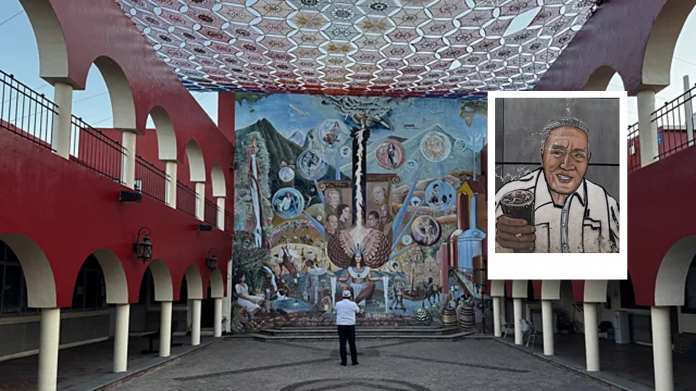
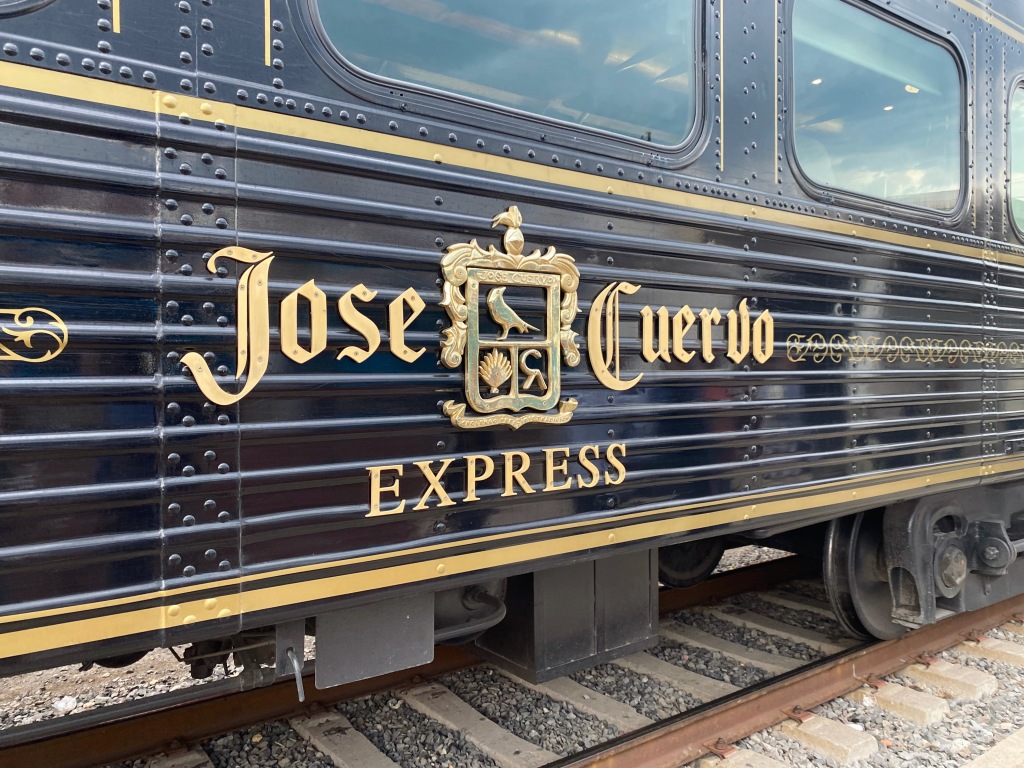
In the town square, I met Luis Alberto Gutiérrez Rojas, a local guide, beneath the bold, Instagram-ready “TEQUILA” block letters. As mariachi bands played nearby, he led me past vibrant murals and onto Calle José Cuervo, where generations of tequila history are etched into stone and story. Inside La Capilla, the town’s oldest cantina, I sampled a virgin batanga—a cocktail famously born here in the 1960s from Coca-Cola, lime, and El Tequileño Blanco tequila. Even without alcohol, the bar’s spirit was palpable. A portrait of founder Don Javier Delgado Corona still looms over the bar, offering his signature drink in eternal hospitality.
Downing their drinks in measured sips or skipping alcohol entirely, travelers could engage in a deeper conversation: what does tequila mean beyond a shot glass?
A deeper connection to the land
The next morning, I ventured into the agave fields with Sheccid Carranza from Atanasio Tequila, a boutique distillery recommended by the Tequila Express team. Standing in the back of a truck, we bounced toward a sun-scorched field where Carranza shared insights often missed on more commercial tours. “It’s always about drinking, drinking, drinking,” she said. “But we were forgetting the roots, the workers, the patience.”
With a barretón—something between a shovel and a spear—Carranza uprooted a hijuelo, a baby agave that grows beside its parent plant. Then it was my turn. Forty strikes later, I managed to dislodge my own spiny prize, earning (hypothetically) one peso for the effort. To plant it elsewhere, allowing it to grow for another seven years before harvest, would earn me another.
These field tours, Carranza argued, offer the kind of education that complements the indulgence. Tools in hand, tourists are reminded that behind every glass of tequila lies a story of climate, cultivation, and generational expertise.
A journey beyond the buzz
As I returned to Guadalajara, a bottle of non-alcoholic Almave in hand and dust still clinging to my shoes, it was clear that the Tequila Express offers something far richer than a simple party-on-rails. While there’s still plenty of celebration to be had—especially once in town—the journey encourages a slower sip, a longer gaze, and a deeper understanding of what tequila means to Mexico.
The Tequila Express isn’t just transporting passengers between two cities. It’s reviving a conversation about legacy, land, and labor. It’s a living museum on rails, serving not only agave spirits but also a profound sense of place. And whether you’re a seasoned connoisseur, a curious traveler, or even teetotal, it’s a ride well worth taking.
Plan your ride:
When to go: The Tequila Express runs year-round between Guadalajara and Tequila.
How to book: Visit tequilaexpress.mx (Spanish only). Round-trip day tours start at 3,900 pesos (~£150) and include guided visits, tastings, meals, and transportation.
Pro tip: Saturdays offer the full experience, including agave field tours and access to top distilleries.