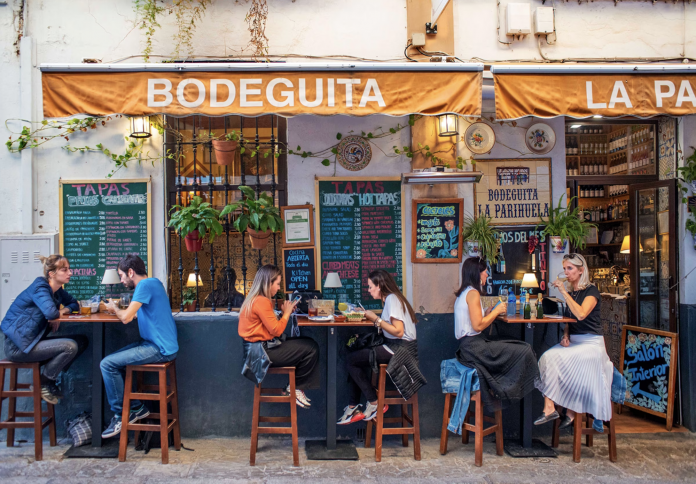
In Spain, lunchtime isn’t just a break in the day—it’s a cultural moment. Around 2 p.m., shops shutter, streets quiet, and restaurants fill with hungry locals ready to savor the afternoon meal. While tourists often crowd into sunny plazas for paella and sangria, savvy Spaniards head somewhere else entirely: their favorite neighborhood spot offering the menú del día. Literally translating to “menu of the day,” menú del día is a fixed-price, three-course lunch served at restaurants across Spain. Affordable, fresh, and deeply rooted in tradition, it remains one of the most authentic dining experiences available—yet most visitors overlook it completely. Here’s why this humble institution should be on every traveler’s radar.
A history born from necessity
The origins of the menú del día trace back to the Franco regime. In 1965, Spain’s authoritarian government passed a law requiring restaurants to offer a budget-friendly, fixed-price menu for tourists. The idea was to make dining out accessible and promote Spain as a more welcoming travel destination.
It worked. Tourist arrivals soared—from 5.4 million in 1960 to more than 20 million by the end of the decade. Over time, however, what began as a state-imposed tourist tool evolved into a beloved local ritual. Spaniards adopted the menú del día as their preferred midday meal, appreciating its balance of quality, affordability, and variety.
Today, a typical menú del día costs between 10 and 16 euros, depending on the city or type of restaurant. For that price, diners receive three courses—starter, main, and dessert—plus bread and a drink, which may include beer, wine, soda, or water. Coffee is sometimes offered as well.
While the law mandating the menú del día was repealed in 2006 under the European Union’s directive to liberalize tourism services, many restaurants have continued the tradition voluntarily, seeing it as both a service to locals and a showcase of their culinary skills.
What’s on the menu?
Though offerings vary widely by region and restaurant, most menús del día follow a similar format: three or four options for each of the three courses, allowing diners to customize their meal. For the primer plato (starter), common choices include gazpacho or salmorejo—chilled Andalusian soups perfect for warm weather—as well as ensalada mixta (mixed salad), fideuà (a noodle-based cousin of paella), or huevos revueltos (scrambled eggs with mushrooms, asparagus, or blood sausage).
The segundo plato (main course) usually offers heartier fare: meat stews, grilled fish, pork loin in cheese sauce, or braised beef cheeks. Vegetarian options, while less common, are increasingly available, especially in larger cities and international restaurants.
Dessert (postre) is typically fresh fruit, but more indulgent choices like flan, rice pudding, apple tart, or even a wedge of Manchego cheese with honey are not unusual. The meal often ends with a shot of espresso or café solo.
Drinks are included in the price—sometimes even a small bottle of house wine if two or more people order the menú. You might even be served wine in a porrón, a traditional Spanish glass pitcher with a spout designed for communal pouring—directly into your mouth, if you’re feeling adventurous.
Importantly, not every menú del día sticks to traditional Spanish flavors. In cities like Madrid and Barcelona, international restaurants have adopted the format, serving sushi starters or pasta mains, allowing travelers to experience this cultural institution through a global lens.
Where and when to find it
The menú del día is widely available on weekdays in cities large and small across Spain—from the bustling neighborhoods of Madrid and Barcelona to coastal towns in Andalucía. But there’s a catch: timing is everything.
The lunch window in Spain is short and specific, typically from 1:30 to 3:30 p.m. After that, most restaurants close for several hours before reopening for dinner around 8 or 9 p.m. The menú del día is never offered on weekends or holidays, and it’s not usually listed on permanent menus.
Instead, restaurants advertise their daily offerings on chalkboards, whiteboards, or printed paper signs near the entrance. Don’t expect to find it online. Your best bet is to wander through local neighborhoods during lunch hours and look for signs that say “menú del día” or “comida casera” (homemade food). If you’re unsure whether a restaurant offers it, don’t hesitate to ask: ¿Tienen menú del día? The staff will usually be happy to show you the day’s selection—or direct you to a nearby place that does.
While the tradition is still going strong in many areas, rising food costs and narrow profit margins mean some restaurants are scaling back or discontinuing their daily menu. That makes it all the more important to seek it out now, before it fades from the culinary landscape.
Why it’s worth your time
For travelers, the menú del día offers several unbeatable advantages. First, it’s an incredible value—three courses and a drink for the price of a single entrée elsewhere. Second, it’s a window into Spanish life. You’ll eat what locals eat, in the same relaxed rhythm, surrounded by students, office workers, and retirees enjoying their midday break.
But perhaps most importantly, it’s a reminder that great meals don’t have to be extravagant or expensive. A bowl of chilled tomato soup, a perfectly grilled fish, and a slice of melon can be just as satisfying—and far more memorable—than the most photogenic plate of paella. So the next time you find yourself in Spain around lunchtime, skip the tourist traps and follow the locals. Find that chalkboard, take a seat, and let the menú del día surprise you.