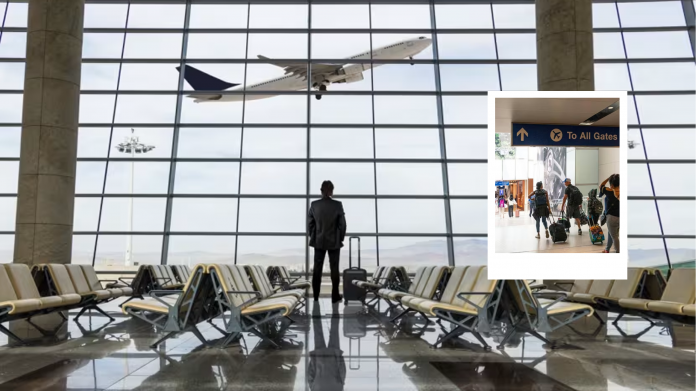
Executives, academics and government officials are preparing for tougher interrogation or changing their plans.
A new reality for business travel to the US
When Alexander, a research scientist at a leading US university, prepared for a work trip to Brazil, he adopted unusual precautions: consulting a lawyer, carrying a burner phone, and traveling with a blank laptop. After his meetings, he uploaded data to the cloud and wiped his device clean before returning. “I was advised to keep zero data on my devices,” he explained. The process was “extraordinarily disruptive,” but necessary in today’s heightened security climate.
This caution is becoming the norm as stricter US border controls come into effect under the Trump administration’s renewed immigration enforcement policies. Corporate executives, academics, and government officials—especially from Europe and other international hubs—are reconsidering routine US travel amid increased scrutiny. The fears are not unfounded: travellers’ emails, contacts, social media, and devices risk invasive searches, potentially leading to denied entry.
Since the start of 2025, US Customs and Border Protection (CBP) reported a 10% increase in border device searches compared to the same period last year. Many travellers, like Alexander, find themselves caught in an uncomfortable spotlight, their personal and professional activities subjected to intense scrutiny, often without clear justification.
Behind the tightened border: politics and security
The executive order issued on January 20, 2025, under the Trump administration aims to enhance vetting and screening for foreigners seeking entry or already in the US. It sets the stage for tougher travel restrictions and comprehensive visa reviews. Assistant Commissioner Hilton Beckham of CBP stresses that search rates have been rising steadily since 2021, and that less than 0.01% of travellers have their devices inspected. She dismisses claims that political beliefs drive these inspections as “baseless and irresponsible,” emphasizing the importance of these measures for national security.

Nevertheless, universities and companies are advising staff to reconsider travel plans. Prestigious institutions like Duke and Columbia recommend international academics and students avoid unnecessary travel. This caution stems from a series of detentions and deportations of visa holders, shaking confidence in the safety of cross-border mobility. The deportation of pro-Palestinian activist Mahmoud Khalil on grounds of his beliefs signals a new era where ideology can influence admissibility.
European bodies have adapted accordingly. The European Commission, for example, has issued burner phones and basic laptops to officials traveling to the US, limiting the risk of exposing sensitive data. Businesses, too, are taking no chances, updating travel policies and seeking legal guidance to prepare employees for potential border interrogations and searches.
Corporate caution: Navigating the new normal
Elizabeth Nanton, US immigration practice leader at KPMG Law in Canada, explains that while most travellers remain unaffected, companies are proactively preparing staff for the possibility of detailed questioning and device inspections. Organisations are reevaluating their IT policies, carefully determining what data employees should carry abroad.
“No matter how many times a non-US citizen has entered the country, each trip is a new admissibility decision,” she cautions. This uncertainty leads companies to work closely with immigration specialists and tailor advice on a case-by-case basis. Some UK asset managers advise employees to exercise “significant caution” with personal devices, equating US business travel risks with those of more traditionally high-risk countries like China.
Pharmaceutical firms reportedly avoid sending employees deemed “brown, Muslim or Chinese” to the US to circumvent border delays. Conversely, some corporations encourage staff to apply for Global Entry, a US program that expedites entry for vetted travellers, while tech companies advise foreign staff to carry extensive personal documentation to ease re-entry.
Online communities have also taken note, sharing tips such as deleting social media apps and removing politically sensitive content from phones before traveling. These evolving precautions reflect a growing unease about international business travel to the US.
Impact on travel and future outlook
The ripple effects of stricter US border controls are now visible in booking trends. Major carriers like Air France-KLM and Lufthansa report a slowdown in transatlantic business travel bookings. Travel analyst Henry Harteveldt notes a “noticeable concern among corporate travel managers” and attributes the decline to economic downturns coupled with fears over US entry.
For international business travellers, uncertainty has become a new constant. Alexander’s story underscores this shift—he is already planning the same rigorous precautions for an upcoming trip to the UK. His experience reflects a broader reality: increased border scrutiny is reshaping how business and academic communities approach global mobility.
A cautious path forward
Stricter US border policies have introduced a new era of complexity for international travellers. While national security remains a priority for authorities, the growing challenges faced by professionals raise questions about the future of global business and academic collaboration. For now, travellers, companies, and institutions are navigating a landscape where every trip to the US demands careful preparation, legal advice, and a willingness to adapt.
In this evolving environment, the ability to maintain seamless global connections depends on resilience, prudence, and an acceptance that the rules of business travel have fundamentally changed.