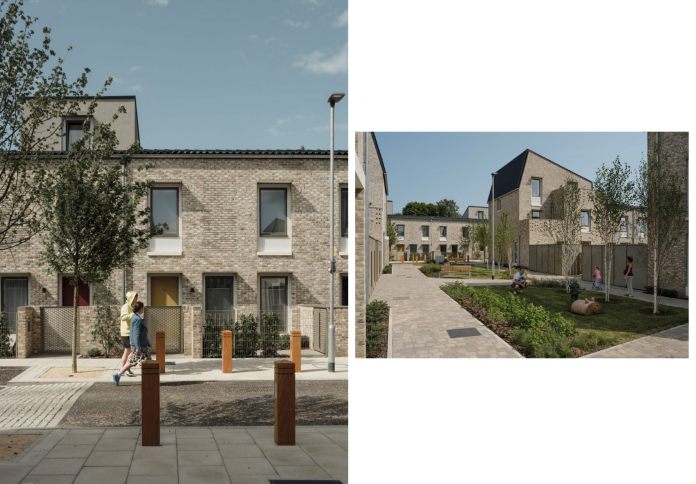
Once celebrated as a beacon of sustainable, dignified council housing, Goldsmith Street in Norwich is now at risk of being dismembered through the UK’s “Right to Buy” policy. The award-winning development, lauded for its design integrity and energy efficiency, confronts a troubling paradox: its success may render it vulnerable to privatization, undoing the very social mission it was created to fulfill.
A rare architectural triumph in social housing
Completed in 2019, Goldsmith Street was heralded as a watershed in public architecture. Designed by Mikhail Riches with Cathy Hawley, the project defied decades of cynicism about council housing. With its distinctive black solar panels, triple-glazed windows, generous green spaces, and terraced Passivhaus design, it reintroduced an ethos of community and sustainability into an arena long starved of both.

Its recognition with the 2019 RIBA Stirling Prize—typically reserved for flagship cultural buildings—underscored the symbolic weight of its achievement. Here was a housing scheme that not only served working-class families, but also raised the bar for architectural ambition and climate responsiveness in the UK.
But that very prestige has now become a liability. Because Goldsmith Street is so desirable, tenants are increasingly exercising their Right to Buy—a Thatcher-era policy that allows long-term council tenants to purchase their homes at heavily discounted rates. As a result, a growing portion of this idealistic enclave may quietly transition into private ownership.
Right to Buy: A dismantling mechanism in disguise
When Right to Buy was introduced in the 1980s, it was championed as a tool of social mobility. But in practice, it has hollowed out council housing stock across England. According to government figures, over two million homes have been sold under the policy, with many re-entering the market as rental properties at higher rates—some even leased back to councils for social use.
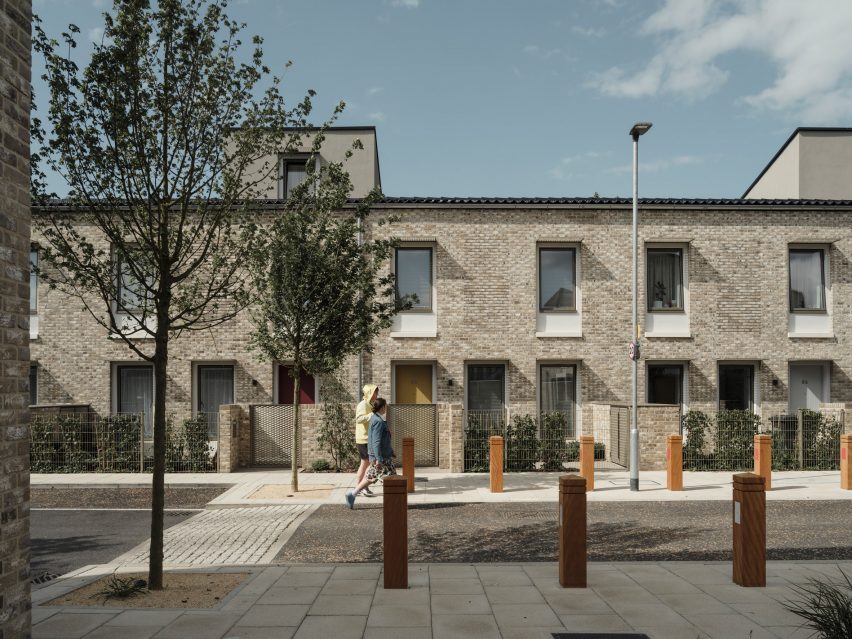
In the case of Goldsmith Street, this dynamic feels especially cruel. The homes were commissioned by Norwich City Council with the intention of addressing housing need, not speculation. Yet under current law, councils are powerless to restrict tenants from purchasing the properties or flipping them for profit.
Already, five of the 93 homes have been sold, and more applications are pending. As ownership fragments, so too may the management of shared spaces, energy systems, and maintenance standards—jeopardizing the long-term coherence of the project.
The ideological war over who deserves good design
At the heart of this unfolding dilemma lies a deeper cultural question: who is architecture for? Goldsmith Street was a rare answer in favor of the public—proof that beauty, sustainability, and care were not exclusive to the private sector. Its brick facades, sunlit alleyways, and domestic warmth offered dignity without luxury.
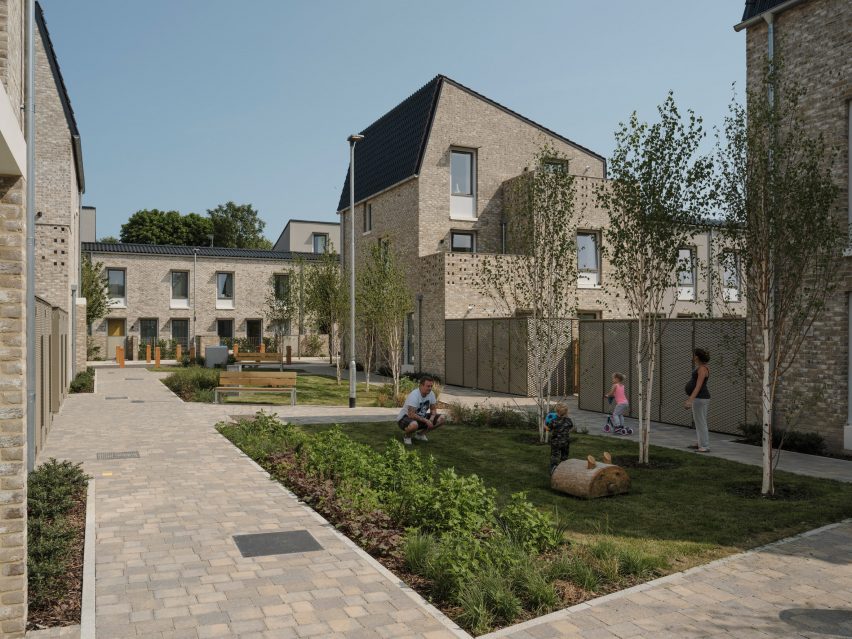
But the property market reads such attributes as premium features. As council housing is rarely designed to this level, demand from prospective buyers—especially those unable to access similar quality in the private sector—is understandable. In effect, the market is cannibalizing one of the few places where architectural equity was achieved.
Critics argue that unless the Right to Buy is reformed or repealed, future councils will be disincentivized from building to Goldsmith Street’s standards. Why invest in high-quality public housing, they ask, if those assets are destined for private transfer?
Preservation or erosion: A choice of political will
Goldsmith Street’s fate now hangs in legislative limbo. Norwich City Council has publicly lamented the loss of units but admits its hands are tied. Meanwhile, architects, housing advocates, and urbanists are calling for exceptions to the Right to Buy for exemplary projects, or even a moratorium on sales where communal design integrity is at risk.
Ultimately, the question is not just about one award-winning development, but about the values a society chooses to protect. Will Goldsmith Street be remembered as a model for the future of housing—or as a cautionary tale about how even the most thoughtful public design can be undone by policy inertia?
The future of Britain’s most celebrated council estate may depend less on brick or timber than on political courage.