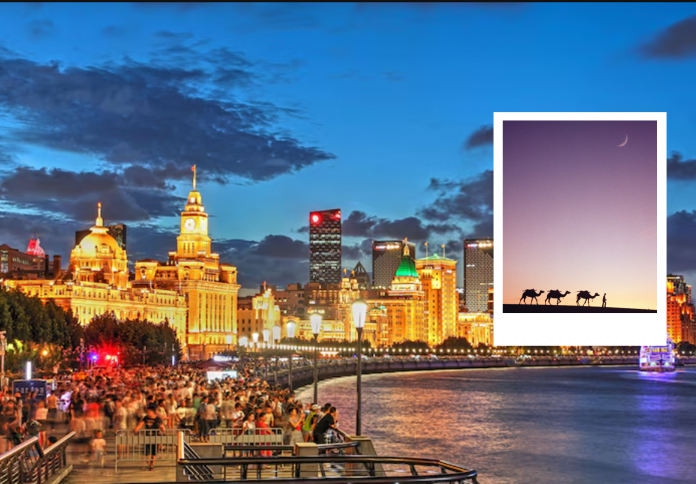
China’s high-speed rail network is more than an engineering marvel — it’s a window into a nation in motion. Blurring landscapes, changing skylines, and the quiet hum of acceleration converge to redefine what it means to travel across the world’s most populous country.
Steel arteries across a shifting nation
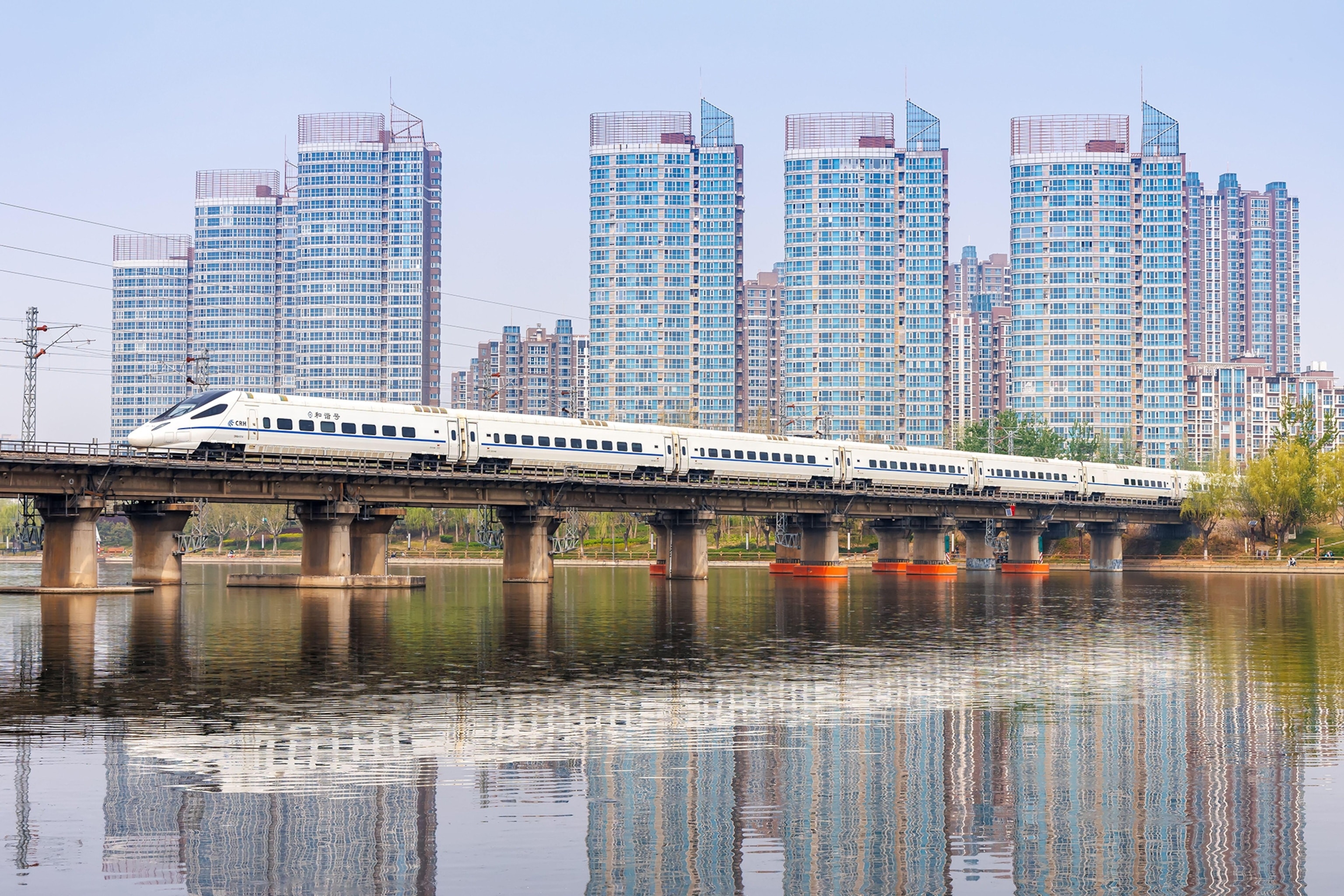
At 217 miles per hour, the world becomes a streak of color — rice paddies melting into megacities, concrete towers rising beside ancient villages. China’s high-speed rail system, the largest and fastest in the world, connects not just places but centuries. From the imperial walls of Xi’an to the futuristic skyline of Shenzhen, the train carries its passengers through both time and terrain.

In less than two decades, China has laid more than 40,000 kilometers of high-speed tracks — enough to wrap the Earth’s circumference. The trains, known as gaotie, don’t just link metropolises but tether together the stories of a continent-sized country: students heading home from universities, business travelers reviewing slides on tablets, families sharing dried plums and instant noodles in the quiet rhythm of motion.

It’s transportation as transformation. Before the high-speed boom, a trip from Beijing to Shanghai might have taken an entire day. Now it’s five hours — quicker than flying when security lines and traffic are considered. The bullet train has collapsed distances, recalibrated economies, and altered the social imagination of what’s possible.
The choreography of speed and silence
Inside a gaotie, there’s an odd serenity. The ride is whisper-quiet, even as it darts past farmland and factory towns at blinding speeds. Trains glide on steel with a meditative grace — no rattling, no lurching, just a gentle sway like a cradle on invisible rails.
Carriages are spotless and orderly. Attendants move briskly down the aisles in pressed uniforms. There’s no honking, no motorbike clamor, no incense smoke or engine fumes. For a country known for its sensory density, the train offers an oasis of clean modernity — air-conditioned, hushed, soft-lit.
And yet, through the large panoramic windows, China reveals itself in sharp relief. Along the route from Chengdu to Xi’an, Sichuan pepper trees give way to the Loess Plateau’s ochre ridges. The Guangzhou to Hong Kong line blurs past neon apartment blocks and centuries-old tea houses. With every flash of scenery, the gaotie compresses China’s sprawl into a narrative of speed.
Stations as symbols of modern ambition
High-speed rail terminals in China aren’t just train stations — they’re cathedrals of velocity. Glass-roofed and cavernous, with digital screens flashing arrival times in Chinese and English, they resemble airports more than platforms. Cities often build entire districts around these hubs, fueling a ripple of urban development.
In smaller towns, the arrival of the gaotie has meant new opportunities and growing pride. What was once a sleepy outpost now finds itself three hours from Beijing, an arm’s reach from global markets. Property prices rise. Cafés open. Young people consider staying. The train becomes more than transport — it’s hope, mobility, and modernity on tracks.
But the grandeur has its critics. Some stations are far from city centers. Others operate at low capacity, symbols of overreach or misplaced ambition. And while the network is vast, ticket prices — though lower than flights — can still be steep for lower-income travelers. The progress is real, but uneven.
A journey written in speed

Traveling by bullet train in China is not simply about getting from one place to another. It’s about witnessing a country redefine its scale and tempo. Each ride feels like a statement — that movement itself has become an art form, that the ancient and the futuristic can co-exist at 350 kilometers per hour.
In the soft seat of Car 5, sipping green tea and watching mist roll over rice fields, you feel part of something bigger: a national experiment in connectivity, an unfolding blueprint of ambition. The ride ends as it begins — on time, precise, almost too smooth to remember. But step outside, into a city you’ve never been to, and the memory floods back. You have moved — not just across land, but into another version of the world.
And in China, that world keeps accelerating.