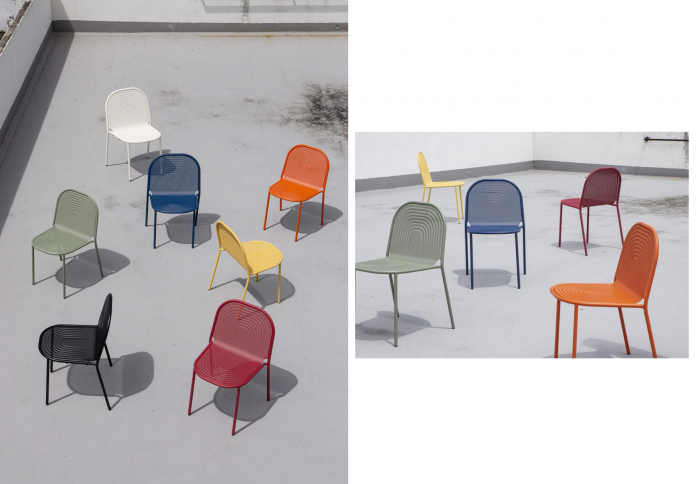
In a compelling intersection of social enterprise and creative design, Thai practice Thinkk Studio has developed a unique chair that is as much a testament to ingenuity as it is a piece of furniture. Collaborating with a struggling Bangkok-based metalwork factory, the studio conceived of the Stamping chair, a piece made from perforated steel. Faced with the threat of cheaper imports, the factory was in search of a new direction. The solution was a seemingly simple yet radical idea: to use their existing machinery, typically used for small components, to produce a full-scale, market-ready furniture piece. The result is a slender, colourful chair with a contemporary aesthetic, and a powerful symbol of how design can open up new paths for struggling manufacturers, transforming limitations into valuable assets.
A Radical Idea for a Struggling Factory
The project to create the Stamping chair was not a typical design commission; it was an act of economic and social partnership. The Bangkok factory, whose expertise lay in the precise production of small steel machinery components, was facing increasing market pressure. Faced with the formidable challenge of competing with low-cost imports, the factory was in a precarious position and actively seeking new opportunities to leverage its specialized equipment and skilled workforce. Thinkk Studio saw an opportunity to bridge this gap between traditional manufacturing and the demands of the modern design market.

The studio’s proposal was a simple yet radical idea: to use the factory’s existing stamping machines—tools that were designed for precision and repetitive small-scale production—to produce a full-scale furniture piece. This approach bypassed the need for significant capital investment in new machinery and instead maximized the potential of the factory’s current assets. It was a conceptual leap that required both the design studio and the factory to think beyond their established practices. The chair was not merely a product of the factory’s tools; it was a manifestation of a new and creative manufacturing process.
Form Follows Function: The Corrugated Steel Design
The design of the Stamping chair is a brilliant example of form and function working in perfect harmony. At first glance, the chair’s aesthetic is defined by its perforated steel sheeting, which gives it a contemporary, almost transparent appearance. However, the design goes much deeper than surface aesthetics. The perforated pattern is specifically developed with a corrugated profile. This is not a decorative flourish, but a sophisticated engineering solution.
According to Thinkk Studio, this corrugated pattern significantly increases the chair’s structural strength without the need for additional material. This makes the chair incredibly lightweight while ensuring its durability and stability. The design is an exercise in efficiency and resourcefulness, where every element serves a dual purpose. It is a powerful illustration of how the inherent qualities of a material, when approached with a designer’s eye, can be leveraged to create a product that is both beautiful and structurally sound.
Versatility for Modern Life

The Stamping chair was designed with the demands of a modern, fast-paced world in mind. Its lightweight and stackable nature make it highly versatile and well-suited for busy commercial environments. In cafes and co-working spaces, where furniture often needs to be rearranged or stored quickly to accommodate different uses, the chair’s stackability is a major practical advantage. Its durability, a direct result of its steel construction, means it can withstand the rigors of high-traffic areas without losing its form or function.
Beyond its immediate utility, the Stamping chair is also designed for longevity. The studio has highlighted that it can be easily repaired, repainted, or have cushions added to it to extend its lifespan. This is a subtle but significant nod to sustainability, promoting a more circular approach to furniture consumption. Instead of being discarded when they show signs of wear, these chairs can be given a new lease on life, a practical feature that aligns with a growing desire for products that are both robust and adaptable.
An Aesthetic of Industrial Minimalism
Aesthetically, the Stamping chair marries a contemporary minimalist aesthetic with a raw, industrial edge. The perforated steel gives it a distinctive texture and a graphic quality that is both modern and timeless. The use of a single material for the entire structure, from the seat to the legs, gives it a sculptural purity. This industrial simplicity, however, is contrasted by the chair’s availability in seven different colours. This deliberate use of vibrant colour adds a sense of personality and liveliness, transforming the coldness of the steel into a playful and inviting form.
The chair’s slender profile and clean lines allow it to fit seamlessly into a wide range of interiors, from industrial-style lofts to clean, contemporary office spaces. The colours allow it to serve as a subtle accent or a bold statement piece, depending on the designer’s vision. Thinkk Studio has successfully demonstrated that an industrial material, born from a factory floor, can be refined into a piece of furniture that is not only functional but also possesses a distinct and appealing visual identity.
Design as a Tool for Transformation
The story of the Stamping chair is about more than just a new product launch. As Thinkk Studio explicitly states, it is a project that “demonstrates how design can open new paths for struggling manufacturers.” In a global economy where traditional industries are often left behind by technological and market shifts, this chair stands as a powerful case study for a different way forward. It shows that by looking at existing tools and knowledge with a creative eye, it is possible to revive a struggling business and adapt it for new markets.
The project embodies the potential to “transform limitations into assets.” The factory’s specialized stamping machines, which were once a limitation, became the very tool that made the chair unique. The Stamping chair is more than a product; it is a collaborative project that embodies innovation, resilience, and a powerful social purpose. It serves as a reminder that design is not just about creating objects but about creating opportunities and building a more resilient, resourceful future.