Sleep doesn’t start at bedtime. According to emerging research, what you eat from morning to night could determine whether you drift off easily or toss and turn. Experts say the best path to better rest isn’t a quick-fix snack before bed — it’s a full-day approach to nutrition. Here’s how the right food choices can make your sleep deeper, longer, and more restorative.
The food-sleep connection starts early
If you want a good night’s rest, start planning for breakfast. According to Dr. Marie-Pierre St-Onge, director of the Center of Excellence for Sleep and Circadian Research at Columbia University, the nutrients you consume throughout the day help regulate your internal clock — not just what you eat before bed.
St-Onge’s new book, Eat Better, Sleep Better: 75 Recipes and a 28-Day Meal Plan That Unlock the Food-Sleep Connection, highlights the role of food in stimulating melatonin production. Melatonin, a hormone that governs your sleep-wake cycle, depends on tryptophan — an amino acid the body cannot produce on its own. “You can’t just pop a handful of nuts at 10 p.m. and expect to sleep like a baby,” said Dr. Erica Jansen, assistant professor of nutritional sciences at the University of Michigan. Instead, Jansen said, it’s about consistency and a diet that supports restful sleep over time.
Focus on nutrient-rich whole foods
The most effective sleep-supporting diets are rich in plants, whole grains, and lean proteins, said St-Onge. Her research emphasizes the importance of meals that offer a steady supply of nutrients throughout the day — not high-fat, processed “quick fixes.”

Tryptophan is found in many legumes such as chickpeas, lentils, tofu, beans, seeds, and nuts. These foods also offer fiber, which helps regulate blood sugar and reduce overnight awakenings. Avoiding heavily processed carbohydrates like cookies, cakes, and crackers is another key strategy.
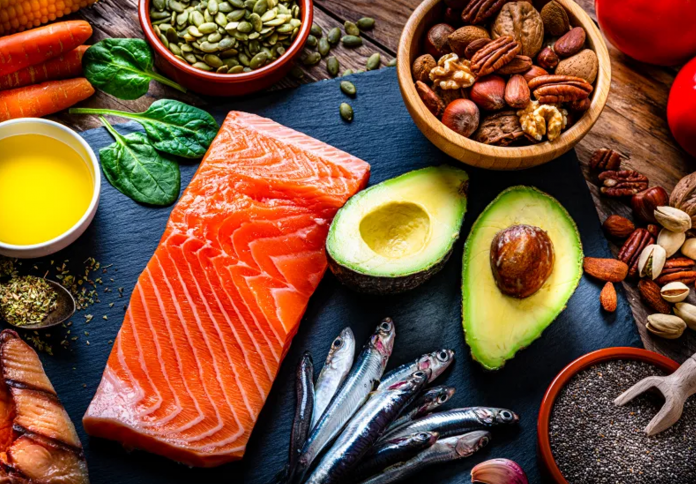
Want a more structured approach? A Mediterranean-style diet, rich in olive oil, seafood, whole grains, fruits, and vegetables, has been associated with better sleep quality and a lower risk of insomnia. In a 2018 study, St-Onge and her colleagues found that people who followed the Mediterranean diet spent more time asleep and experienced fewer disturbances overnight.
Micronutrients that make a difference
Beyond tryptophan, your body needs a range of micronutrients to convert food into the building blocks of melatonin. Zinc, magnesium, B vitamins, and folate are all essential to this process — and each can be sourced from whole foods.
Try adding almonds, oysters, or wheat bran for zinc; chia seeds, cashews, or yogurt for magnesium; and bananas, chickpeas, or tuna for vitamin B. For folate, think leafy greens like spinach, as well as broccoli and lentils. St-Onge emphasizes that the best source of these nutrients is food, not supplements. Nutrients are more easily absorbed and effective when consumed in a natural, food-based form. Supplements, she warns, may not provide the right balance or may lack the complementary nutrients that make them effective.“Getting nutrients from a balanced diet is generally healthier and safer than supplements,” she wrote. “Plus, absorbing nutrients from foods is more efficient.”
Don’t obsess over perfection
If you’re worried that the occasional dessert or cup of coffee will ruin your sleep, relax. Both St-Onge and Jansen emphasize that eating for sleep isn’t about strict rules — it’s about balance. “It’s not a very prescriptive diet,” Jansen said. “If you want to eat something that’s not sleep-promoting, it’s not a big problem. Just focus on adding in more of the good stuff.”
Of course, it’s still best to avoid highly sugary, spicy, or caffeinated foods close to bedtime. These ingredients can disrupt digestion or overstimulate your nervous system, making sleep harder to come by. But rather than restricting, aim to gradually increase nutrient-rich foods throughout your day.
Small changes with big impact
According to registered dietitian Alexandra Babcock, one of the easiest ways to start eating for better sleep is to focus on improving a single meal — especially the one you usually skip or skimp on.“Start with breakfast,” said Babcock, who runs Nutrition Innovations in Austin, Texas. “Add a serving of fruit, veggies, or beans.” Her go-to option? Savory oatmeal topped with a poached egg and black beans — a simple, protein- and fiber-rich start to the day.
Lunch can be just as easy: a leafy green salad with chickpeas or lentils adds not only fiber and tryptophan but also key micronutrients like folate and B vitamins. And don’t be afraid to spice things up. “Chickpeas don’t have to be boring,” Babcock said. “They can be toasted, roasted, and seasoned for flavor.” These small nutritional changes often spark other positive lifestyle habits — like getting more exercise, which also supports better sleep.
A holistic approach for chronic insomnia
For people already eating a nutritious diet, these adjustments might fine-tune their sleep. But for those with poor diets or irregular eating habits, the benefits can be profound. That said, nutrition alone may not be a silver bullet for serious sleep disorders. “For someone who has really significant sleep issues, diet should be one part of a larger strategy,” Jansen said. “They should also consult a physician, especially if insomnia or other conditions are interfering with daily life.”
Ultimately, eating for better sleep is not about quick fixes or one-size-fits-all plans. It’s about tuning into your body, honoring what it needs, and making small, sustainable changes. Whether that starts with a banana at breakfast or a salad at lunch, the journey to better sleep might begin on your plate — long before your head hits the pillow.