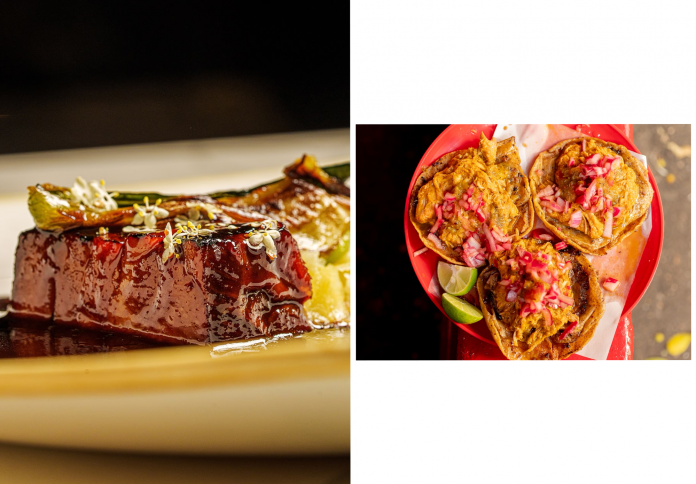
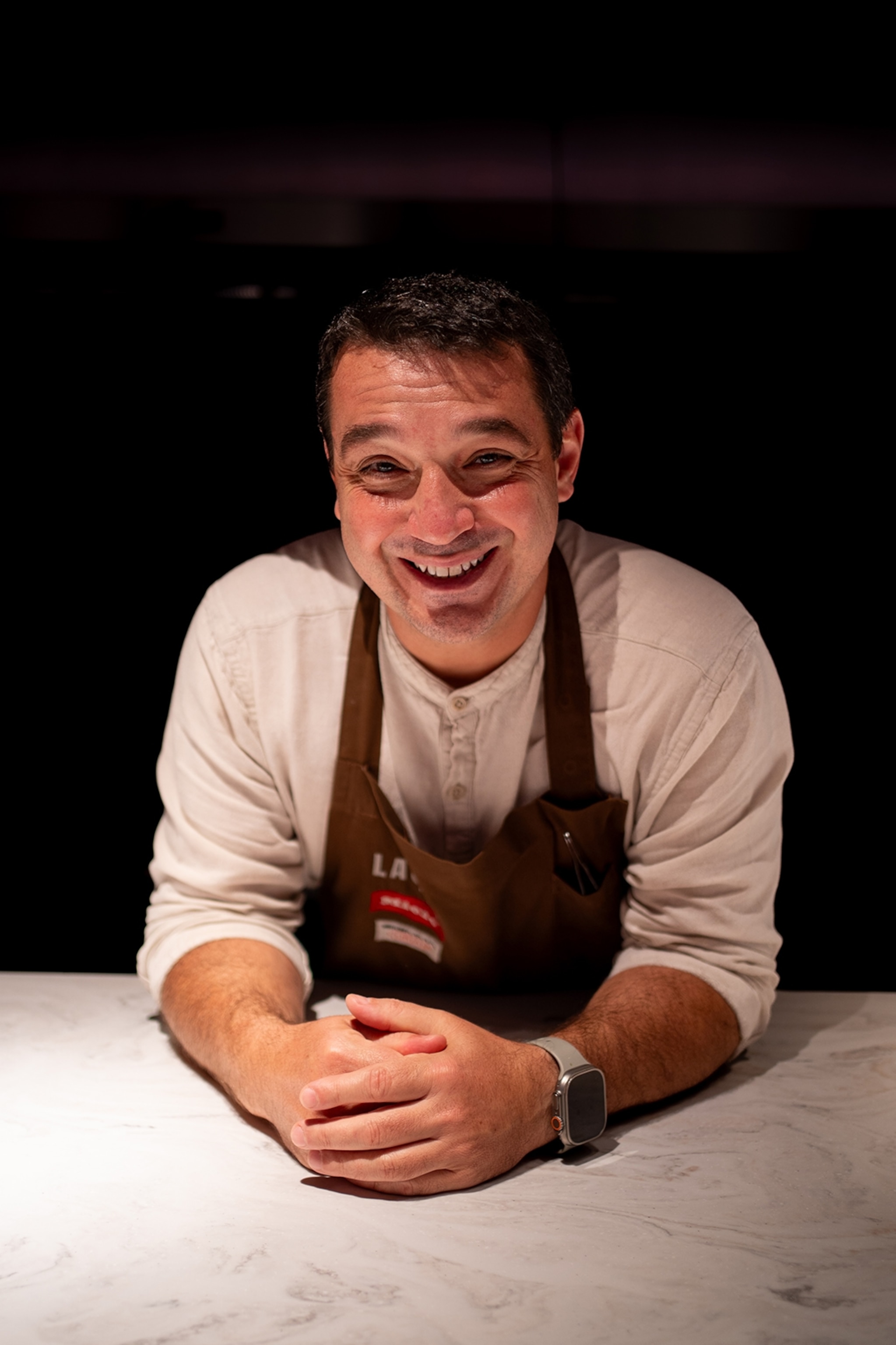
Rio de Janeiro can be tasted through a series of sharp changes in register. A heavy afternoon feijoada arrives with rice, kale, orange and farofa; later, cachaça anchors a drink on a Leblon balcony. One dining room offers a mountain view over the city, another compresses fine dining into 16 seats, and a neighborhood bakery makes sourdough feel as essential as any celebrated tasting menu. Chef Rafa Costa e Silva, a Rio native and chef-owner of two-Michelin-star Lasai, values both tradition and experimentation. His choices form a route through the city that is personal without becoming exclusive—a culinary portrait built from comfort, local ingredients, French technique, tropical fruit and places that invite people to settle in.
Begin With the Meal That Ends the Day
Feijoada is not a discreet introduction. The black-bean stew incorporates dried beef, bacon and cuts such as pork ear and foot, then arrives with white rice, kale, orange and farofa, the toasted cassava flour that adds a dry, granular contrast. It is substantial enough that an afternoon serving may remove any need for dinner.
Chef Rafa Costa e Silva sends visitors to Aconchego Carioca in Praça da Bandeira for the dish. Katia Barbosa’s restaurant is casual and domestic in spirit, closer to entering a generous cook’s home than attending a formal culinary performance. Starting here establishes an important Rio principle: seriousness about flavor does not require stiffness in the room.
Drinks and Bread Carry Local Memory
In Leblon, Liz Cocktail & Wine places Brazilian ingredients inside a compact bar with indoor tables and balcony seating. Cachaça, the sugarcane spirit central to the country’s drinks culture, appears alongside more international references. Costa e Silva favors the Black Negroni, made with gin, Campari, amaro, sweet vermouth and coffee beans. The coffee shifts a familiar template toward Brazil without turning the drink into a novelty.
Bread offers a quieter form of attachment. The Slow Bakery, with locations in Botafogo and Jardim Botânico, opened around the same period as Lasai. Owner Rafa Brito Pereira and Costa e Silva experienced the difficult early years of their businesses together. The bakery’s Rio Sourdough, served simply with butter, represents a friendship and a city’s changing appetite at once.
Dining Rooms With Different Views
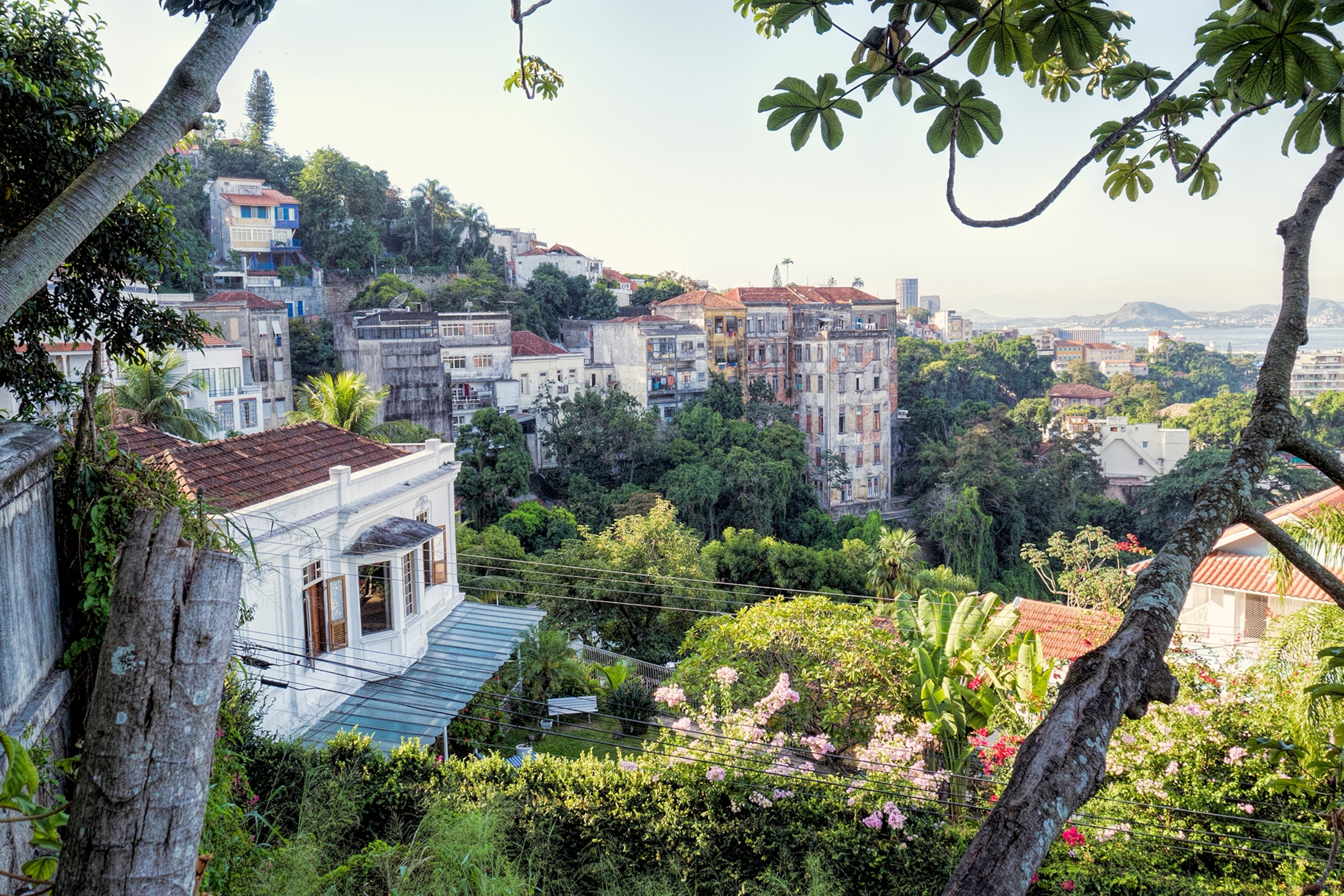
Aprazível in Santa Teresa uses elevation literally. Set high above Rio, it serves direct Brazilian cooking with a view across a large portion of the city. Ingredients come from around the country, and tapioca is among the dishes worth seeking. The setting folds geography into the meal: hills, neighborhoods and distance remain present while the plate stays grounded in national food traditions.
Oseille by Thomas Troisgros creates intensity through closeness. Its roughly 16 seats gather diners around a chef’s-table-style space in Ipanema, sometimes with a DJ present. Troisgros combines French training with ingredients from Rio; a dish of scallops with coffee beurre blanc demonstrates how a classical sauce can absorb a local flavor without losing technical precision.
Claude Troisgros, Thomas’s father, operates Madame Olympe in Leblon. The smaller, romantic restaurant represents an earlier chapter in the same exchange. Claude was among the first foreign-born chefs in Brazil to apply international cooking to local ingredients, and his charcoal-cooked aged fish keeps seafood at the center of that conversation.
Childhood Returns in a Scoop
Mil Frutas closes the route through memory rather than ceremony. The ice-cream company uses fruits that can be difficult to encounter elsewhere, including cashew fruit and cupuaçu from the Amazon basin. For Costa e Silva, the place recalls childhood even though he describes relatively few gastronomic memories from that period. Longevity gives the shops a different authority from the city’s newer dining rooms.
Rio’s culinary identity is sometimes overshadowed by its beaches, mountains and nightlife, but the same topography appears in its food. Neighborhoods establish mood; balconies and hilltops determine perspective; tropical ingredients move between humble and elaborate formats. The city allows feijoada and coffee beurre blanc to coexist because neither is asked to stand for the whole cuisine.
Costa e Silva’s own restaurant, Lasai, provides the background to these recommendations. The two-Michelin-star dining room focuses on seasonal cooking with locally sourced products, including ingredients grown in its gardens. His perspective therefore comes from a chef accustomed to refinement who still assigns equal emotional weight to stew, bread and ice cream. Technique is important, but usefulness to a particular moment matters more.
Timing helps organize the route. Feijoada belongs to a long afternoon; a cocktail can open the evening; the Santa Teresa view rewards daylight; Oseille suits a focused dinner; sourdough and fruit ice cream can be fitted around the city rather than treated as events. Rio’s hills and dispersed neighborhoods make the sequence geographical as well as culinary.
A useful dining plan therefore avoids ranking the stops. Aconchego Carioca supplies tradition and weight, Liz handles the aperitif, Aprazível frames the city, Oseille concentrates technique, Slow Bakery provides daily pleasure and Mil Frutas preserves flavor memories. The route is varied, but the connective tissue is local confidence. Each stop can remain specialized because the city supplies the next appetite. Rio does not need one signature plate when it can offer an entire sequence of places that know exactly what they are for.