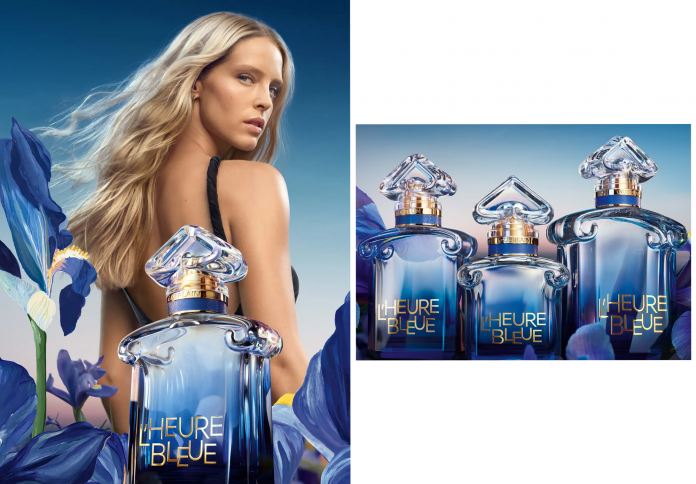
Guerlain has returned to the poetic territory of L'Heure Bleue, using the moment between day and night as the organizing idea for a new feminine fragrance introduced in 2026. The house's director of perfume creation, Delphine Jelk, is associated with this chapter, which draws attention to the difficult task of translating a fleeting change in light into scent. The historic L'Heure Bleue name carries established associations in Guerlain's perfume heritage, while the newest interpretation invites an audience accustomed to contemporary fragrance launches. Its appeal depends not only on the symbolism of twilight, but on how a wearer experiences the composition over the course of a day. A perfume inspired by a moment is an unusually intimate proposition: no two people see dusk in precisely the same way.
A Few Minutes of Blue
The blue hour describes a short period around the transition between daylight and darkness, when the sky can appear intensely blue. As a perfume idea, it is evocative because it sits between opposites: day and night, activity and rest, certainty and anticipation. Guerlain's use of that image gives the fragrance a visual and emotional entry point before any note is described.
This approach has deep roots in luxury perfumery, where evocative names often help a scent claim a distinctive mood. Yet a romantic concept remains just that until the material experience supports it. People may imagine lavender skies, city lights or an empty garden when they hear the phrase, and those personal associations can influence how they respond to the perfume.
The Weight of a Historic Name
L'Heure Bleue is an established name within Guerlain's heritage rather than an entirely new phrase created for the 2026 launch. That history changes how the project is received. A contemporary fragrance linked to a classic title is likely to attract people curious about continuity, even if they have never tried an earlier version. It can also create expectations that are difficult to satisfy because longstanding admirers develop their own memories of an iconic perfume.
A responsible interpretation should distinguish the older fragrance's reputation from the properties of the new release. Sharing a name or inspiration does not mean that two products have identical formulas, concentrations or effects. Those technical questions require precise evidence, not assumptions drawn from branding.
The Perfumer as Translator
Delphine Jelk's involvement focuses attention on fragrance making as a creative discipline. Converting the atmosphere of twilight into a wearable composition requires choices about balance, contrast and development. A perfume can begin with one impression and change as it settles, offering a loose parallel with a sky that shifts minute by minute. The comparison is aesthetically useful, but it is not a substitute for an accurate account of the formula.
The artistic challenge is to make an idea tangible without treating fragrance notes as a rigid story that every wearer must experience. Skin chemistry, climate and individual perception can alter how a composition presents itself. The most successful perfume concepts allow some room for the customer to find a personal meaning.
Iris and the Feeling of Texture
The fragrance discussion includes iris tincture, a material associated with a range of olfactory impressions that can include soft, powdery or root-like effects depending on the composition. Iris is especially interesting in an atmospheric project because its perceived texture can suggest delicacy without requiring a literal floral portrait. Still, a single ingredient cannot determine how an entire perfume smells. Its context within the blend is decisive.
This highlights the limits of describing perfume only through lists of notes. Two fragrances may mention the same material and feel markedly different. For prospective wearers, testing and allowing the scent to develop is more informative than expecting an ingredient list to predict every dimension of the experience.
The metaphor of twilight is unusually resistant to fixed definition. In one place it arrives after a busy street gradually quiets; elsewhere it is the hour when the day's social life begins. A wearer might associate the color blue with serenity, coolness or melancholy. That openness gives Guerlain's idea a reach beyond a single setting, but it also prevents any campaign from establishing the one correct emotional response. The fragrance's appeal depends on the space it leaves for interpretation.
It is tempting to discuss such launches almost entirely through imagery, especially when the name itself sounds like a scene. That would overlook the craft of balancing materials so that the result remains coherent through wear. An evocative inspiration can open the conversation; it is the fragrance's actual evolution that determines whether the mood feels convincing to an individual user.
Twilight as an Everyday Ritual
A fragrance centered on a fleeting hour might seem suited only to evening, yet the concept does not dictate when it must be worn. Some people may save it for dinners or special occasions; others may associate it with the quiet pleasure of getting ready in the morning. The beauty of an atmospheric name is that its meaning can shift with personal use.
Guerlain's latest L'Heure Bleue chapter demonstrates how perfume houses can revisit artistic territory without exhausting it. The enduring test is whether the composition offers an experience substantial enough to stand apart from its image. A blue sky may introduce the fragrance, but its future will be shaped by the people who choose to wear it.
A name drawn from natural light can carry a poetic promise, but it cannot prescribe how a scent must be used. A person might wear L’Heure Bleue during ordinary errands, a quiet afternoon or a formal gathering. The freedom of that choice is part of what makes perfume personal.