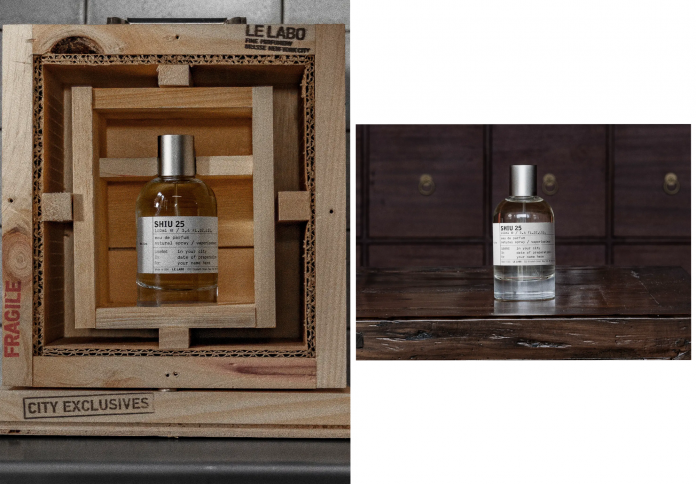
Le Labo's Shiu 25 adds Beijing to the perfumer's City Exclusives conversation, a collection built on the idea that a place can become a distinctive olfactory encounter. Announced in September 2026, the fragrance carries the recognizable format of a city-inspired release, yet the very idea deserves closer examination. A city is not a single smell, and perfume cannot offer a literal map of its streets, seasons or neighborhoods. What it can do is propose an atmosphere, inviting wearers to interpret an urban identity through a personal sensory experience. That tension between geography and imagination makes Shiu 25 interesting even before discussing any individual note. The launch also raises a question about contemporary niche fragrance: is scarcity part of a scent's identity, or merely the way the industry teaches consumers to value it?
The City as Creative Brief
Le Labo introduced Shiu 25 as a Beijing-inspired perfume within its limited-edition City Exclusives family. The location is central to the concept, but inspiration does not mean that every wearer will recognize a specific place in the finished scent. Cities contain countless associations—food, greenery, traffic, architecture, weather, personal memory—and no composition can represent them all. A perfumer necessarily chooses an angle, transforming a sprawling environment into a concentrated artistic statement.
This is where fragrance differs from a travel souvenir. Its effect depends not only on the creator's intention but also on the listener, or in this case the wearer. Someone who knows Beijing intimately may smell something entirely different from someone whose relationship with the city consists of photographs and stories.
Twenty-Five and the Language of the Label
The numerical naming convention has long been an integral part of Le Labo's presentation. By placing a name and number on the bottle, the house gives a complex composition the appearance of a spare laboratory identification. That restraint contrasts with the elaborate prose often used to sell perfume. Shiu 25 participates in this visual tradition, allowing its place-based concept to sit within a recognizable product language.
The name alone does not provide a reliable ingredient list or performance claim. That is an important distinction in coverage of niche scent, where enthusiasts sometimes infer notes from associations, promotional photography or a perfume's place in a collection. A precise review would require an authoritative formula description and direct wearing experience. The documented identity here is the Beijing inspiration and its City Exclusives context.
Scarcity and Access
City-based fragrance collections create an unusual relationship between availability and desire. A product attached to a destination can feel like something discovered through travel rather than a conventional purchase. This is a compelling idea, but it also deserves skepticism: limited availability can intensify interest regardless of whether the fragrance is uniquely suited to a customer's tastes. A collector's motivation may be different from a wearer's motivation, and both are legitimate if understood clearly.
The useful question for buyers is whether the scent's personality would remain attractive without the story surrounding its release. Exclusivity can change how people experience an object, but it cannot by itself make the perfume comfortable, original or enjoyable on the skin.
What Cannot Be Put Into a Bottle
Beijing is a living city rather than a fixed aesthetic. Its culture and identity cannot be reduced to a perfume name, and consumers should resist taking an aromatic interpretation as a representative portrait. The most respectful way to approach a city-inspired fragrance is as a creative response, open to disagreement and curiosity. Its success lies not in literal accuracy but in whether it evokes a distinctive emotional or sensory world.
The city connection may also prompt the wearer to think about travel, memory and belonging. Perfume is unusually good at attaching itself to such associations because scent can become linked with places and experiences over time. The meaning of a bottle may deepen through daily life in ways that a launch campaign never anticipated.
A city-based fragrance can become part of personal memory even for a wearer who has never visited its namesake. A bottle purchased during a particular year might later be associated with a friendship, a journey or a changing stage of life. That process gives perfume an unexpected relationship with geography: the meaning created by its owner may have little to do with the place that originally inspired it. In that sense, Shiu 25 begins with Beijing but cannot control where the experience leads.
Collectors may approach City Exclusives as a sequence of releases, drawn by the prospect of comparing different urban interpretations. Others may own only one bottle because it speaks to them directly. Neither use is less authentic. A collection can provide structure and curiosity, but the lasting value of perfume is usually established through wearing rather than cataloging.
Beyond the Collectors Shelf
Shiu 25 invites the kind of slow evaluation that fashionable fragrance launches sometimes discourage. It is worth considering how the perfume wears across a day, how its character changes on skin and whether it contributes something distinctive to a personal collection. None of those judgments should be fabricated in the absence of testing. A label and a compelling origin story can introduce the scent, but they do not substitute for wearing it.
Le Labo's Beijing chapter broadens the imagined geography of City Exclusives. Its enduring significance will rest on whether owners find a genuine relationship with the fragrance once the initial excitement of a new city, a new name and a new release has settled.