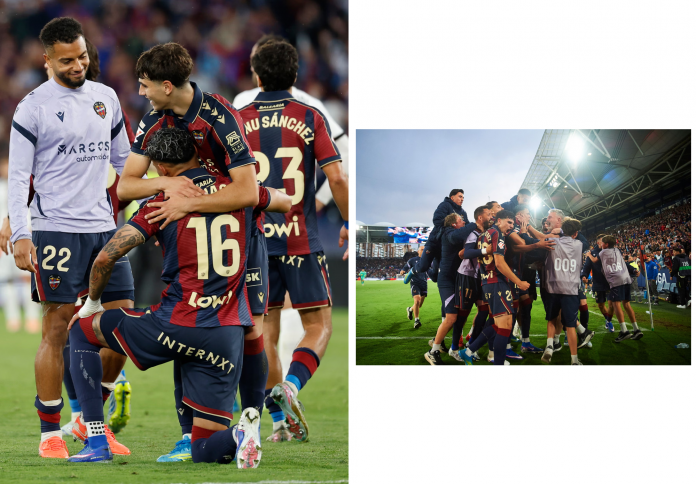
Levante’s late push toward La Liga safety has become one of the season’s most improbable coaching stories. Luís Castro arrived in December with a career built far from Spain’s biggest stages and inherited a club that appeared trapped in an impossible relegation battle. Months later, after a crucial win over Mallorca, Levante stood close to survival. Castro’s own history adds resonance: as a child he survived a serious illness after doctors initially gave his family little hope, later returning to football despite warnings that he should avoid physical activity. His path through lower-league playing days and coaching jobs across several countries has produced a manager whose defining quality may be the refusal to treat difficult situations as final.
A Coach Shaped by Recovery
Castro’s biography is unusually aligned with the challenge Levante gave him. At 11, after vomiting blood, he was diagnosed with purpura and his parents were initially told he might not survive. Even after recovering, doctors warned against physical exercise. Three years later he was back on a football pitch. That early experience does not automatically explain a coaching philosophy, but it helps illuminate why he speaks about resilience without sounding like he learned the language from a leadership manual. His playing career unfolded in Portugal’s lower leagues, away from glamour, and his coaching career then became strikingly international. He won trophies in Qatar, Saudi Arabia, Ukraine and Brazil before his name reached Levante’s president in December. The club needed someone willing to regard survival as a problem to solve rather than a verdict already delivered.
A Relegation Battle Without Room for Illusion
La Liga’s lower end has been crowded and unforgiving, with several clubs separated by narrow margins and every late-season result capable of changing the table. Levante’s position required practical football as much as inspiration. Castro’s value has been his ability to make the team competitive enough to accumulate points while keeping belief intact. The win over Mallorca, sealed amid an eruption of relief at the Ciutat de València, became a visible symbol of that turnaround. Kervin Arriaga’s late goal to make it 2–0 did more than settle a match; it moved survival from fantasy to probability. For a club that had spent much of the campaign bracing for relegation, the emotional shift is significant. Players begin to make decisions differently once they believe their actions can still change the season.

The Advantage of Being Underestimated
Castro arrived without the profile of the coaches who usually dominate Spanish headlines, and even his name invited comparison with a more famous Portuguese namesake. That relative anonymity may have helped. Managers entering crisis clubs often spend precious time negotiating expectations built around their reputation. Castro could focus on the immediate work: organization, confidence and points. His career abroad also gave him experience adapting to different dressing rooms and competitive cultures. Coaching in Qatar, Saudi Arabia, Ukraine and Brazil requires flexibility in communication and squad management; those skills are useful in a relegation fight where players may be anxious, fatigued or uncertain about their futures. Levante’s improvement suggests that international experience can matter even when it arrives without the branding of a celebrated European résumé.
Survival as a Collective Reset
Staying in La Liga would have consequences far beyond the emotional relief of the final whistle. Top-flight status shapes television revenue, transfer budgets, sponsorship value and the club’s ability to retain players. It also changes how the summer can be planned. A relegated Levante would need to rebuild around a different financial reality; a surviving Levante can instead ask how the qualities that saved the season might be strengthened. Castro’s role in that conversation would be central. Emergency appointments are often judged only on whether they escape danger, but the best ones reveal ideas that can outlast the crisis. The question would become whether Levante’s late intensity can be converted into a stable playing identity once the immediate threat is removed.

Why Turnarounds Matter
Football is saturated with stories about inevitability: wealthy clubs are supposed to win, struggling teams are supposed to fall, and managers are often judged before their work has had time to become visible. Levante’s recovery resists that logic. Castro’s personal history makes the narrative vivid, but the sporting achievement rests on daily coaching and competitive execution. Survival is never delivered by biography alone. It requires players to defend, run, finish chances and recover from setbacks under pressure. What Castro seems to have offered is a framework in which those tasks remain meaningful even when the table looks hostile. That may be the most transferable lesson of the turnaround. In relegation battles, belief is useful only when it produces better decisions. Levante’s late-season form suggests that theirs finally did.
The Next Challenge Is Normality
Crisis management and long-term management are different skills. Castro has shown that he can energize a team facing the drop, but survival would create a new test: can Levante remain organized when the emotional emergency disappears? The club will need to recruit carefully, improve depth and avoid assuming that the same late-season intensity can simply be carried into another campaign. Players who thrive under danger do not always produce the same level when the objective becomes steady mid-table progress. That is why the summer matters. If Levante use survival to establish clearer structures around Castro, the turnaround can become the foundation of a project. If they treat it as a miracle that can be repeated without investment, the club may find itself in the same fight again. Staying up is an achievement. Learning how not to need another rescue is the more difficult form of progress.