
The admission by refereeing chief Howard Webb that Manchester United’s goal against Nottingham Forest should have been disallowed is another reminder that technology cannot remove judgment from football. Bryan Mbeumo handled the ball before Matheus Cunha scored in United’s 3–2 win, and referee Michael Salisbury was sent to the monitor by VAR. He still allowed the goal to stand. Webb later told Forest the decision was too lenient under the Premier League’s interpretation of handball. The incident is awkward precisely because the review system worked procedurally: the footage was available, the referee reconsidered the moment, and the wrong conclusion was still reached. That is where the modern argument about VAR has become most difficult.
The Review Happened, Yet the Error Survived
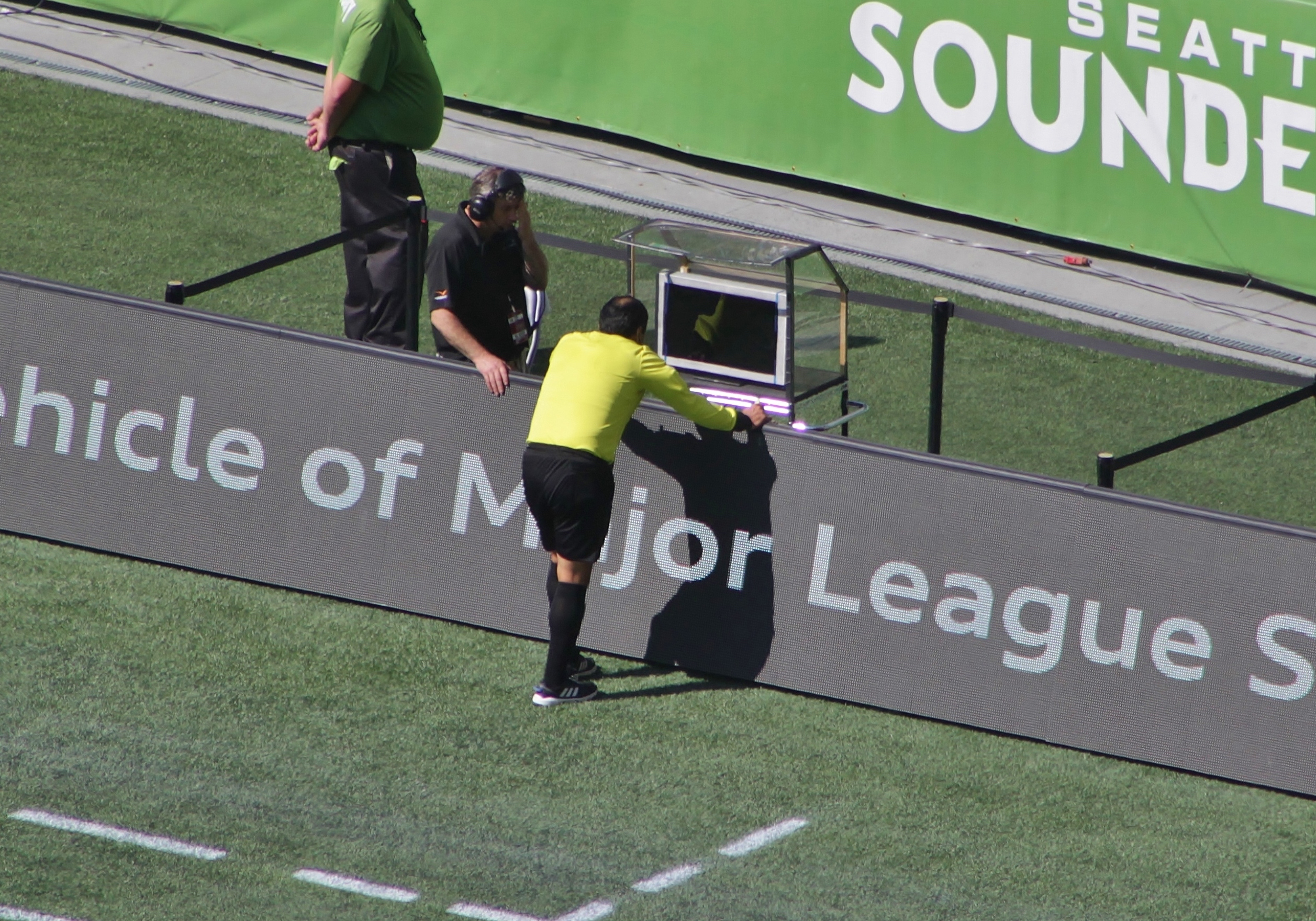
VAR was introduced to correct clear mistakes that officials could not properly see in real time. The Manchester United–Nottingham Forest incident demonstrates the limit of that promise. Matt Donohue, the video assistant referee, identified Mbeumo’s contact with the ball and advised Salisbury to review the 55th-minute sequence on the pitchside monitor. The referee had access to repeated angles and time to reconsider the decision. He nevertheless judged the handball unintentional and allowed Cunha’s goal to stand. Webb later concluded that this was the wrong interpretation. The problem, then, was not a missing camera angle or a failure to trigger the review. It was the human application of a law whose language depends on concepts such as natural movement, deliberate action and body position. Technology clarified the event but could not decide its meaning.
Handball Remains Football’s Most Unstable Law
Few laws create as much public frustration as handball because ordinary viewers often expect a simple rule while the official framework contains context and exceptions. The Premier League allows leeway for natural arm movements, recognizing that players cannot keep their limbs fixed while running, jumping or challenging. That flexibility is sensible, but it also creates the grey area in which controversy lives. Webb’s view was that Mbeumo’s action crossed the competition’s threshold and should have resulted in the goal being ruled out. For supporters, the subsequent admission may feel both reassuring and unsatisfactory. It shows the refereeing body is willing to acknowledge mistakes, yet it cannot change the match result. The more often similar incidents are interpreted differently, the harder it becomes for players and fans to predict what the law actually requires.

Transparency Helps, but Only Up to a Point
PGMOL has increasingly tried to explain major decisions after matches, with Webb becoming a public face of refereeing accountability. That is preferable to silence. Clear acknowledgment of error can reduce the suspicion that officials protect one another regardless of evidence. But transparency must eventually produce consistency. If clubs receive apologies without seeing fewer repeat mistakes, the process begins to look like customer service rather than sporting governance. Forest’s complaint carries particular force because the disputed goal came in a 3–2 defeat, where a single decision had obvious competitive weight. The league cannot promise perfect refereeing, but it can improve how laws are communicated, how video officials frame recommendations and how referees are coached to recognize patterns that have already caused confusion.
VAR Has Changed the Standard of Error
Before video review, supporters tolerated some mistakes as the cost of a fast game viewed once by a referee at ground level. VAR altered that social contract. Once decisions can be replayed from multiple angles, the public expects the final call to be more accurate than the original one. That expectation is reasonable, but it also magnifies the anger when a reviewed mistake survives. The question is no longer simply whether the referee saw the incident. It becomes why a team of officials, with technology and time, reached an interpretation that the refereeing chief later rejected. The resulting frustration is less about technology itself than about institutional confidence. VAR has made the process more visible, so inconsistency now looks less like misfortune and more like a system problem.
The Goal Should Be Predictable Judgment
Football does not need a future in which every handball decision is mechanically identical; context is part of the sport. It does, however, need players and supporters to recognize a stable line. That requires clearer guidance, consistent examples and review protocols that focus officials on the decisive elements of an incident rather than simply replaying it. Webb’s admission is useful only if it becomes part of that learning process. The United–Forest call will remain on the record, and no explanation can return the lost competitive moment. But the controversy can still serve a purpose. The success of VAR should not be measured by the number of reviews conducted. It should be measured by whether, after those reviews, the football public increasingly understands how and why decisions will be made.
Consistency Is the Only Credible Fix
Refereeing bodies can never guarantee that every borderline handball will produce universal agreement. They can, however, reduce the sense that similar incidents are being judged by different standards from week to week. That requires publishing representative examples, training officials around common decision patterns and making post-match explanations specific enough that supporters can see the reasoning. The goal should be predictability rather than perfection. Players need to know how to position their arms in common situations, and coaches need confidence that a tactical plan will not be overturned by an interpretation that feels unique to one match. VAR remains useful because it catches incidents that would otherwise be missed, but its legitimacy depends on the quality of final judgment. The Mbeumo case will fade from the weekly cycle. Whether the same type of mistake keeps returning will determine if the lesson was actually absorbed.