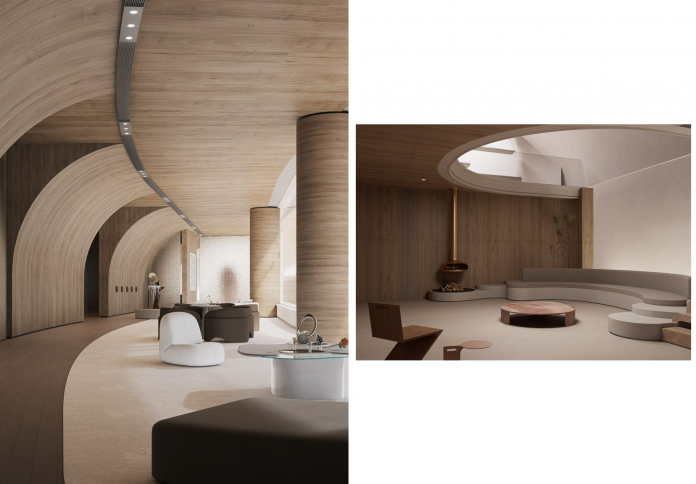
High-pressure laminate is often asked to perform an impossible visual trick: provide the appearance of natural timber while delivering the consistency, durability, and maintenance advantages of an engineered surface. PoliLam’s Nature’s Capsule collection approaches that task by treating specific wood characters as references rather than producing a single generic “oak” or “walnut.” The 2026 range includes twelve finishes inspired by species and landscapes associated with places including Missouri, Australia, and Germany. The manufacturer uses high-resolution color separation with custom embossing plates to coordinate printed grain and tactile texture, aiming for a more convincing relationship between what the eye sees and the hand feels. The project is interesting not because laminate becomes indistinguishable from wood, but because it acknowledges that imitation can be designed with more specificity. Surface culture is moving from broad categories toward material narratives.
Laminate Has Always Been About Translation
High-pressure laminate is a translation technology. Paper, resin, print, pressure, and texture are combined to produce a surface that can stand in for timber, stone, color, or pattern while offering predictable performance. The challenge is that translation can easily become caricature. Repeated grain, mismatched embossing, or generic color makes the illusion collapse at close range.
PoliLam’s Nature’s Capsule collection addresses that problem by starting from specific timber references. Rather than treating “wood look” as one aesthetic, the range distinguishes between visual characters associated with walnut, karri, oak, and other species. The approach recognizes something interior designers already understand: species names carry expectations about tone, pore, movement, warmth, and cultural context. A convincing surface needs to work at that level of detail.
Texture Has to Agree With the Image
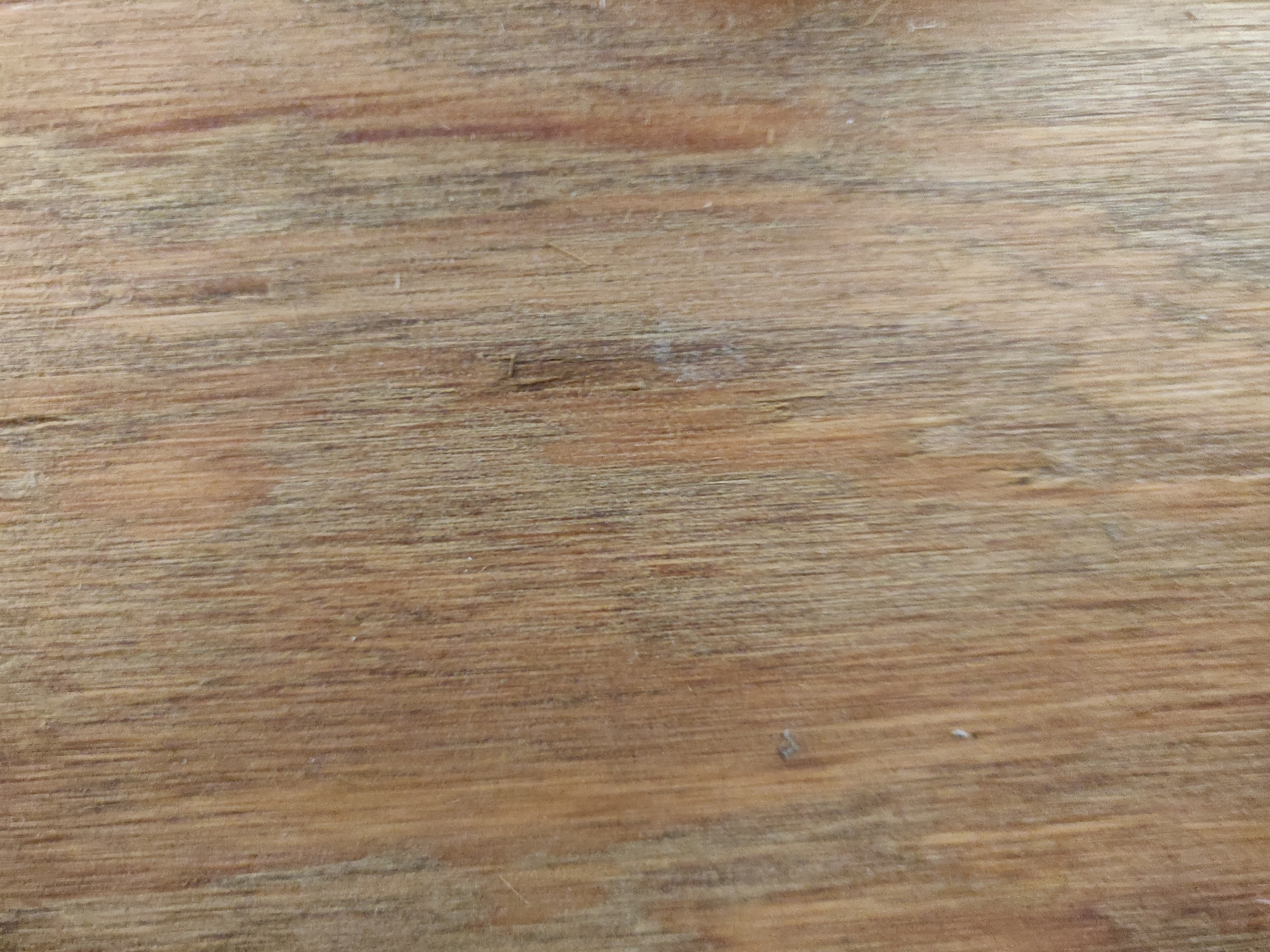
The company uses advanced color separation to reconstruct the tonal complexity of its references, then pairs the print with custom embossing plates designed to follow grain and surface depth. That coordination is essential. When a visual knot appears in one place and the texture describes another, the eye may not consciously identify the error, but the material feels artificial.
Embossing that aligns with the image creates a more coherent sensory experience. The hand confirms what the eye predicts. This is not the same as reproducing the full variability of solid wood, and it should not be presented as such. Laminate remains an engineered product. Its design opportunity lies in making that engineering sophisticated enough to support atmosphere without depending on crude imitation.
Geographic Naming Adds a Story Layer
Nature’s Capsule draws references from places including Missouri, Australia, and Germany. Geographic framing gives each finish a narrative beyond color. It invites specifiers to think about timber as belonging to ecological and cultural landscapes rather than appearing from an abstract catalog. That storytelling can make surfaces more memorable, though it also creates a responsibility to avoid turning place into superficial branding.
The strongest version of the idea is educational. A designer choosing a finish can begin with visual needs, then learn about the species or landscape that informed it. The manufactured surface becomes a prompt to look more closely at natural variation. That is more interesting than the old model in which laminate succeeds only when nobody notices it is laminate.
Performance Keeps Engineered Surfaces Relevant
PoliLam promotes the collection for applications where wear resistance, maintenance, and fire performance matter. Those practical characteristics explain why high-pressure laminate remains important in hospitality, retail, workplace, and other high-use environments. Solid timber can be beautiful, but it is not automatically the right material for every surface, budget, cleaning regime, or code requirement.
The design question is therefore not simply natural versus artificial. It is how to choose a surface whose visual, environmental, technical, and maintenance qualities fit the project. Certifications such as FSC-related sourcing and indoor-air-quality standards can contribute to that assessment, but no single label resolves the full material story. Good specification still requires attention to substrate, adhesives, replacement cycles, and the realities of use.
Imitation Can Become More Honest Through Precision
There is a paradox in increasingly realistic laminate. The better the imitation becomes, the easier it is to forget that the product is an industrial construction. Nature’s Capsule is most valuable when its precision encourages a different response: appreciation for the engineered surface on its own terms. Coordinated print and embossing are feats of manufacturing, not evidence that the product has ceased to be laminate.
That distinction can improve material culture. Designers do not need to apologize for using an engineered surface when it solves the brief responsibly. Nor do they need to accept generic woodgrain simply because it is practical. PoliLam’s collection shows how technical performance and visual specificity can coexist. The result is not a substitute for every piece of timber; it is another material vocabulary, one that becomes stronger when it understands exactly what it is translating and why.
Surface Design Can Carry a Sense of Place Without Imitating Nature Literally
Wood-look laminates are often judged by how convincingly they mimic a species, but the more interesting opportunity is broader. A surface can borrow the rhythm, warmth, and variation associated with natural landscapes without pretending to be a plank of timber. PoliLam’s Nature’s Capsule direction is strongest when the references operate as atmosphere rather than disguise.
That distinction matters in specification. Laminates are chosen for reasons that can include durability, consistency, maintenance, and cost; presenting them as inferior substitutes for “real” material narrows the design conversation. A more confident approach acknowledges the industrial product while using color and pattern to create sensory associations. The result can support interiors that want biophilic cues without relying on a literal forest motif. Designers still have to ask where the material comes from, how long it lasts, and what happens at replacement. But visual language has a role too. When surface collections are treated as tools for composing mood rather than as copies of scarce materials, they can become more honest about what they are—and more useful in the environments they are designed to shape.