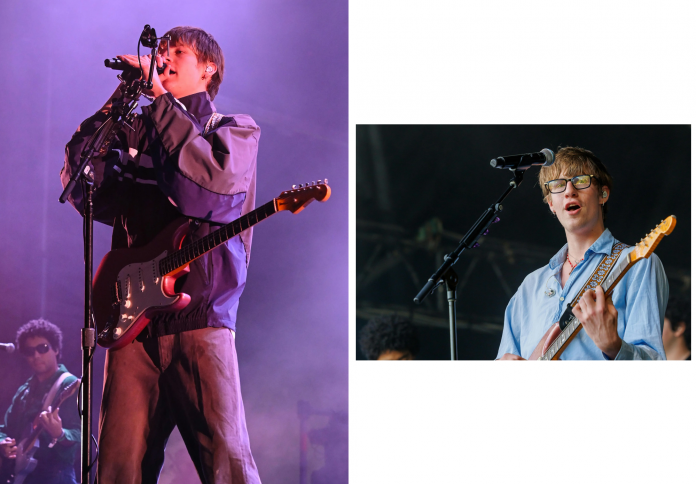
Malcolm Todd’s rise is a useful reminder that a song can move at internet speed while an artist’s identity takes years to form. The Los Angeles singer first built a following through intimate, guitar-led indie R&B, then watched “Earrings” surge into a cross-platform hit in 2026. By summer, he had released the album “Do That Again” and mapped out a North American tour that moves through rooms as ambitious as Radio City Music Hall and the Greek Theatre. What makes the moment interesting is not simply scale. Todd’s appeal rests on a loose, conversational style that still feels handmade even as the machinery around him grows. His next challenge is the classic one for a digital-era breakout: preserving that closeness once the audience becomes much larger.
The Slow Build Behind a Fast Moment
Malcolm Todd can look, from a distance, like one of those artists who arrived fully formed through a short-form video feed. The reality is slower and more instructive. He began making music during the pandemic, developing a sound that sits between indie pop, R&B, and the loose guitar language associated with artists such as Steve Lacy and Omar Apollo. Before the largest stages entered the picture, his appeal depended on the feeling that a listener had stumbled into a private room where songs were still being figured out in real time.
That intimacy became a powerful advantage when “Earrings” broke beyond his existing fan base in spring 2026. The song had been released well before its chart run, making the breakthrough feel less like a manufactured launch than a rediscovery at scale. It eventually reached the upper reaches of charts in both the United States and the United Kingdom. The timeline matters because it shows how contemporary hits often behave: a catalog track can suddenly become a current event when a new wave of listeners decides it belongs to them.

A Voice That Resists Over-Polish
Todd’s songs work because they rarely sound built to announce themselves as capital-P Pop. His vocal delivery can feel half-sung and half-spoken, while the arrangements leave enough negative space for small details to register. Guitar lines do not function merely as decoration; they shape the emotional temperature of the track. That restraint distinguishes him from a crowded field of emerging artists who are asked to make every chorus, clip, and visual instantly legible.
The approach also gives his work elasticity. A song can live as a headphone confession, a TikTok fragment, or a full-room singalong without being rewritten for each setting. That adaptability is increasingly important for young musicians whose audiences meet them in multiple formats at once. Todd’s music does not pretend those formats are identical, but it avoids sounding as if one platform dictated the creative decision. The result is a useful tension between casualness and craft, one that makes the songs feel immediate without making them disposable.
Family, Collaboration, and a Wider Creative Circle
Todd’s creative world is not entirely solitary. His older sister, Audrey Hobert, has her own music career and directed the video for his 2025 song “Concrete.” Their sibling connection has become part of the public story around both artists, but it is more interesting as evidence of a shared creative environment than as a novelty. The two have appeared in music programming together and have enough distinct identities that the family connection adds context without collapsing one career into the other.
That distinction matters in an era when audiences often search for biography as aggressively as they search for songs. Todd’s family background can explain pieces of his environment, yet the work still has to hold attention once the trivia runs out. His strongest material does exactly that. It is built around melody, phrasing, and an emotional looseness that cannot be reduced to lineage. The family story may help listeners understand the ecosystem around him, but the songs are what make the ecosystem relevant.
From Small-Room Energy to Arena-Sized Expectations
The release of “Do That Again” in June 2026 gave Todd a larger body of work just as his audience was expanding. The album arrived through Columbia Records, while his touring plans signaled a jump in scale. His 2026 North American dates include major theaters and amphitheaters, among them New York’s Radio City Music Hall and Los Angeles’ Greek Theatre. Those venues demand a different kind of command than the intimate spaces where emerging artists often learn their live language.
Scale can expose weaknesses, but it can also clarify what makes a performer distinctive. Todd does not need to become louder in personality simply because the rooms are larger. The more compelling possibility is that his understated style becomes the point of contrast. When thousands of people lean toward a singer rather than being overwhelmed by production, quietness can become its own kind of spectacle. The tour therefore represents more than ticket sales; it is a test of whether intimacy can be engineered without feeling engineered.
What Comes After the Algorithmic Breakthrough
Todd’s career now sits at a transitional point familiar to many musicians who come of age online. Viral discovery can produce attention, but attention is not the same thing as a durable artistic relationship. The work after the hit involves converting curiosity into a catalog, a live audience, and a recognizable point of view. His advantage is that those pieces were already developing before “Earrings” accelerated the timeline.
That is why the most interesting part of his story may be what happens after the phrase “TikTok breakout” stops being useful. The song that opened the door will remain part of the narrative, but “Do That Again,” the expanding tour, and the creative choices that follow can determine whether Todd becomes associated with a moment or with a body of work. The early evidence suggests an artist learning how to grow without sanding away the rough edges that made people pay attention in the first place.