Twenty years ago, the music industry was on the brink of collapse, caught in a seemingly endless war between plummeting physical sales and the untamed frontier of digital piracy. Enter Spotify, a Swedish startup that proposed a radical truce: absolute access to the world’s sonic library for a flat monthly fee. Two decades later, as the streaming giant celebrates its monumental twentieth anniversary, it is clear that this platform did not merely save the music business—it fundamentally rewired human consumption. It birthed the algorithmic playlist, turned localized genres into global phenomena, and created an unprecedented echelon of pop royalty. From the meticulous narrative architecture of Taylor Swift to the sprawling, unpredictable sonic eras of Kanye West, the artists who mastered this digital ecosystem have achieved a scale of ubiquity previously thought impossible. This is the story of how a green icon revolutionized our ears and redefined the modern masterpiece.
The End of the Ownership Era
To truly comprehend the seismic impact of Spotify’s two-decade reign, one must first look back at the desolate landscape it inherited. In 2006, the music industry was bleeding out. The compact disc, once a license to print money, was rapidly becoming a relic, while illicit peer-to-peer file-sharing networks had effectively trained an entire generation to believe that music should be free. The concept of purchasing an album was being usurped by the chaotic, virus-laden trenches of illegal downloads. The industry required a savior, but what it received was a complete paradigm shift: the transition from ownership to access.
Spotify’s launch proposed a model that initially terrified record executives. Rather than buying a song for ninety-nine cents, users could rent the history of recorded sound for the price of a modest lunch. It was a staggering gamble that hinged on volume. If enough people subscribed, the micro-pennies generated per stream would eventually aggregate into a mountain of sustainable revenue. Slowly but surely, the gamble paid off. The green icon became ubiquitous, residing on the home screen of nearly every smartphone on the planet, quietly transforming the act of listening from a deliberate, physical ritual into an ever-present, atmospheric constant.
This shift altered the very DNA of songwriting. Because a track only generates revenue if a listener stays engaged for more than thirty seconds, the long, atmospheric intros of the twentieth century vanished overnight. The modern pop song had to strike immediately, deploying its hook within the first breath to prevent the dreaded, algorithm-killing "skip." It was an architectural redesign of music itself, entirely dictated by the mechanics of the stream.

The Reign of the Streaming Titans
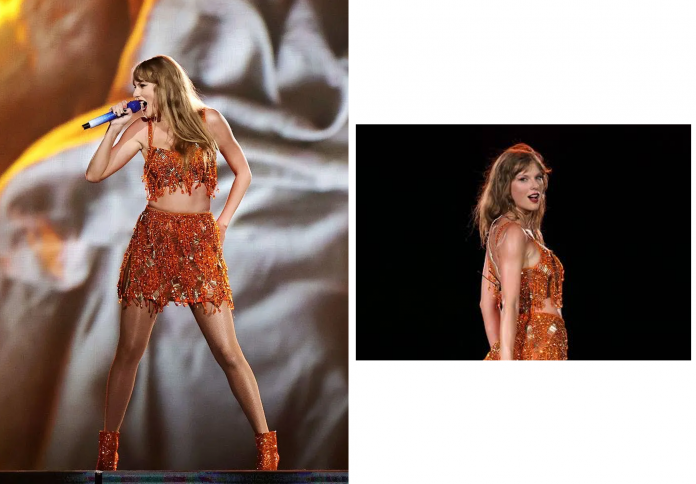
As the platform celebrates its twentieth anniversary, the retrospective data reveals the undisputed monarchs of the streaming era. No artist exemplifies the complex, evolving relationship with Spotify quite like Taylor Swift. Her journey from pulling her entire catalog in protest of compensation models to becoming the platform’s most-streamed female artist is a masterclass in industry leverage. Swift recognized that streaming was not merely a distribution channel; it was a sprawling, interactive archive. By utilizing the platform to rerelease her "Taylor's Version" albums, she weaponized the algorithm, successfully rewriting her own masters' history while generating billions of streams from a fiercely loyal, mobilized fanbase.
Conversely, Kanye West approached the streaming era not as a catalog manager, but as a disruptive hacker. Before the advent of Spotify, an album was a finalized, immutable object once it hit the shelves. West shattered this concept entirely. He utilized the fluidity of the streaming ecosystem to treat his albums as living, breathing software updates. Projects like "The Life of Pablo" were tweaked, remixed, and altered in real-time, long after they had officially premiered on the platform. This audacious approach proved that the streaming age could accommodate a perpetual, iterative creative process, keeping listeners perpetually engaged in an evolving sonic narrative.
These titans did not simply upload their music; they bent the architecture of the platform to their will. They understood that in an era of infinite choice, the true currency is sustained attention. Through strategic drops, heavily teased collaborations, and a mastery of playlist placement, they transformed the sterile interface of a mobile application into a global stadium, commanding audiences that dwarf the highest-selling physical albums in history.
The Billions Club Benchmark
In the physical era, a hit was measured by platinum plaques and radio dominance. In the modern age, the ultimate metric of cultural ubiquity is the Spotify Billions Club. Reaching one billion streams on a single track is a staggering mathematical feat, requiring a song to not only capture the immediate zeitgeist but to endure as a foundational element of global playlists for years. It is the sonic equivalent of immortality.
The artists who consistently breach this threshold—from the moody, synth-drenched anthems of The Weeknd to the ubiquitous, mathematical pop of Ed Sheeran—share a distinct capability to transcend regional borders. A track like "Blinding Lights" did not merely chart in North America; it became the default soundtrack for the entire globe, permeating cafes in Tokyo, nightclubs in Berlin, and rideshares in São Paulo simultaneously. This unprecedented, frictionless distribution has created a tier of mega-hits that are consumed on a scale previously thought impossible.
Yet, this astronomical success also highlights the steep inequality inherent in the streaming model. While the top percentile of artists generate enough streams to amass fortunes, the vast majority of independent musicians struggle to translate millions of plays into a livable wage. The Billions Club is both a celebration of unprecedented global reach and a stark reminder of the winner-takes-all economy that defines the modern music business.

The Fall of the English Monopoly
Perhaps the most beautiful, unintended consequence of the Spotify revolution is the rapid democratization of global genre. For decades, the global pop charts were an impenetrable fortress of English-language music, dictated by gatekeepers in Los Angeles, New York, and London. The streaming algorithm, however, is fundamentally language-agnostic. It does not care where a song was recorded or what language it is sung in; it only cares if listeners are pressing replay.
This algorithmic objectivity allowed artists like Bad Bunny to achieve absolute global dominance without ever compromising their cultural authenticity. By consistently claiming the title of Spotify’s most-streamed artist globally across multiple years, he proved that Spanish-language music is not a niche subgenre, but the central pillar of modern pop. His staggering numbers forced the traditional music establishment to radically rethink their marketing strategies and acknowledge the undeniable, immense power of the Latin market.
Similarly, the platform has acted as a colossal amplifier for Afrobeats and K-Pop, dissolving geographical borders and allowing localized scenes to instantly command worldwide audiences. The algorithm identifies intersecting tastes, seamlessly feeding a listener in Chicago a track produced in Lagos simply because the rhythmic profiles match. It is a quiet, ongoing cultural exchange that has rendered the concept of "world music" entirely obsolete, replacing it with a truly globalized sonic vocabulary.
Echoes of the Next Decade
As Spotify looks toward its third decade, the very definition of streaming is once again beginning to shift. The introduction of artificial intelligence, personalized AI DJs, and sophisticated, mood-based curation suggests that the platform is moving beyond merely providing access. It is aiming to become an active, intelligent companion, predicting what we want to hear before we even formulate the desire.
However, this algorithmic convenience carries a subtle, existential risk. As curation becomes increasingly automated, there is a legitimate fear that music will devolve into mere audio wallpaper—a passive, frictionless soundtrack designed solely to optimize concentration or relaxation, stripping the art form of its challenging, abrasive, or challenging qualities. The challenge for the next generation of artists will be figuring out how to jolt listeners out of their algorithmic slumber.
Ultimately, the first twenty years of the streaming revolution rebuilt the music industry from its ashes, constructing a sprawling digital coliseum where the entire history of recorded sound sits in our pockets. It gave us new icons, broke down linguistic barriers, and redefined what it means to create a masterpiece. The next era will not be defined by how we access our music, but by whether we can still find the humanity buried within the infinite, perfect algorithm.