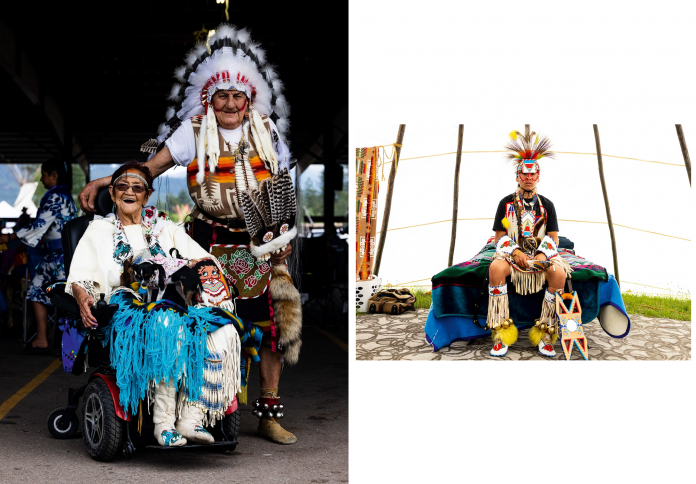
In the heart of summer, as fireworks illuminate the skies across the United States, a profoundly different celebration of resilience unfolds beneath the vast canopies of Northwest Montana. For decades, the Fourth of July weekend on the Flathead Reservation has served not as a conventional tribute to American independence, but as a vibrant reclamation of Indigenous identity. Here, the rhythmic, ground-shaking cadence of the drum circle replaces the crackle of firecrackers, calling generations of Salish, Kootenai, and Pend d'Oreille people to the powwow arena. At the center of this gathering is the breathtaking regalia—meticulously crafted garments of beadwork, ribbons, and feathers that function as wearable histories. More than mere pageantry, these annual summer dances represent a thriving, living heritage, weaving ancient traditions into the complex tapestry of contemporary Native life.
The Rhythm of the Reservation
Nestled within the glacier-carved valleys of Northwest Montana, the Flathead Reservation becomes a nexus of cultural convergence during the first week of July. Long before the surrounding towns begin stringing up red, white, and blue bunting, a different kind of preparation takes hold among the Confederated Salish and Kootenai Tribes. Families begin packing their meticulously stored regalia, tuning their drums, and migrating toward the ancestral encampment grounds. The air here carries the scent of sweetgrass, campfires, and frybread, signaling the commencement of an event that transcends a simple summer festival.
This annual gathering is a profound reaffirmation of community. For many Indigenous people across the Pacific Northwest and the Great Plains, the July powwow circuit is a time of homecoming. It is a space where the scattered fragments of modern life are temporarily set aside in favor of a collective, rhythmic unity. When the first strikes of the drum echo across the arbor, it acts as a sonic tether, drawing dancers and spectators alike into a shared physical and spiritual space that has endured for centuries, defying the immense pressures of historical assimilation.
A Complex Independence
Hosting such a vibrant display of Indigenous culture during the United States’ most patriotic weekend carries a deep, often misunderstood, historical resonance. In the late nineteenth and early twentieth centuries, the federal government strictly outlawed many traditional Native American religious ceremonies and dances, viewing them as a direct threat to integration policies. To survive this cultural suppression, numerous tribes ingeniously synchronized their sacred gatherings with federal holidays like the Fourth of July. Under the guise of celebrating American independence, they were able to legally assemble, dance, and keep their heritage from being entirely extinguished.
Today, the dynamic has shifted from quiet preservation to unapologetic celebration. While the holiday outside the reservation is marked by parades and patriotic anthems, inside the powwow grounds, the focus is squarely on Indigenous sovereignty and survival. It is a weekend that acknowledges the painful contradictions of Native American history while simultaneously celebrating the enduring strength of the community. The dancers in the arena are not merely performing; they are actively asserting their presence and vitality in a modern world that often attempts to relegate them to the pages of history books.
The Architecture of Regalia
At the visual core of this celebration is the regalia. It is a critical distinction within Indigenous communities that these garments are never referred to as costumes. A costume is meant to disguise the wearer, to allow them to pretend to be something they are not. Regalia, conversely, is an amplification of the wearer’s true identity, family lineage, and spiritual journey. Each piece is a masterwork of artistry and storytelling, requiring hundreds of hours of manual labor and often spanning across multiple generations of artisans within a single family.
The materials used in modern powwow attire are as diverse as the tribes themselves, blending ancestral techniques with contemporary aesthetics. Intricate beadwork, which might depict clan symbols, geometric mountain motifs, or even modern color palettes, adorns moccasins and leather yokes. Elk teeth, traditionally a symbol of hunting prowess and wealth, rattle softly alongside modern metal cones crafted from chewing tobacco lids. Eagle feathers, the highest honor one can wear, are meticulously cared for and passed down from respected elders. Every fringe, ribbon, and piece of quillwork holds a specific intention, transforming the dancer into a moving mosaic of living history.
The Arena as a Classroom
When the Grand Entry begins, the central arbor becomes a riot of color and kinetic energy. The procession is led by Native veterans carrying eagle staffs and flags, followed by a cascading wave of dancers categorized by their distinct styles. There are the Men's Traditional dancers, their movements deliberate and grounded, mimicking the tracking of game or the telltale signs of a warrior. Then come the Fancy dancers, a blur of bright ribbons and athletic footwork, their dizzying spins perfectly timed to the escalating tempo of the host drum.
The women’s categories bring their own profound narratives to the circle. The Jingle Dress dance, for instance, is rooted in a tradition of healing. As the dancers step rhythmically, the hundreds of metal cones sewn to their dresses strike against one another, creating a sound akin to falling rain. It is a restorative, spiritual auditory experience meant to bring medicine to the community. Similarly, the fluid, swaying movements of the Grass Dancers historically served the practical purpose of flattening the tall prairie grasses to prepare the grounds for ceremonies, a tradition that has evolved into one of the most mesmerizing and graceful styles on the circuit today.
Yet, beyond the sheer athleticism and visual spectacle, the powwow arena serves as a vital intergenerational classroom. Look closely at the edges of the dance circle, and you will see toddlers barely able to walk, fully outfitted in miniature regalia, mimicking the footwork of their older siblings. Elders sit on the periphery, watching with discerning eyes, ready to correct a misstep or adjust a fallen feather. The songs themselves, sung in languages that have fought hard against erasure, are memorized and carried forward by young men and women gathered around the rawhide drums. Here, cultural transmission is not learned from a textbook; it is felt in the chest and stamped into the earth.
A Living, Breathing Culture
The beauty of the contemporary powwow lies in its firm refusal to be static. While deeply rooted in ancestral protocols, the celebrations in Northwest Montana are vividly modern. Today’s regalia makers are not afraid to incorporate vibrant synthetic dyes, holographic fabrics, or pop-culture references into their beadwork, challenging the archaic notion that Indigenous culture must remain frozen in the nineteenth century to be considered authentic. The culture is breathing, adapting, and evolving, much like the people who carry it forward.
As the long summer weekend eventually draws to a close and the final honor song fades into the cool mountain twilight, the physical encampment may dismantle, but the energy cultivated there remains. The Indigenous Fourth of July is a powerful reminder that heritage is not a relic to be passively observed, but a daily practice to be actively lived. Through the meticulous threading of every bead and the rhythmic pounding of every moccasin against the soil, the communities of the Flathead Reservation ensure that their vibrant legacy will continue to echo across the Montana landscape for generations to come.