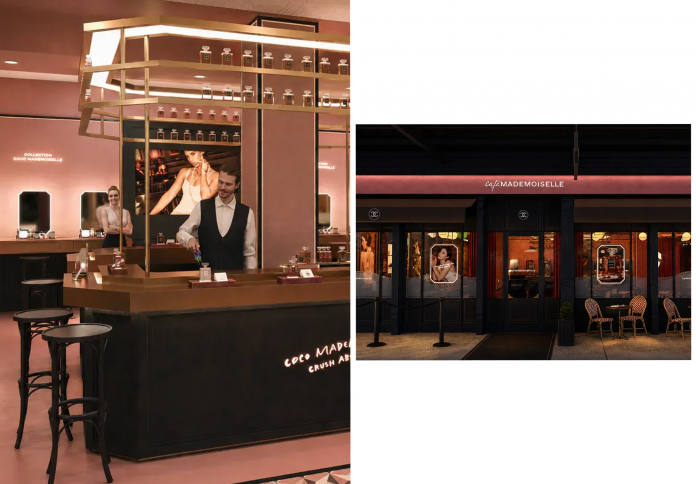
For two weekends in September 2026, Chanel Beauty brought a fragrance experience into New York's Meatpacking District. The Coco Mademoiselle Crush Absolu pop-up transformed a perfume campaign into a public-facing destination, allowing a luxury house normally encountered through bottles, counters and advertisements to command a physical space. Its setting matters: the Meatpacking District is shaped by retail, nightlife, design and pedestrian movement, making it a plausible stage for an event intended to be discovered as well as attended. The project illustrates a change in how prestige fragrance is introduced. Instead of asking an audience to imagine a scent from a photograph, a pop-up can supply architecture, interaction and a shared social moment. The remaining challenge is to make the encounter meaningful beyond the spectacle.
A Fragrance With an Address
Chanel's Coco Mademoiselle activation took place in the Meatpacking District rather than remaining within a conventional perfume counter. A dedicated facade made the campaign visible from the street, turning a temporary retail space into an element of the neighborhood's visual landscape. The address gave the experience a sense of occasion; visitors could enter a branded world instead of encountering the fragrance only through a product display.
That shift from shelf to setting is important for luxury brands. Perfume is difficult to communicate digitally because its essential property cannot be transmitted through a screen. A physical environment cannot reproduce a customer's private experience of wearing scent, but it can provide context, dramatize mood and make an otherwise intangible identity easier to remember.
The Pop-Up as Cultural Format
Temporary installations have become a recognizable language of contemporary marketing because they combine scarcity with participation. A permanent store depends on repeat visits; a pop-up encourages people to arrange their time around a limited opening. For Chanel, two weekends offered a defined window in which the campaign could exist as an event rather than an ongoing fixture. The format also gives visitors something to share with friends or through images afterward.
These social benefits do not automatically reflect deeper engagement with perfume. A striking exterior may earn attention from someone who never tests the fragrance. That is not necessarily a failure, but it reveals two separate ambitions: to generate interest in the brand and to support meaningful product discovery. Good experiential design tries to connect the two.
Why New York Matters
The Meatpacking District's mixture of shopping, architecture and nightlife made it a fitting backdrop for a fragrance associated with urban energy. A city location can help anchor a luxury campaign in ordinary movement, allowing it to compete for attention with restaurants, galleries and other storefronts. People passing by encounter the installation as part of their day, not necessarily as the result of a planned beauty appointment.
The city itself becomes part of the campaign's narrative, though not always in a way the brand can control. Weather, crowds and the pace of the surrounding streets shape how a temporary experience is received. That unpredictability is one advantage of public activation: a carefully designed brand environment still has to coexist with real life.
When Performance Meets Product
The name Coco Mademoiselle carries an established place within Chanel's fragrance universe. A pop-up built around it can reinforce associations of confidence, style and a distinct point of view, but the product remains a perfume to be tested individually. Visitors may appreciate a photogenic space without finding the scent right for them. Other people may ignore the visual theatrics and simply enjoy the opportunity to explore fragrance in person.
The strongest installations accommodate both modes of attention. A brand experience should offer more than decoration if it expects to contribute to an informed purchase. Information about a product, access to sampling and room to form an independent opinion are as valuable as the setting that draws visitors through the door.
A promotional installation also has to navigate the peculiar economics of attention in New York. Residents and visitors encounter thousands of commercial messages, making a temporary facade both an opportunity and a limitation. It may draw someone into a space precisely because it interrupts a familiar route, but the same intensity of surrounding activity means that impressions can disappear quickly. An event that rewards curiosity with a thoughtful product encounter has a better chance of remaining memorable than one designed solely for a photograph.
The brief calendar of the Chanel activation made the experience inherently temporary. That can sharpen anticipation, but it also means people outside the city or unavailable on those weekends could experience the campaign only indirectly. Luxury brands increasingly operate between exclusivity and accessibility, and an invitation-based or location-specific encounter makes that contradiction visible.
What Remains After the Doors Close
Temporary experiences can create lasting images, but their physical structures eventually disappear. For a brand with Chanel's recognition, the enduring question is whether visitors remember more than the facade. Did the event deepen their connection with Coco Mademoiselle or merely furnish a weekend activity? Those outcomes are difficult to establish without audience research, and they should not be assumed from the existence of an installation.
The pop-up nevertheless makes a revealing statement about luxury fragrance in 2026. Even heritage houses are willing to bring their products into temporary, participatory settings. The bottle still matters, but the journey toward it increasingly includes streets, architecture and shared experiences.
For fragrance houses, creating a memorable visit is only the beginning. Long after a pop-up is dismantled, the essential commercial question remains whether someone wants to wear the scent again. That depends on personal sensory preferences, not merely the scale of the temporary installation.