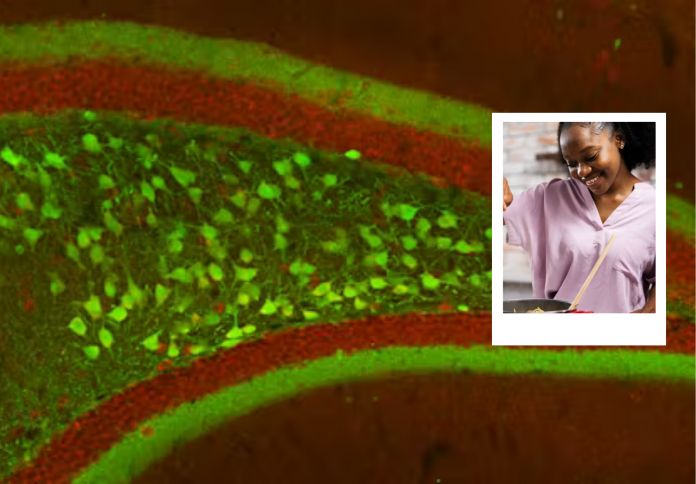
For decades, scientists have decoded how the brain navigates the physical world, but a new discovery reveals its hidden ability to chart the world of ideas and actions. Researchers at the University of Oxford have identified specific brain cells that enable animals — and possibly humans — to generalise from past experience, adapt to new situations, and predict what will happen next. These “goal progress” cells don’t just map where we are in space; they map where we are in a sequence of behaviour, allowing for flexibility, creativity, and intelligent decision-making.
From spatial maps to behavioural blueprints
The idea that the brain builds “maps” of our surroundings dates back to the mid-20th century, when psychologist Edward Tolman proposed the concept of cognitive maps. Decades later, researchers uncovered the intricate system of place cells and grid cells in the hippocampus and entorhinal cortex, which create a spatial framework of the environment. These specialised neurons encode distances, goals, and locations, giving us an internal compass that guides physical navigation.
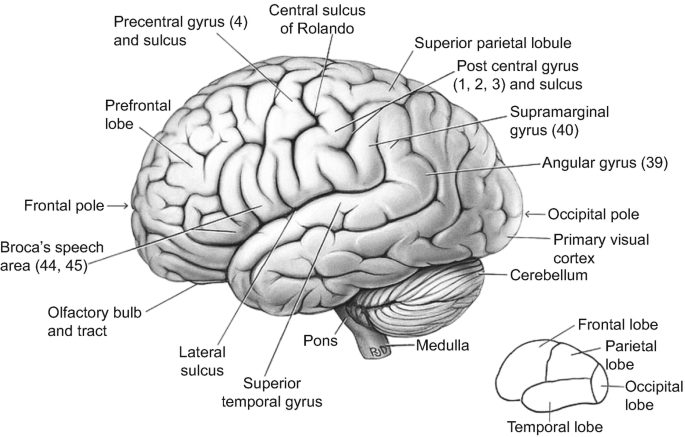
But scientists have long suspected that the brain’s mapping abilities extend beyond physical space. If we can map streets and rooms, could we also map abstract ideas and sequences of behaviour? This question has driven researchers to explore whether similar principles govern how we remember steps in a recipe, navigate social interactions, or tackle a new challenge.
Discovering the “goal progress” cells
In a recent study published in Nature, Oxford neuroscientists trained mice to perform a structured task: moving through a series of four locations, each offering a water reward, in a repeating sequence. Even when the positions of the rewards changed, the mice instantly adapted, inferring the next step in the sequence without direct prior experience. This demonstrated that they were not relying on simple memory, but rather on a general understanding of task structure.
Electrode recordings from the mice’s cortex revealed the presence of specialised neurons that fired according to the animal’s progress toward a goal, independent of its location. Some cells tracked immediate subgoals, like intermediate steps in a cooking process, while others monitored overall progress, akin to nearing the completion of a meal. Together, these neurons created a “behavioural space” map — a flexible internal framework that could adapt when the rules of the task changed.
Why generalisation matters
Generalisation is one of the hallmarks of intelligence. Without it, every task would have to be learned from scratch, an exhausting and inefficient process. Life, however, is full of patterns and regularities — from the steps needed to prepare different dishes to the structure of conversations or the flow of a project. By abstracting the common structure, the brain can quickly apply past knowledge to new situations.
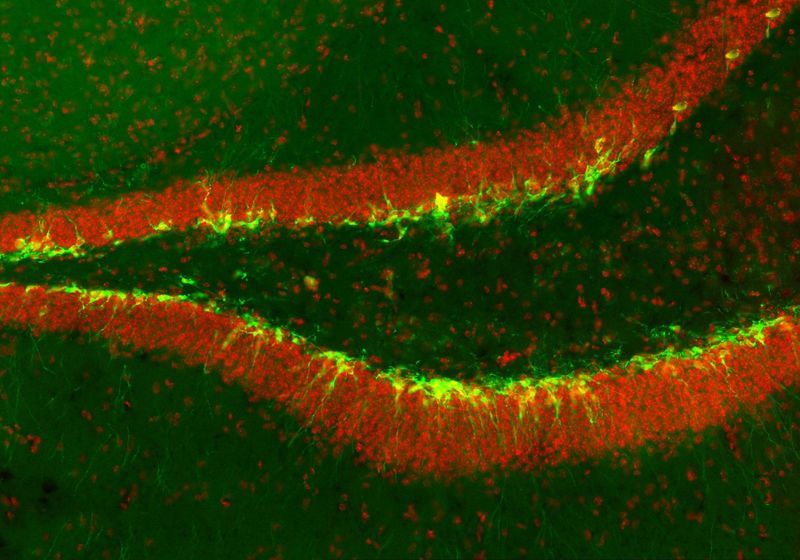
The Oxford study suggests that “goal progress” cells are the neural building blocks of this ability. They organise abstract relationships between actions, events, and outcomes, allowing the mind to predict the next step in a sequence without direct rehearsal. While the findings are based on mice, the parallels to human cognition are compelling — and hint that similar systems may underpin our own adaptive intelligence.
Linking brains, AI, and the future of learning
Beyond understanding how animals and humans think, this discovery also feeds into the development of artificial intelligence. Traditional AI models excel at repetitive, predictable tasks but often struggle with flexible reasoning. Insights from the brain’s goal progress mapping could inspire algorithms capable of abstract thought and rapid adaptation.
In essence, these cortical networks serve as bridges — between past and present experiences, between biological and artificial intelligence, and even between species. They show that intelligence is not just about recalling facts or following learned paths, but about understanding the structure of a problem well enough to navigate the unknown. Whether in a mouse finding its way to water, a human improvising dinner, or a machine solving a novel challenge, the same principle applies: intelligence thrives on the ability to map the journey, not just the destination.