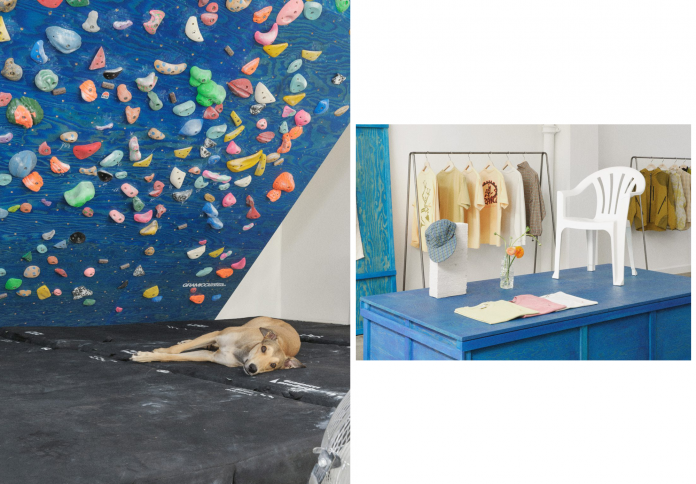
Gramicci's second London store near London Fields is less interesting as a standalone headline than as a window onto how a climbing brand can translate product humor, modular retail, and subcultural history into a shop that is more flexible than a conventional flagship. Gramicci opened its second London store on Netil Lane near London Fields in East London. Steep Learning Group designed the interior. The oversized shorts are the obvious joke, but the deeper design move is to make the entire store capable of changing position and use, echoing the mobility built into the clothes themselves. Rather than treating the moment as a checklist of products, names, or announcements, the more useful approach is to ask what changes for the people who actually use, watch, enter, or live with it. Adaptive reuse makes that task more demanding because the designer is working
A Space With More Than One Life
Gramicci opened its second London store on Netil Lane near London Fields in East London. Steep Learning Group designed the interior. The shorts are absurdly large, but the joke works because visitors already understand the ordinary object being exaggerated. The important point is not simply that these details exist, but that together they define the conditions of the story: who is making the decision, what has changed, and why the moment now feels different from an ordinary product release, workplace adjustment, episode recap, or interior refresh.
Adaptive reuse makes that task more demanding because the designer is working with two timelines at once. Existing structure carries physical and cultural information, while new uses require comfort, accessibility, services, and a clear identity in the present. In this case, that context sharpens how retail storytelling can be playful without losing functional clarity. It also keeps the article from mistaking visibility for significance; the most photographed or repeated detail may open the story, but it is the relationship among the details that gives the subject its editorial weight.
Material as a Working Tool
A 2.5-meter pair of blue-and-white striped shorts forms the most visible installation, referencing Gramicci's climbing shorts and signature webbing-belt language. The brand was founded by climber Mike Graham in 1983 and built its identity around clothing designed for movement. Those facts create a more useful frame than hype alone. They show how the subject works at the level of format, process, casting, policy, material, or service rather than leaving it as an abstract trend. The movable timber units make the space useful after the novelty of the installation wears off, and they let staff change circulation as stock or programming shifts.
Material choices matter most when they are tied to behavior. Timber can soften a retail room, metal can make a new intervention legible against an old shell, and movable furniture can turn a fixed shop into an event space; the effect comes from use, not from material prestige alone. That makes comparison important. The relevant question is not whether every consumer, institution, viewer, or visitor should respond in the same way, but which conditions make the idea work and which conditions expose its limits.
Designing the Visitor's Route
Designer Dom Johnson created bespoke Douglas-fir furniture on wheels inspired by utilitarian European crates. Movable fixtures allow the retail floor to be reconfigured for launches, gatherings, and events. This is where the story moves from announcement to experience. The subject is interpreted through repeated choices: what gets emphasized, what becomes optional, what is standardized, and what remains dependent on individual judgment. Referencing climbing through a wall and flexible fixtures is more convincing than covering the store in literal mountain imagery.
The central tension is between atmosphere and legibility. A space can be theatrical without becoming confusing, and it can preserve traces of history without freezing them into décor. The best interventions make the relationship between old and new easy to feel even when it is not explicitly explained. For Gramicci's second London store near London Fields, the tension is particularly visible in the desire for an Instagrammable icon and the need for a shop to remain adaptable when campaigns change. That tension is productive when it leads to better choices and clearer expectations rather than simply producing another layer of marketing language or speculation.
Old Structure, New Behavior
A climbing-wall element appears at mezzanine level, bringing the brand's origin story into the architecture without turning the entire shop into a sports facility. The split-level space uses the building's compact footprint to create distinct zones rather than one continuous showroom. Those details also define the boundary of what can responsibly be claimed. The installation should be read as brand theater rather than as a claim that theatrical retail alone creates community or long-term commercial success. An editorial reading can still be enthusiastic, skeptical, or aesthetically engaged without turning uncertainty into certainty.
Commercial identity adds another layer. A memorable interior has to photograph well, but it also has to function for staff, repeat visitors, maintenance, storage, circulation, and changing programs. The image is only one moment in a much longer operational life. The point is not to remove pleasure from the story. It is to make the pleasure more durable by separating what has been demonstrated from what is merely possible, and by recognizing that users and audiences bring different needs, tastes, and tolerances to the same idea.

What the Project Leaves Behind
The project combines humor and utility: a giant garment creates immediate identity while modular furniture handles the less glamorous need for operational flexibility. The store can remain relevant if its modular setup supports events and local use instead of freezing the opening-day concept in place. Seen this way, the subject is not a finished verdict but a snapshot of a system in motion. Products will be reformulated, software will be updated, series will continue, stores will age, and cultural labels will change; the useful editorial task is to identify which underlying choices are likely to remain meaningful when that happens.
The project is most convincing when the concept can be read in use rather than only in photographs. A room that helps people understand where to pause, gather, browse, listen, or retreat has translated an idea into architecture. Gramicci's best retail idea is not the giant shorts; it is giving the room enough freedom to move like the clothes were designed to. The strongest takeaway is therefore not a command to buy, believe, visit, or predict. It is a clearer understanding of why this moment matters now and what evidence will matter next.