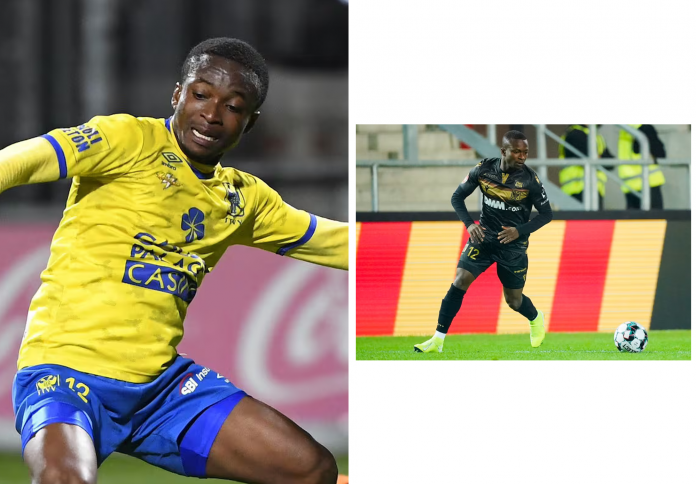
A routine second-tier soccer match in China has resulted in a devastating injury that has cast a shadow over player safety standards in the global game. Togolese international midfielder Samuel Asamoah, playing for Guangxi Pingguo FC, suffered a broken neck after a harrowing collision with a pitch-side LED advertising board. The 31-year-old’s career and health now hang in the balance, with his club confirming he faces the risk of “high-level paraplegia” due to the severity of the cervical vertebrae fractures and nerve damage sustained. The incident, captured on video, has reignited a critical debate over the placement and padding of advertising displays so close to the field of play, highlighting the brutal consequences when standard on-field challenges intersect with unforgiving pitch-side infrastructure.
The Devastating Incident And Initial Diagnosis
The catastrophic injury occurred during a Chinese League One match on Sunday, October 5, when Guangxi Pingguo faced off against Chongqing Tonglianglong. In the course of a competitive challenge for the ball near the touchline, Samuel Asamoah was shoved by an opposing player, Chongqing Tonglianglong midfielder Zhang Zhixiong.
The momentum from the push caused Asamoah to lose his balance and collide head-first into an unforgiving LED advertising panel directly behind the boundary line. The midfielder was immediately attended to, remaining motionless on the pitch for several minutes before being rushed to the hospital. Initial reports from his club confirmed the worst: Asamoah suffered a dislocation and multiple fractures in his cervical vertebrae, along with significant nerve compression. The prognosis, according to the club’s statement on Monday, October 7, was terrifying: a risk of “high-level paraplegia,” a condition that severely compromises mobility.
Club Response And Post-Surgery Update
Following the critical initial assessment, Asamoah underwent emergency surgery. His club, Guangxi Pingguo FC, provided regular updates, conveying both the gravity of the situation and a glimmer of hope for his recovery. The club stated unequivocally that the midfielder would miss the remainder of the season and that his future as a professional footballer was in serious doubt.
However, a follow-up statement released on Wednesday, October 9, provided a cautious but stable update, confirming that the surgery had been successful and that Asamoah was recovering in a stable condition. The club shared a photograph of the player in the hospital, offering a hopeful sign to the public. Guangxi Pingguo FC extended its gratitude for the outpouring of concern from fans and the wider football community, promising to continue monitoring and reporting on his long recovery progress.
The On-Field Discipline And Referee’s Ruling
The challenge that initiated the accident was a physical tussle that led to the shove, for which the opposition player, Zhang Zhixiong, was issued a yellow card by the match referee. This disciplinary action—or lack thereof—immediately sparked controversy among fans and commentators, many of whom felt the punishment was insufficient given the catastrophic outcome.

The referee’s post-match report, however, defended the decision, categorizing Zhang’s action as a foul of a “reckless nature” but concluding that it did not reach the threshold of serious foul play or violent conduct that would warrant a red card. Regardless of the referee’s official determination, the incident has highlighted the fine line between competitive contact and dangerous play, especially when that contact is leveraged near hazardous pitch-side installations.
Safety Standards Under The Spotlight
The proximity of the rigid LED advertising boards to the field of play is the central focus of the safety debate spurred by this tragedy. Chinese football authorities, citing a state-backed outlet, confirmed that the advertising display was positioned three meters (approximately 10 feet) from the field, asserting that this distance was in line with international standards for pitch-side perimeter signage.
However, the fact that a player suffered a life-altering injury by colliding with a static object within the bounds of a legal challenge raises serious questions about the adequacy of these “international standards.” Critics are now calling for a fundamental review of safety protocols, advocating for softer, shock-absorbing materials or a complete re-evaluation of the required run-off area to better protect players from a repeat of this devastating, career-ending—and potentially life-threatening—hazard.
Asamoah’s Career And The Footballing Community’s Concern
At 31, Samuel Asamoah is a seasoned professional with a career largely spent in the Belgian league before moving to China. He is also a respected international player, having represented the Togo national team on multiple occasions. His move to Guangxi Pingguo FC marked a new chapter in his career, which is now on indefinite hold.
The severity of the injury, and the high-level paraplegia risk, has sent shockwaves through the global footballing community. Beyond the immediate well-wishes and messages of support, the incident has served as a grim reminder of the physical risks inherent in the sport and the constant need for organizations to prioritize player safety over commercial interests. The opposition club, Chongqing Tonglianglong, released a public statement expressing deep regret and apologizing to Asamoah on behalf of the club and their player, Zhang Zhixiong, confirming that representatives had visited the Togolese midfielder in the hospital.