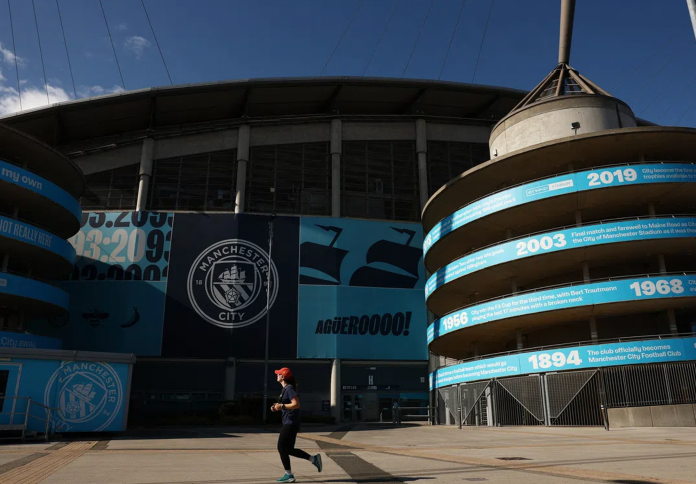
Manchester City's financial-rule dispute has moved from a question of league discipline into a much larger argument about how English football governs money, sponsorship, and accountability. An independent commission's findings concerning the club's financial reporting prompted the prospect of an appeal in October 2026, while the Football Association and British tax authorities faced questions about the consequences beyond the Premier League. City has denied wrongdoing and intends to challenge the conclusions. The case is significant not simply because a prominent club is involved, but because its ramifications could test the boundaries between private sporting regulation and wider public responsibilities. The next phase is about the strength of the evidence, the procedures governing appeals, and the credibility of a competition whose financial rules depend on consistent enforcement.
A Deadline That Opens Another Contest
The first contest was conducted through financial evidence and legal argument rather than football. Manchester City faced findings by an independent commission concerning Premier League financial rules, including allegations around commercial agreements and the presentation of revenue and costs. The club maintained that the conclusions were wrong. As the October 2026 appeal deadline approached, an expected challenge meant the commission's conclusions were not necessarily the final word. It would be misleading to treat a contested decision as the end of a legal process.
A crucial distinction runs through the dispute: a commission may find a breach, but subsequent appeal procedures can revisit that determination. Supporters, rival clubs and observers may already have firm opinions, yet formal findings and legal remedies move according to their own rules. The public discussion is likely to outpace that timetable. The question is whether the system can deliver a decision that remains persuasive after prolonged scrutiny.
What the Commission Examined
The allegations reached into commercial arrangements, with reporting on the commission's conclusions focusing on purportedly inflated revenue and understated costs over a period of years. Sponsorship agreements are particularly sensitive territory in football finance because they can involve both genuine commercial value and difficult questions about connected parties. A shirt sponsorship or commercial partnership is simultaneously an asset, a revenue source and an important expression of a club's identity.
City rejected the suggestion that its agreements were a sham and has pointed to evidence that it says supports its position. The expected appeal was therefore not a procedural footnote; it was a challenge to the underlying account of how the transactions should be understood. Distinguishing what the commission found from what City disputes is essential. The consequences depend on how that disagreement is resolved, not on which headline becomes most widely shared.
An Appeal System Under Pressure
The Premier League introduced accelerated appeal arrangements contemplating a hearing within twelve weeks of an appeal and a decision within thirty days of its conclusion. Those deadlines are designed to reduce uncertainty in a competition organized around seasons, qualification places and transfers. Yet City was expected to question whether rules adopted later could properly apply to charges originally brought in February 2023. Procedural fairness becomes part of the substance when the dispute is this consequential.
The calendar matters because sporting decisions cannot easily be separated from ongoing competitions. Clubs make investment and recruitment decisions without knowing what an eventual sanction might mean. A fast process has value, but only if parties believe they were afforded a fair opportunity to argue their case. Rushing an unsound outcome would merely exchange one form of uncertainty for another.
Beyond the League Office
The Football Association said it was monitoring the situation and considering implications for the integrity of the game. Meanwhile, a parliamentary committee chair sought answers from HM Revenue and Customs about the commission's findings. Those responses reveal why the case cannot be contained within a single competition. Financial allegations can raise distinct questions for sporting regulators, public authorities and businesses dealing with a club. Each institution has a different remit, standard and set of possible actions.
Lawyers also discussed the prospect of claims from other football stakeholders. Such predictions should not be confused with established liability: bringing a claim and proving a compensable loss are separate steps. Nonetheless, the prospect illustrates how an intensely technical accounting dispute can become a debate about the distribution of advantage across an entire league.
A further complication is that football finance rests on multiple accounts of value. A sponsor may see global visibility; a regulator may examine contractual substance; a club may describe the funds as ordinary commercial income. The fact that these perspectives can differ is precisely why the dispute calls for transparent evidence rather than confident speculation. None of those approaches, in isolation, answers whether particular deals complied with the rules in force. It is equally important not to confuse an investigation into historic transactions with a judgement about players currently on the pitch. Team performance may shape public emotion around the case, but it does not prove or disprove financial allegations.
Manchester City's position also illustrates a broader institutional dilemma. The same competition that benefits from global investors must enforce standards meant to preserve confidence among differently resourced members. That tension is not resolved by assuming that wealth itself is improper, nor by dismissing legitimate questions about how financial advantages are recorded. The appeal offers a formal setting in which precise distinctions might finally replace the broad language of scandal and loyalty.
The Cost of Uncertainty
For Manchester City, the obvious stakes include reputation and possible sporting sanctions, but uncertainty itself carries a cost. For opponents, an unresolved case feeds questions about whether everyone competed under equivalent conditions. For the Premier League, both rigorous investigation and dependable due process are fundamental to legitimacy. A ruling seen as too lenient can damage trust; one overturned for procedural defects can do the same.
The appeal phase should therefore be judged by more than its final outcome. Clear explanations of the applicable rules, the treatment of evidence and the scope of any sanction will determine whether the result is intelligible to people outside legal and financial circles. English football's commercial success depends partly on spectators believing that the competition is governed by rules capable of surviving their own toughest test.