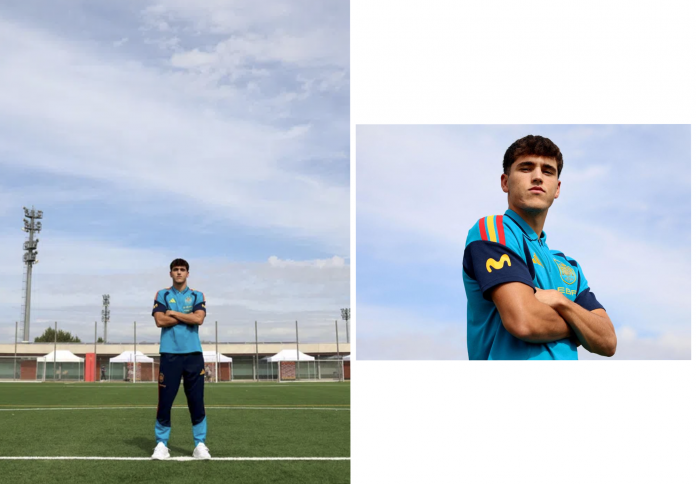
Pau Cubarsí reached an extraordinary point in his football career while still a teenager: by 19, the Barcelona and Spain defender had won a World Cup and collected recognition as the tournament’s best young player. Yet his most useful message to players following him may concern something less visible than a medal or a defensive performance. In October 2026, Cubarsí spoke openly about receiving psychological support during his rise through Barcelona and about seeking therapy at times. He urged young footballers to take their mental health seriously without fearing judgment. His comments challenge the familiar assumption that success protects athletes from pressure. They also suggest that developing an elite player means more than improving technical skill; clubs have a responsibility to build environments in which asking for assistance is an ordinary part of preparation.
A champion speaks about the support behind him
When Cubarsí discussed mental health in an October interview, he spoke from a position of exceptional sporting visibility. At 19 he had already achieved a World Cup victory with Spain and been recognized as that tournament's best young player. In a culture that celebrates confidence and composure, such credentials might make private uncertainty easy to overlook.
His account offered a more grounded picture. A psychologist at Barcelona helped him navigate his early steps toward the senior team, and he has also sought therapy at times. These are details the defender disclosed about his own experience, not a diagnosis or an invitation to speculate about his health. Their importance lies in normalizing professional assistance within a high-performance environment.
Young athletes often absorb the idea that progress requires appearing untroubled. Cubarsí's example complicates that assumption. Someone can perform well, accumulate honors and still recognize situations in which guidance is valuable. Help is not necessarily an emergency intervention; it can be part of building the habits that sustain a career.
The pressure hidden inside an early breakthrough
Promotion to a major club's senior side changes a teenager's environment rapidly. Training demands intensify, public attention grows and mistakes become widely visible. Even without assigning any unreported private feelings to Cubarsí, those conditions explain why psychological preparation deserves the same seriousness as physical conditioning.
The young defender has had to develop while representing Barcelona, one of the world's most closely watched football institutions. At that level, attention rarely pauses between matches. Selection choices, performances and recovery can all become subjects of public conversation. A player entering this environment benefits from learning how to distinguish constructive feedback from an endless stream of external reactions.
Club psychologists can contribute in several ways, including helping athletes establish routines, communicate concerns and develop coping strategies appropriate to their circumstances. Cubarsí's public description does not reveal the details of any treatment, and it need not. The broader point is that mental skills are part of preparation, not proof that an athlete lacks resilience.
Changing the meaning of toughness
Football frequently rewards players who appear unshakeable. Defenders, in particular, are praised for composure under pressure and for recovering quickly after errors. That image can make discussions of anxiety, uncertainty or exhaustion feel at odds with professional identity. Cubarsí is asking young players to reject the supposed contradiction.
Physical injuries offer a useful comparison, though the two are not identical. A player experiencing knee pain does not strengthen a squad by hiding it indefinitely; assessment helps establish what care is appropriate. Psychological concerns likewise deserve timely attention from qualified professionals rather than silence motivated by embarrassment.
This does not mean every difficult emotion is a medical condition or that therapy solves all performance challenges. It means players should have access to support and the freedom to use it. Cubarsí's comments are strongest when read as a message about choice and dignity: an athlete should not have to protect an image of invulnerability at the expense of well-being.
What clubs can learn from his experience
The story also raises an institutional question. Sports organizations often talk about mental health awareness, but meaningful provision depends on the culture surrounding professional support. Athletes need to know services exist, understand how confidentiality works and trust that requesting assistance will not automatically be interpreted as weakness.
Younger players face particular challenges because their identities are still forming while elite sport asks them to behave like seasoned professionals. Clear routes to advice, appropriately trained staff and supportive coaching practices can help reduce unnecessary barriers. Cubarsí's experience shows that assistance can accompany successful development rather than appear only after failure.
Public statements by prominent players cannot replace those systems. They may, however, change what a junior athlete expects when encountering difficulty. Hearing a World Cup-winning teenager describe psychological support as normal can make it easier for another young player to start a conversation with a trusted adult or professional.
The example beyond the trophy cabinet
Cubarsí's sporting achievements will continue to draw attention to his performances for Barcelona and Spain. But the immediate value of his October comments reaches players who may never compete at his level. His central proposition is modest: look after mental health and do not treat seeking help as shameful.
It is important to avoid turning his openness into a heroic narrative that makes one player's experience representative of everyone. Athletes encounter different pressures and require different kinds of support. A thoughtful response respects those differences while defending access to care for each individual.
For young footballers, his example joins two realities too often presented as opposites. Excellence demands work, focus and resilience; it can also involve collaboration with people whose expertise lies outside tactics and fitness. Cubarsí's message is that needing that collaboration does not diminish the achievement. It may help make sustained achievement possible.