When Singapore sprinter Shanti Pereira finished a 100-meter final at the 2026 Asian Games, the work surrounding her medal ceremony had barely begun. A volunteer had to help her navigate the next stages of the evening and return safely to her hotel. Such jobs rarely enter the public image of an international sporting event, yet the competitions in Aichi and Nagoya depended on thousands of people performing them with care. Among them were longtime Japan resident Vicente Tai, language and cultural intermediary Yuichiro Kubo, and badminton enthusiast Chin Huey, whose assignment brought her unusually close to the game she loved. Their experiences reveal a second map of the Asian Games: one made of transport connections, backstage corridors, translation and the volunteer labor that allows athletes to focus on competing.
A Silver Medal Is Not the End of the Shift
The race was over, but Vicente Tai still had a specific responsibility. After Shanti Pereira claimed silver in the women's 100 meters at the Aichi-Nagoya Asian Games, the Singaporean volunteer needed to make sure she returned to her accommodation after the official ceremonies. The assignment made him anxious. It was a small, human moment in an event usually measured by times, medals and rankings: an athlete's achievement immediately creating a fresh logistical task for somebody out of public view.
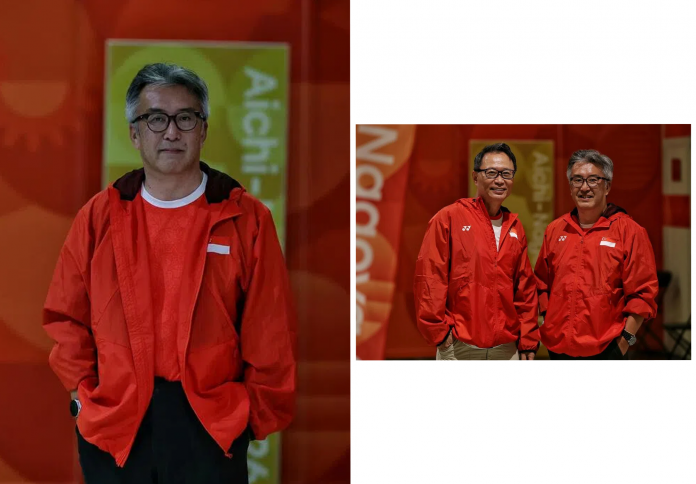
Tai, 61, was volunteering with the Singapore National Olympic Council. His responsibilities included accompanying members of the delegation between venues and helping them navigate their surroundings. Having spent roughly three decades living in Japan, he could contribute local knowledge that a short-term visiting team would not necessarily possess. That experience mattered whenever the schedule, language or local procedures turned an ordinary journey into a potential source of confusion.
The service sounds mundane until one imagines the consequences of its absence. International competitions involve many overlapping schedules, unfamiliar transport networks, changing competition times and athletes who must manage their energy carefully. A delayed departure or a misunderstanding at the wrong moment can erode a participant's concentration. Tai's work was valuable precisely because it aimed to make those complications unremarkable.
Translation Is Also a Form of Hospitality
Volunteerism at the Games was not confined to moving people between buildings. Yuichiro Kubo and other helpers provided a human connection between visiting delegations and Japan's host communities. At a regional multisport event, shared enthusiasm does not erase linguistic and cultural differences. Even when participants understand the formal rules of their sports, daily matters can require explanations that an instruction sheet cannot easily provide.
Interpreting a request involves more than exchanging words between languages. A volunteer may need to recognize when a visitor is uncertain about etiquette, a timetable or a local custom, then explain the situation without adding friction. For athletes and officials moving among accommodation, training sites and competition halls, this quietly improves the experience of an unfamiliar city.
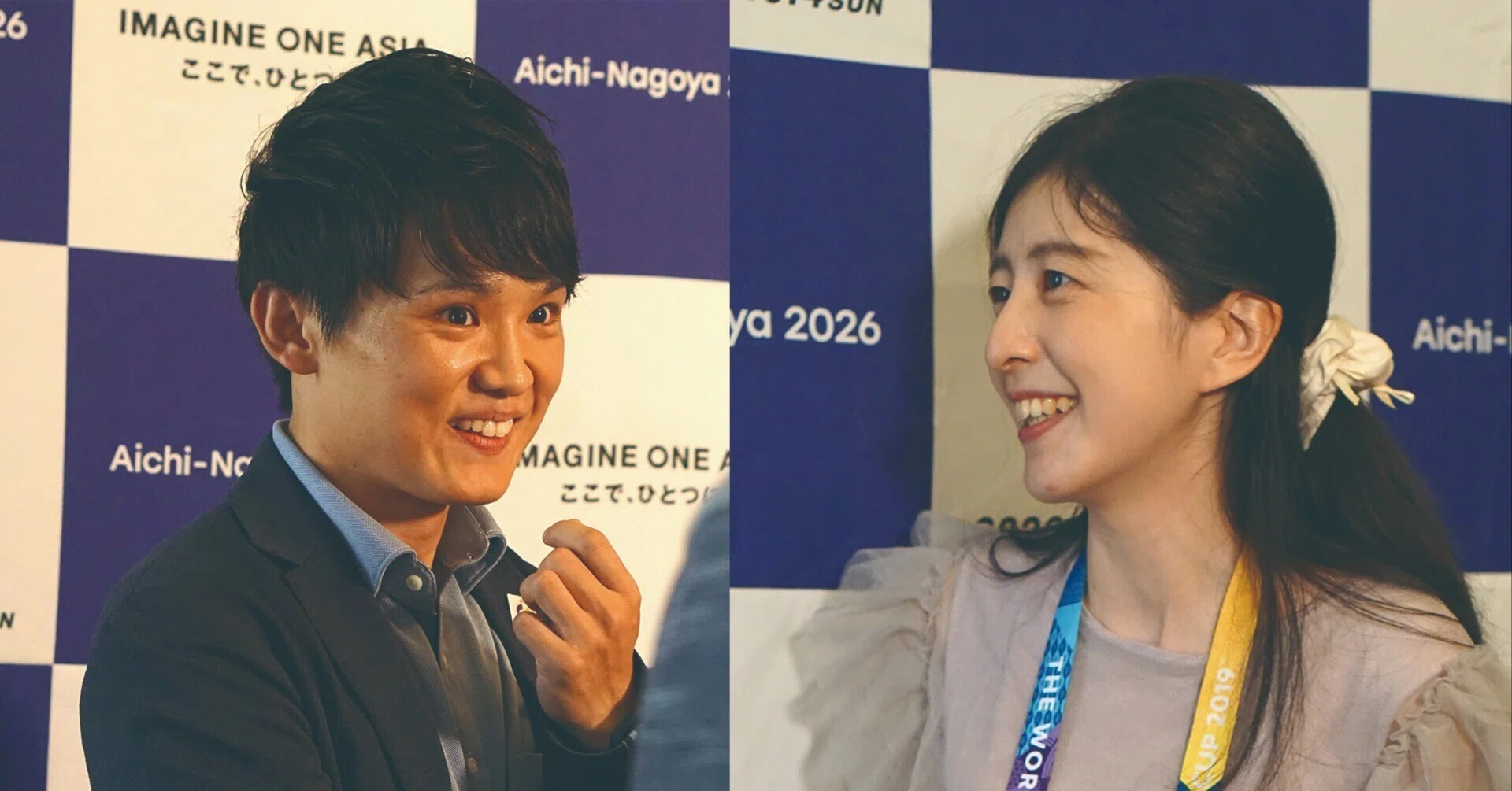
It also widens the notion of what counts as a contribution to sporting success. Coaches prepare strategy and medical staff protect health; volunteers help preserve the conditions that make both kinds of specialized work possible. Their expertise may come from living in a country, understanding its routines or knowing how to respond calmly to a problem before it grows. These skills rarely generate statistics, yet a major Games cannot function smoothly without them.
Badminton From the Other Side of the Barrier
Chin Huey approached the Asian Games with a different personal motivation. Originally from Melaka, Malaysia, she moved to Japan in 2018 for her studies and later worked as a caregiver in Tokyo. A devoted badminton follower, she applied to volunteer after discovering the recruitment opportunity online. The process involved an interview and training, turning a fan's curiosity into an operational role with real responsibilities.
She hoped to work around badminton and received an assignment involving media operations and event logistics. It let her see international players at much closer range than a conventional spectator seat would allow. Among the athletes she particularly wanted to watch were Malaysian women's doubles players Pearly Tan and Thinaah Muralitharan. Encounters with Japan's Akane Yamaguchi and Singapore's Loh Kean Yew made the experience personally memorable.
The appeal was access, but the exchange was not simply a privilege granted to a fan. Chin used time away from her regular employment to support an organized competition. Her presence helped the event function for athletes, journalists and spectators. In return, she gained a view of professional sport that tickets alone could not buy: the setup, coordination and repetition behind a polished public performance.
Forty Thousand People, Thousands of Different Jobs
The Aichi-Nagoya Games involved around 40,000 volunteers, most of them residents of Aichi Prefecture. Reported figures indicated that approximately 55 percent were first-time volunteers and 85 percent lived in the prefecture. More than 90 percent helped with direct Games support, including competition operations and transportation; others were assigned to assist spectators at railway stations or on their way to venues.
Those proportions show how much of the workforce was connected to everyday local life. An international event briefly turns a familiar city into a complex destination for visitors who do not share residents' geographic instincts. Train stations, routes between venues, accommodation and media facilities all become extensions of the sporting infrastructure. The organizing committee's volunteer program recognized that supporting spectators outside the arena mattered alongside managing people inside it.

Preparation started well before the opening ceremony. The host program set out recruitment, training and activity plans for an operation spanning the Asian Games and the subsequent Asian Para Games. Nagoya's public information described assignments around competition sites, transportation connections and other public-facing locations. The scale required standardized procedures, but the actual work still depended on individual judgment: the right directions, a useful translation, a timely escort or a calm response to confusion.
The Part of a Games That Remains With Its Hosts
High-profile competitions are remembered through extraordinary results. A national record, a surprise defeat or a successful defense of a title can become the shorthand for an entire tournament. For volunteers, the memories often belong to smaller intervals between those moments: a journey completed safely, a fan guided to the right entrance or an athlete helped after an exhausting evening.
The rewards are not identical for everyone. Tai contributed knowledge gained from years of living in Japan; Chin turned an enthusiasm for badminton into direct participation; thousands of local residents took on unfamiliar duties to welcome visitors. The shared feature was a willingness to occupy roles whose success was most visible when nothing went wrong.
Their work also complicates the idea that the host city is merely a backdrop to competition. Aichi and Nagoya supplied venues and transport networks, but residents and volunteers supplied much of the event's day-to-day human character. For international visitors, one helpful conversation can shape an impression of a place as strongly as a striking stadium or a packed arena.
Once medalists leave and temporary signs come down, those individual encounters cannot be reduced to an official tally. They remain part of what made the Games possible. The volunteers' contribution was not another race to win; it was the series of ordinary, indispensable actions that allowed every race to happen.