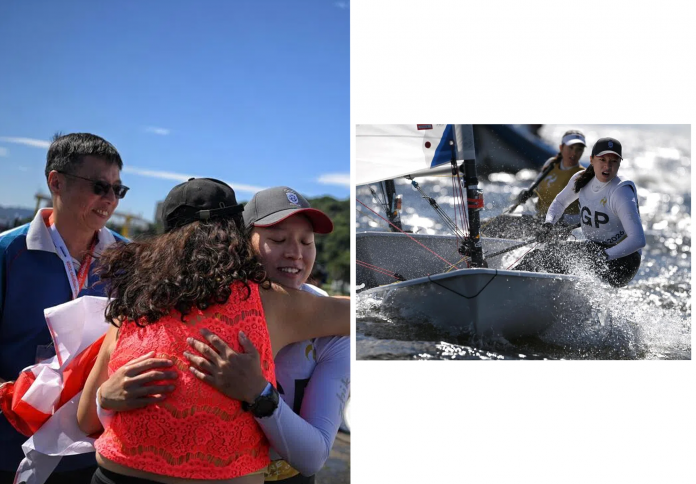
At the Kaiyoh Yacht Harbour in Gamagori, Singapore's Asian Games sailing breakthrough on October 2, 2026, came from two very different routes to the same silver-medal finish. Jania Ang arrived at her first Games after an accident had threatened to keep her away from the starting line altogether. Teenagers Sean Kum and Nigel Tan, meanwhile, had spent much of their young partnership learning how to manage a demanding skiff and the pressure of racing against more established crews. Ang's late surge in the women's ILCA 6 and the boys' recovery in the 29er made for a double celebration on the water. Their results offered a revealing portrait of a national program: one athlete rebuilding trust in her body, two others discovering how quickly composure can turn a difficult regatta into a medal campaign.
The Race That Almost Did Not Happen
Jania Ang's silver was dramatic even before the first race began. During a trip to Ireland for the ILCA 6 Women's World Championship, the Singaporean sailor crashed her bicycle after looking toward the water and failing to notice steps ahead. She sustained a mild concussion and injuries to the tendons and ligaments in her right wrist. The accident forced her to withdraw from that championship and prioritize recovery before the Asian Games in Japan. For an athlete accustomed to planning around wind shifts and racing decisions, the immediate uncertainty was much more basic: whether she would be fit to sail at all.
The 22-year-old's return to the boat came at the Asian Games venue itself. At Kaiyoh Yacht Harbour, that compressed preparation made her performance especially notable. She was not simply making her Games debut; she was testing her ability to compete after a disruption serious enough to interrupt her final lead-up. Her silver medal was therefore a competitive achievement with a conspicuous physical backstory, rather than a routine conversion of pre-event expectations into a podium place.
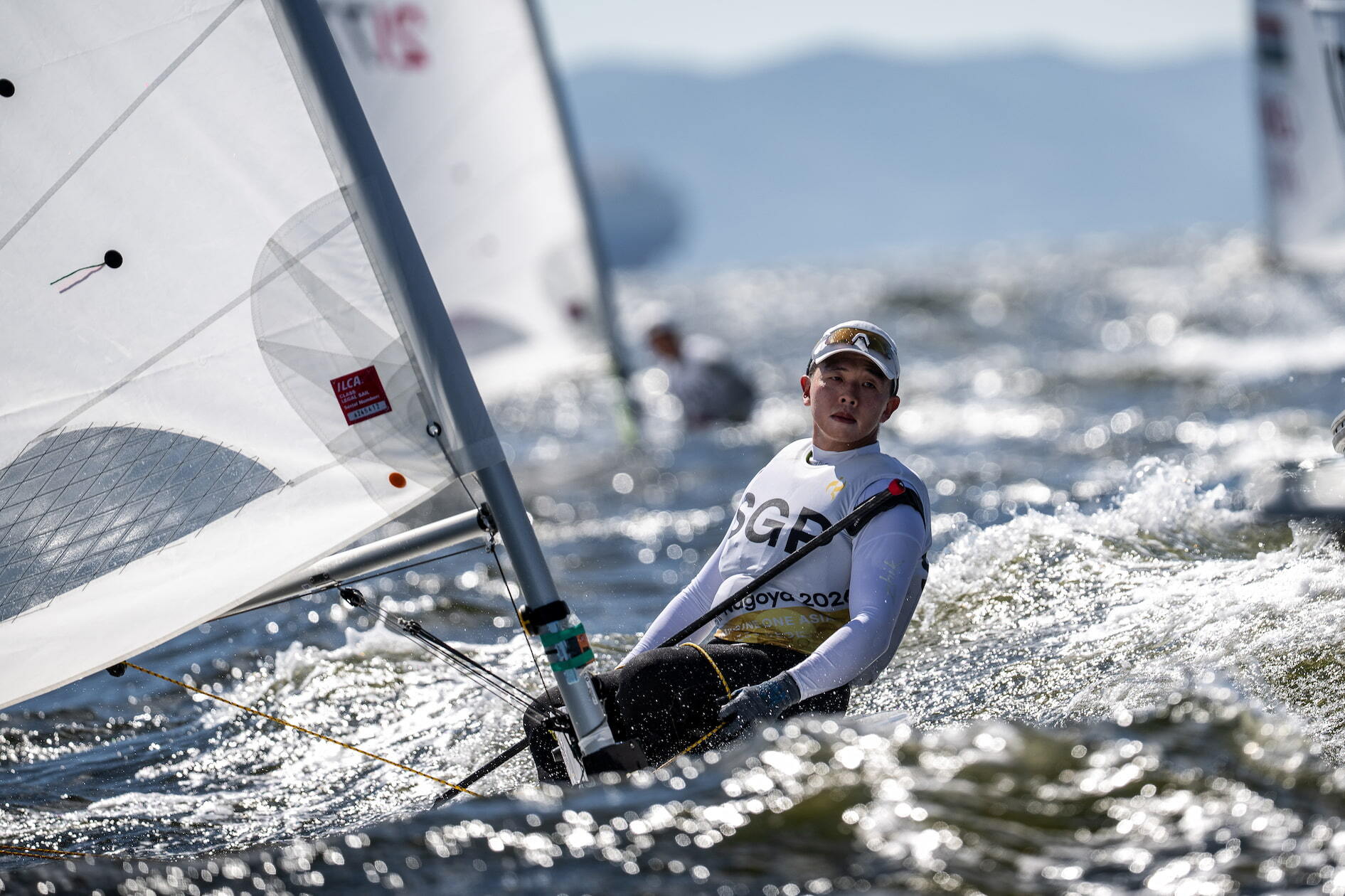
The circumstances also resist an easy triumph-over-adversity interpretation. Sailing rewards accumulated practice and sensitivity to conditions, and recovery alone does not produce race results. Ang still needed to read the course, manage pressure and produce decisive finishes. Her medical recovery gave her the opportunity to start. What she did once racing began determined the color of her medal.
Thirteen Points, and a Late Change of Position
Ang went into the final phase outside the top three, sitting fourth after nine qualification races. In the two final-series races, she recorded third and second places, enough to move into the runner-up position on 13 points. Thailand's Sophia Montgomery took gold with five points, while India's Nethra Kumanan finished third with 14. That one-point separation between second and third shows how narrow the decisive margin was. Ang needed consistency when it mattered most, not a spectacular isolated win.
Those late results also explain why her silver carried weight for the future. The ILCA 6 is an Olympic class, meaning the same fundamental style of solo dinghy racing features in the pathway toward Los Angeles 2028. Montgomery's victory earned Thailand an Olympic quota place, giving the race a second layer of consequence beyond the immediate medals. Ang's performance, against competitors also pursuing higher-level qualification ambitions, offered a useful competitive marker for Singapore.
Afterward, Ang emphasized decision-making and experience as areas she wanted to develop. Her progression through the regatta supports that focus. A sailor may have enough speed and technical ability to challenge the leading group but still lose ground through a sequence of small judgments. The final day demonstrated that she could recover positions under pressure. Extending that quality across an entire championship is the less visible work that follows a breakthrough result.
A Skiff Crew Finds Its Balance
A different kind of comeback unfolded in the boys' 29er. Sean Kum and Nigel Tan had begun training together only in late 2025, leaving them a relatively short period to develop the coordination required by a two-person skiff. Their first day at the Asian Games was difficult: the Singapore pair ended it last in the six-boat fleet. Rather than allowing that opening to define their event, they stabilized their racing and worked back toward the leaders.
The 29er demands constant cooperation. Its two sailors have separate physical tasks but share the consequences of every maneuver. Timing, communication and balance matter intensely, particularly when wind and fatigue make the boat less forgiving. For a new partnership, the discipline to limit costly mistakes can be as important as pure boat speed. Kum and Tan's final-day sequence of two second-place and two third-place finishes provided convincing evidence that the partnership was developing under competitive stress.
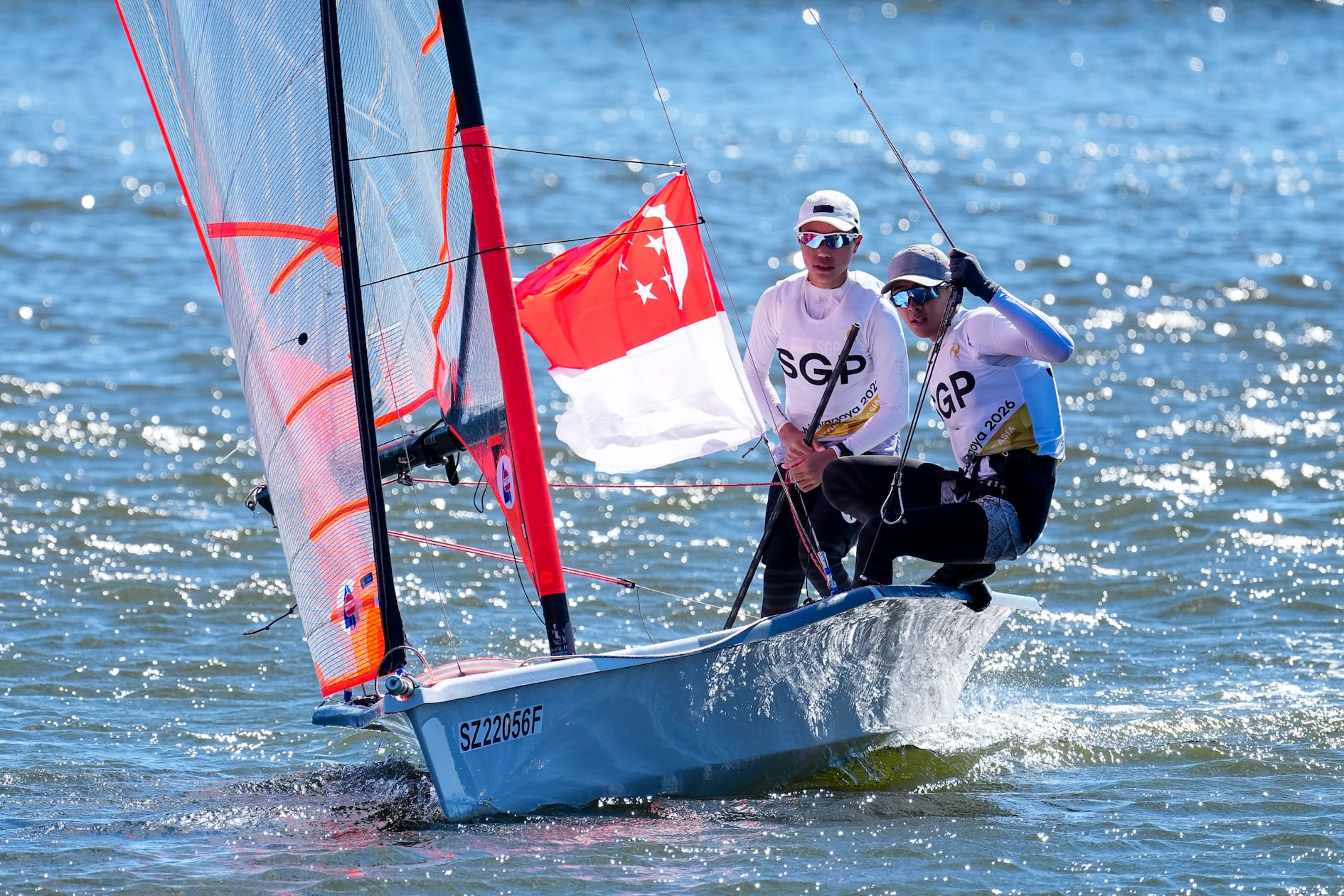
Across 12 races they accumulated 35 points, enough for silver behind Hong Kong's Ethan Kiu and Louis Polson, who finished on 11. Malaysia's Muhammad Adam Aierell and Iqbal Nazham Musmuliadi were third with 39. Singapore's teenagers finished four points clear of the bronze-medal crew. Their result also made history for the national team: Singapore had not previously won an Asian Games medal in the boys' 29er event.
Coaching Knowledge Travels Across Generations
The pair's coach, Priscilla Low, brought a particularly relevant perspective. She and her sister Cecilia had earned silver in the girls' 29er at the 2014 Incheon Asian Games. Twelve years later, Priscilla was helping another Singaporean skiff crew handle the pressure of an Asian Games regatta. Her experience offered an unusually direct connection between the national program's earlier success and this new generation.
Nigel, 16, described the crew's early stress and credited their coach with directing attention away from feared outcomes and back toward manageable actions. Sean, 15, also pointed to the demands of the final day. Those comments are meaningful because they describe a familiar high-performance problem without romanticizing it: young athletes can understand their potential and still struggle to execute when the stakes rise. A coach's intervention may consist not of a dramatic technical revelation but of helping the team concentrate on the next race.
The broader significance of their partnership lies in its youth as much as its medal. Two sailors who were still learning how to handle a new class became Asian Games silver medallists within a season of joining forces. That speed of development should not be mistaken for a guarantee of later success. It does, however, give the Singapore Sailing Federation a tangible reason to invest in continuity, structured training and transitions between junior and senior events.
Beyond the Two Silver Medals
Not every Singaporean sailor left Gamagori with the finish expected at the start. Ryan Lo, the defending Asian Games champion in the men's ILCA 7, placed fifth. South Korea's Ha Jee-min won that class, while Hong Kong's Nicholas Halliday and Malaysia's Khairulnizam Mohd Afendy completed the podium. Lo's disappointment underlined the unpredictability of a sport in which elite preparation does not cancel out the effects of weather, positioning and tactical execution.
By the end of the sailing program, Singapore had accumulated four medals: three silvers and a bronze. Ian Goh added silver in the boys' ILCA 4, and John Wong won bronze in boys' iQFOiL windsurfing, the country's first Asian Games windsurfing medal. All five medal-winning sailors were Asian Games debutants. The federation identified sailing as Singapore's largest medal contributor at the 2026 Games, with four of the national delegation's 18 medals.
That later tally supplies the context for the October 2 double silver. Ang's medal belonged to an Olympic event; the teenagers' 29er result belonged to a developmental class that feeds toward senior Olympic skiff competition. Together, they illustrated different parts of the same sporting ecosystem. In Gamagori, the most encouraging signal was not simply the number of medals on one afternoon, but the range of athletes capable of producing them: a solo sailor returning from injury and a young crew learning, race by race, how to stay in contention.