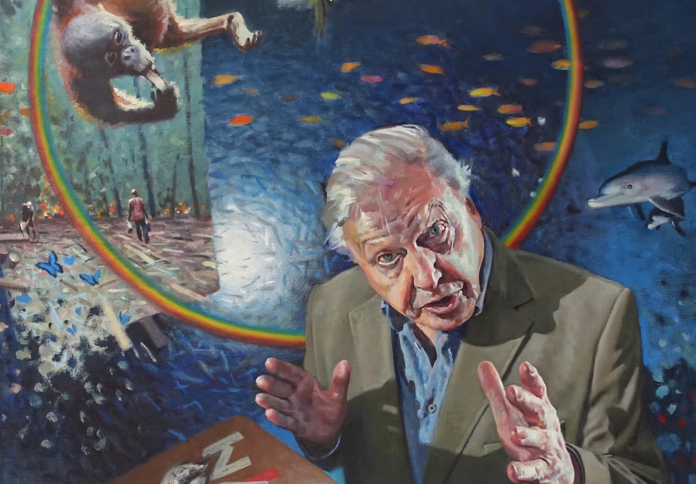
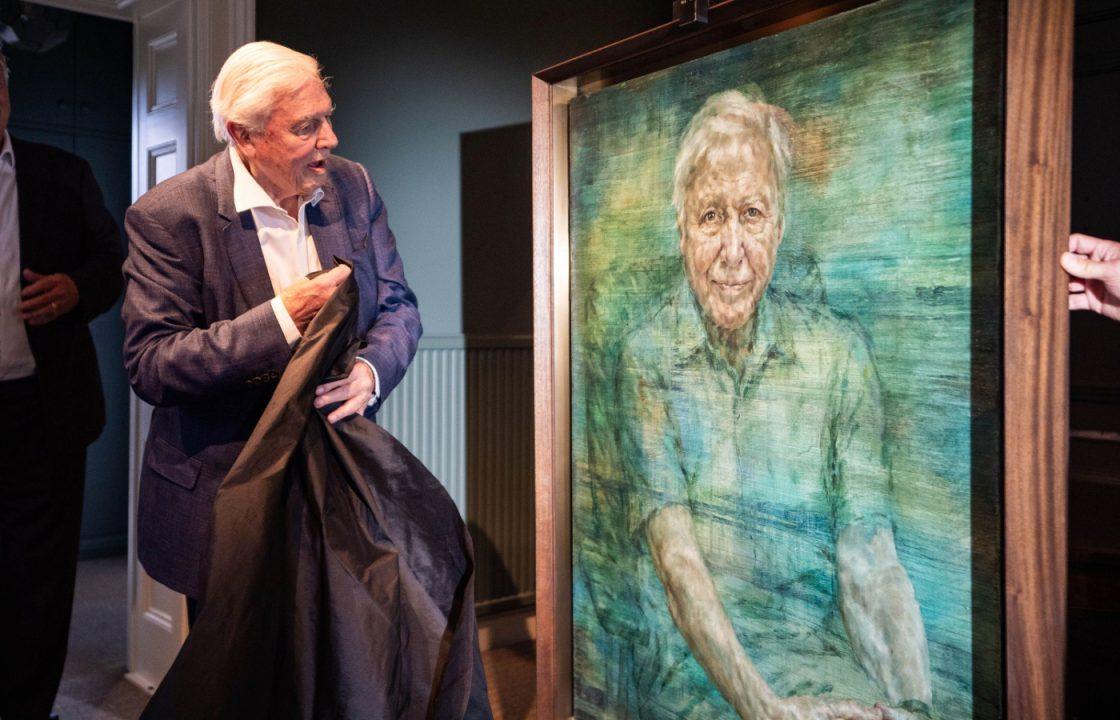
The world of fine art often moves at a stately pace, yet the annual opening of the Royal Society of Portrait Painters’ exhibition offers a vibrant snapshot of contemporary culture, capturing the faces of today’s most relevant figures. Amidst the roughly 230 canvases displayed at the Mall Galleries in London, one work stood out with immediate, universal appeal: a new portrait of national icon Sir David Attenborough. Commissioned by the BBC and painted by artist David Cobley, the piece was instantly recognized as the star of the 132nd annual show. It is a work that perfectly encapsulates the enduring power of portraiture, successfully bridging the formality of the genre with the subject’s accessible, cherished public persona. The exhibition’s vitality, asserted by the Society’s President as being “alive and kicking,” found its most compelling evidence in this spirited likeness of the famed naturalist.
The New Guard of Portraiture: A Lively Retort to Tradition
The Royal Society of Portrait Painters’ Annual Exhibition is a venerable institution, having showcased the finest examples of the genre for well over a century. Yet, the 132nd edition proved that the art of the painted likeness is anything but antiquated. Held at the prestigious Mall Galleries, the show featured an array of work—many available for sale—that spoke directly to the contemporary moment, moving beyond stiff historical conventions to embrace expressive interpretations of modern figures.
The President of the Society, Anthony Connolly, seized the opportunity to issue a powerful, almost rebellious defense of the form. Dismissing any notion that portrait painting is a dying art, Connolly stated that the genre is, in fact, “alive and kicking. It is skateboarding, surfing and untethered. It has never been more energised.” This spirited declaration framed the entire exhibition as a lively retort to critics who might dismiss painting in a world saturated with photographic and digital imagery. By showcasing contemporary celebrities and cultural icons, the Society firmly demonstrated the genre’s enduring relevance and its ability to capture the complex personalities of the modern era in a way that goes beyond a mere captured moment.
The exhibition successfully placed the portrait of the legendary naturalist within a diverse cultural context. Alongside Attenborough’s likeness, the show featured other compelling celebrity images, including a piece of the well-known newsreader Clive Myrie, and a poignant, sombre image of the actor Richard E. Grant by artist Wendy Barratt titled Grief. This juxtaposition—from the comforting familiarity of Attenborough to the intense emotional exploration of Grant’s private life—showed the breadth of modern portraiture, proving it is a versatile medium capable of both civic homage and intimate psychological study.
Capturing the Naturalist: David Cobley’s Spirited Likeness
The undeniable centerpiece of the exhibition was the commissioned work of Sir David Attenborough, brought to life by the painter David Cobley. Known for his ability to infuse traditional portraiture with a lively, expressive touch, Cobley’s challenge was immense: how to paint a man whose face is arguably one of the most recognized and beloved on the planet, all while respecting the gravitas of his achievements. The resulting portrait was immediately hailed as a success, described as a “spirited likeness” that captured the icon’s energy and curiosity.
Cobley’s approach was informed by a philosophical admiration for his subject. The artist articulated a profound connection between the work of a painter and that of the naturalist. He observed that, “Just as artists try and show things from a different point of view, Sir David has shown us life from a plant’s perspective, from the miniature eye of an ant, from a polar bear on a drifting ice floe.” This insight reveals the core intention of the portrait: it was not merely to record his features, but to mirror his genius for observation and perspective. By focusing on this shared intellectual curiosity, Cobley transcended the technical demands of replication, aiming instead for an expressive capture of Attenborough’s intellectual and humanitarian essence.
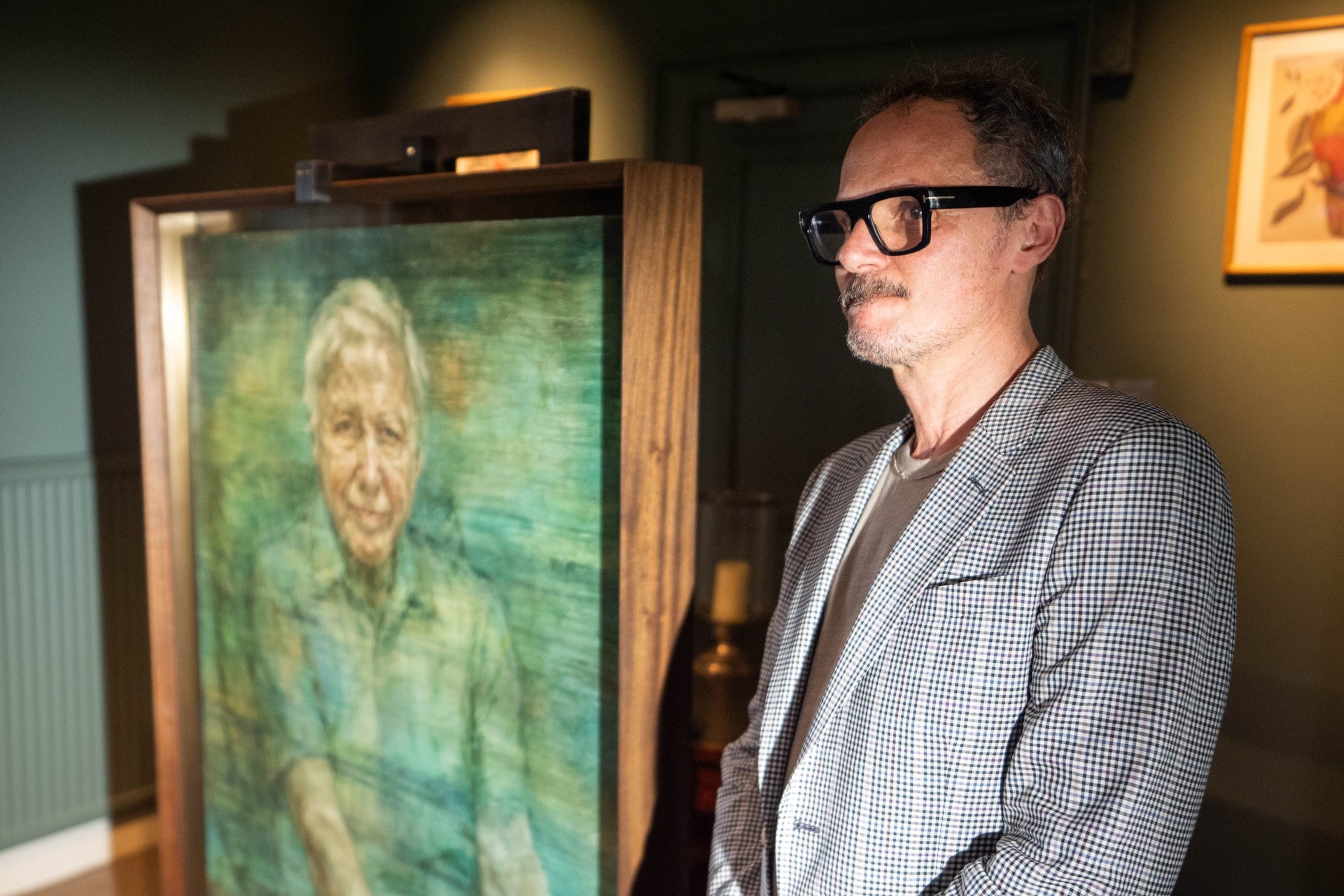
In the context of Cobley’s broader body of work, this approach suggests a style prioritizing character and narrative over photorealism. A “spirited likeness” implies a portrait that focuses on the eyes, the subtle smile, and the gestures that convey the subject’s enduring enthusiasm. It is a kinetic painting of a man constantly on the move, both physically across the globe and intellectually through complex ecosystems. The painting thus became a visual metaphor for Attenborough’s career—a window into the world as seen through the eyes of a man who has tirelessly encouraged the rest of us to look closer.
The BBC Commission: An Act of Cultural Preservation
The provenance of the David Attenborough portrait adds a significant layer to its cultural importance, as it was directly commissioned by the BBC. This act highlights the role of major public institutions in modern artistic patronage, shifting the focus from historical aristocratic or royal commissions to the celebration of figures who have profoundly shaped the national conversation and identity.
For decades, the BBC has served as the primary platform for Attenborough’s work, making the corporation the logical and symbolically appropriate patron for his portrait. The commission is not just an acquisition of art; it is an act of acknowledging and enshrining a shared cultural history. By funding the creation of this major portrait, the BBC is asserting its role not merely as a broadcaster, but as a preserver of the nation’s contemporary cultural narrative, ensuring that the visual legacy of its most important collaborators is secured for future generations.
This shift in patronage is a vital component of the contemporary portraiture scene described by the Royal Society’s President. It democratizes the process of creating national icons, placing a beloved public educator and environmentalist on the same artistic pedestal historically reserved for monarchs, generals, and politicians. The portrait is therefore a testament to the power of the media to create modern heroes and, subsequently, to formally recognize their monumental status through the timeless medium of painted art.
The Enduring Power of the National Treasure

The reason the Attenborough portrait was deemed the “biggest draw” of the entire exhibition is rooted in the unique status Sir David holds within British and global culture. He is more than a celebrity; he is a rare figure of universal respect and admiration—a genuine national treasure who has educated generations on the wonders and fragility of the natural world. In an increasingly polarized society, his voice is one of trust and quiet authority.
His image, therefore, carries a weight that transcends that of other celebrity sitters. A portrait of Sir David is not merely a picture of a famous person; it is a visual representation of environmental conscience, scientific curiosity, and a shared connection to the planet. For the thousands of visitors drawn to the Mall Galleries, the portrait offered a chance to connect with a hero whose work is deeply personal to millions. The artistic merit of the painting is inseparable from the cultural significance of the man, making the canvas an immediate cultural touchstone.
The ultimate success of David Cobley’s portrait lies in this perfect synergy: a talented artist, a major institutional patron, and a subject whose life’s work resonates with a deep and passionate national consensus. It confirms the vibrancy of contemporary portrait painting, demonstrating that when the right subject meets the right vision, the resulting artwork becomes not just a gallery piece, but a mirror reflecting the highest aspirations and deepest affections of a society. The portrait of Sir David Attenborough serves as a compelling symbol of the enduring power of art to elevate and celebrate those who enrich the human experience.