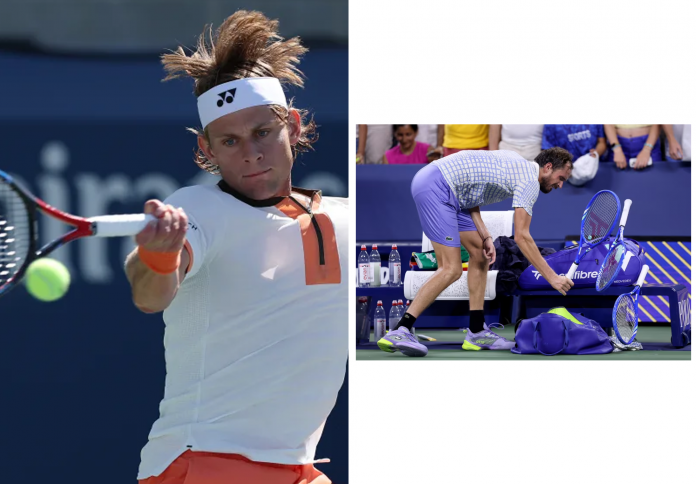
The 2025 US Open quickly became less of a showcase of sublime tennis and more of a study in volatile human psychology, cementing its reputation as the Grand Slam where tempers flare most spectacularly. Driven by the suffocating pressure of the season’s final major, the boisterous energy of the New York crowd, and a series of contentious officiating decisions, the tournament was defined by several high-profile meltdowns. The most resonant incident saw former champion Daniil Medvedev enter a state of near-chaos on court, culminating in an angry confrontation with a chair umpire and a substantial fine. Yet, Medvedev was not alone. The tournament featured heated exchanges, racket smashes, and post-match arguments, raising questions once again about the emotional toll the sport exacts and the need for greater player composure on the world stage.
The Medvedev Meltdown: A Photographer, A Umpire, and Chaos
The most spectacular and consequential display of anger at the 2025 US Open occurred on the opening weekend when former champion Daniil Medvedev faced France’s Benjamin Bonzi in a gruelling five-set first-round match. The chaotic climax of the encounter became the defining moment of the tournament’s first week.
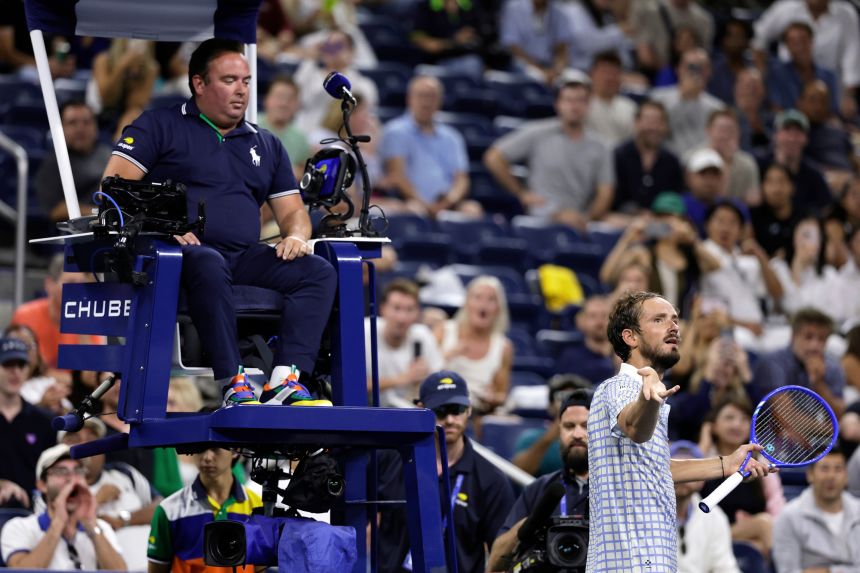
The flashpoint came late in the match, during the third set, with Bonzi serving for the victory at match point. A photographer inadvertently stepped onto the court surface, causing a significant disruption. Chair umpire Greg Allensworth, citing standard rules, correctly ordered Bonzi to replay his first serve. This decision, while technically correct, sent an already frustrated Medvedev into a spectacular rage. He furiously charged the umpire’s chair, shouting accusations and challenging the official’s decision in an angry, extended confrontation that halted play for an astonishing six minutes and incited the Louis Armstrong Stadium crowd into a frenzy of booing.
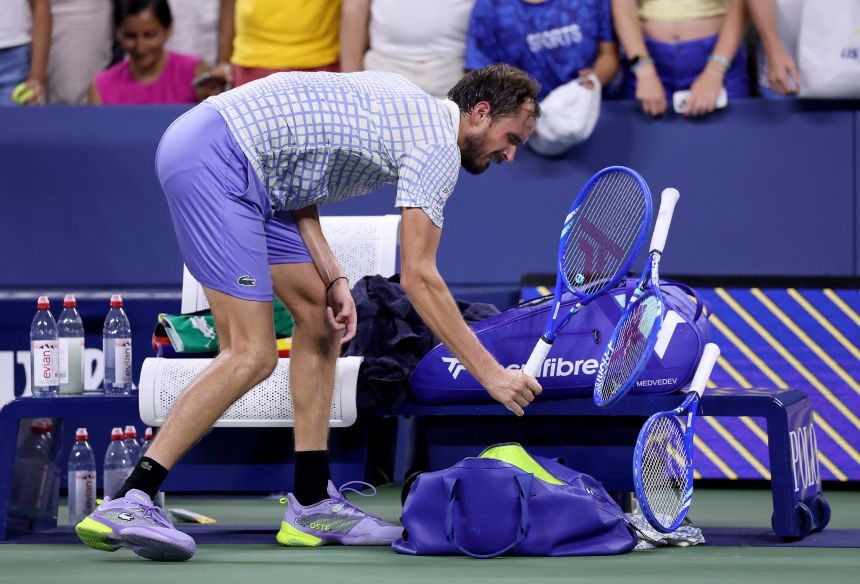
The outburst did initially spark a rally, with Medvedev fighting back to win the third set and take the fourth 6-0, but his momentum ultimately stalled. Following the five-set defeat, his frustration boiled over again as he violently smashed his racket repeatedly at his courtside bench. The fallout was swift and severe: Medvedev was handed a staggering $42,500 fine for unsportsmanlike conduct and racket abuse, amounting to nearly 40 percent of his tournament earnings.
Stefanos Tsitsipas and the Net Cord Controversy
Beyond Medvedev’s spectacular exit, other top players added to the tense atmosphere, highlighting the thin line between competitive spirit and poor sportsmanship that often defines the US Open.
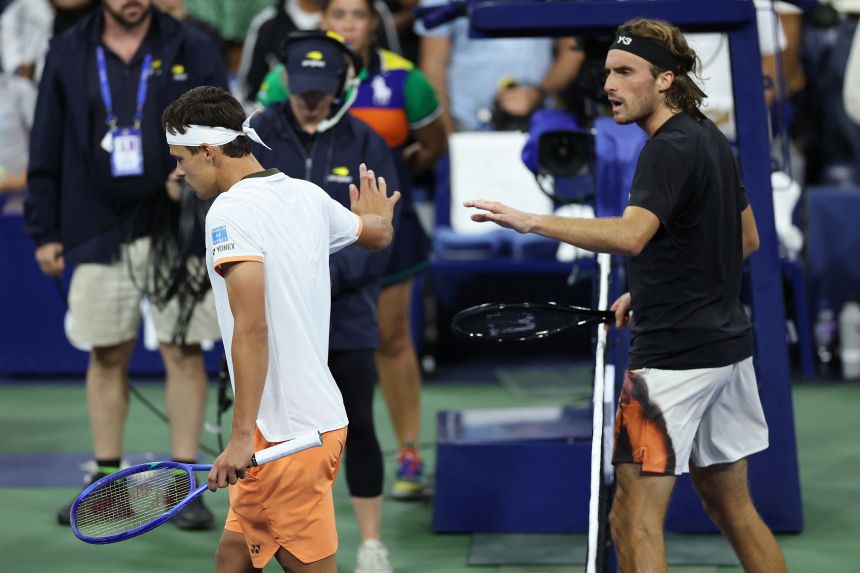
One controversial moment involved Stefanos Tsitsipas and his opponent, Daniel Altmaier. Tsitsipas, visibly frustrated by Altmaier’s unexpected and successful use of an underarm serve during their match, attempted to address the issue at the net handshake following his loss. Tsitsipas was overheard warning his opponent, “Next time, don’t wonder why I hit you, OK? No, I’m just saying if you serve underarm…” before Altmaier wisely disengaged and walked away. This verbal spat highlighted the increasing tensions between players who adhere strictly to traditional tennis etiquette and those who employ more unconventional tactics.
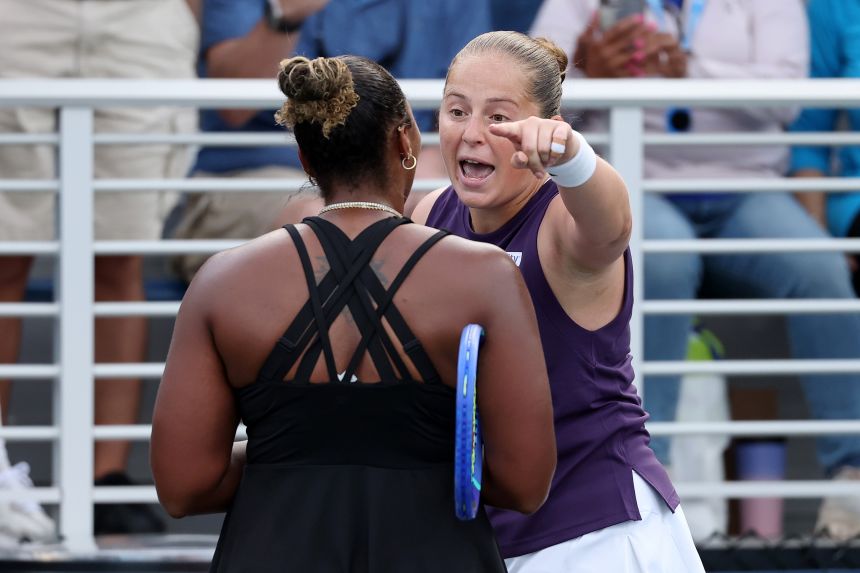
Furthermore, the women’s side saw its own fiery confrontation when Jelena Ostapenko lost to Taylor Townsend. In a bizarre post-match argument at the net, Ostapenko admonished Townsend for not having apologized for winning a point via a “net cord.” While a brief gesture of apology for a net cord is considered standard—albeit often insincere—tennis etiquette, Townsend angrily retorted that she was under no obligation to apologize, escalating the exchange with a verbal jab that Ostapenko later publicly condemned as “classless” and “uneducated.”
The Psychology of the Flushing Meadows Meltdown
The frequent and intense emotional flare-ups at the US Open are not merely random occurrences; they are often attributed to a unique confluence of factors that make Flushing Meadows the most pressure-cooker environment in tennis.
Firstly, the US Open is the final Grand Slam of the season, meaning players arrive mentally and physically fatigued, with their entire year’s performance and ranking hanging in the balance. Secondly, the New York crowd is notoriously boisterous and unforgiving, often fueling player frustration or, as Medvedev demonstrated, being actively incited by it. Finally, the extreme heat and humidity during late August and early September further compounds the physical stress, blurring the lines between exhaustion and rage. As Toni Nadal, uncle and former coach of Rafael Nadal, observed, players of Medvedev’s stature should be “capable of calming his nerves,” suggesting that high financial sanctions often fail to curb the primal emotional release that Grand Slam tension provokes.