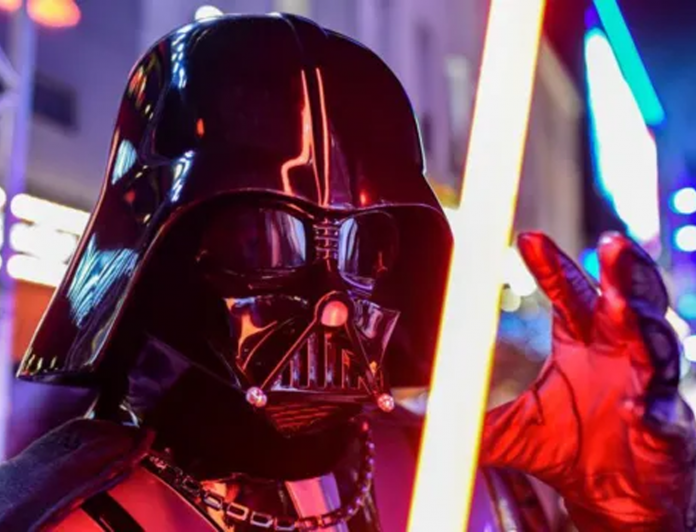
In a lawsuit that signals rising tensions between Silicon Valley innovation and Hollywood’s creative strongholds, entertainment titans Disney and Universal have jointly filed legal action against Midjourney, the AI image-generation startup. At stake is not only the use of familiar characters like Elsa and Darth Vader—but the legal limits of AI’s rapidly evolving creative power.
A legal battle brewing in Hollywood
Disney and Universal, two of the world’s most influential film studios, have launched a high-profile lawsuit against artificial intelligence firm Midjourney, alleging widespread and repeated copyright infringement. According to the studios, Midjourney’s image-generation software has reproduced countless unauthorized depictions of protected characters—including Star Wars’ Yoda, Marvel’s Iron Man, Frozen’s Elsa, and even the mischievous yellow Minions from Despicable Me.
The lawsuit, filed in federal court in Los Angeles, describes Midjourney’s output as a “bottomless pit of plagiarism.” The studios argue that the startup’s AI tool violates intellectual property law by allowing users to generate high-quality images of characters and franchises without permission from rights holders.
Disney’s Chief Legal Officer, Horacio Gutierrez, acknowledged that while AI has immense potential in creative industries, its misuse cannot be ignored. “Piracy is piracy,” he stated. “And the fact that it’s done by an AI company does not make it any less infringing.”
What Midjourney does—and why it matters
Midjourney, a San Francisco-based startup, allows users to create detailed visual art using only text prompts. Type in “Spiderman on Mars,” and the AI will generate a plausible image of the iconic superhero on the red planet. For many users, it’s a magical, near-instantaneous tool for creating digital art. For Hollywood studios, however, it’s a potential copyright minefield.
The company, run by David Holz—who previously founded Leap Motion—claims to be a small, self-funded operation. It lists a handful of prominent advisors, including former GitHub CEO Nat Friedman and Second Life creator Philip Rosedale. Despite its size, Midjourney has grown rapidly, reportedly earning $300 million last year.
More concerning to studios is Midjourney’s reported plan to expand into video generation. For Disney and Universal, this escalation—combined with AI’s ability to replicate copyrighted characters—makes it harder to ignore the company’s impact on creative ownership and monetization.
The legal gray area of AI-generated content
Midjourney is not the first AI firm to face legal scrutiny over content creation, and it likely won’t be the last. Syracuse University law professor Shubha Ghosh explained that AI-generated images often occupy a murky legal territory. “A lot of the images that Midjourney produces just seem to be copies of copyrighted characters that might be in new locations or with a new background,” he said. “It doesn’t seem like they’re being transformed in a creative or imaginative way.”
Under U.S. copyright law, “fair use” can permit the use of copyrighted content without permission—provided the result is transformative, used for commentary, or does not harm the original’s market value. Whether AI-generated fan art falls under fair use is an unresolved legal question.

Randy McCarthy, head of IP Law at Hall Estill, added, “No litigation is ever a slam dunk, and that is true for Disney and Universal in this case. There are issues such as Midjourney’s terms of service and basic fair use analysis that need to be sorted out by the court.”
Hollywood’s complicated relationship with AI
Ironically, while studios battle against AI misuse, they are also increasingly embracing AI themselves. In recent years, the film and TV industries have deployed AI for everything from de-aging actors—such as Tom Hanks and Harrison Ford—to generating synthetic voices, a technique used in two Oscar-nominated films: Emilia Perez and The Brutalist.
The dual nature of AI in Hollywood was brought into sharp focus during the 2023 Writers Guild and SAG-AFTRA strikes, where one of the major sticking points was the unchecked use of generative AI in screenwriting, visual effects, and even digital replicas of actors. Though the strikes ended with some protections in place, the broader conversation about AI’s role in entertainment remains unresolved.
Studios are keen to harness the power of AI for cost savings and creative efficiency—but not at the expense of their intellectual property or brand integrity. This lawsuit appears to be part of a broader strategy to assert control over how iconic characters and franchises are represented in a rapidly shifting technological landscape.
The future of creativity—or its biggest threat?
At the heart of the legal battle lies a bigger cultural question: What counts as creativity in the age of AI? Is a prompt like “Elsa fighting Darth Vader in Times Square” a new work of art, or a digitally rendered bootleg? And if AI can effortlessly replicate characters, settings, and styles with uncanny precision, what does that mean for the thousands of human artists employed in the entertainment industry?
Supporters of AI argue that generative tools like Midjourney democratize art and open up creative opportunities for those without traditional skills or access. Critics counter that such tools often train on copyrighted works without consent, producing derivative content while sidestepping both legal and ethical obligations.
Disney and Universal are making it clear where they stand: AI can be a powerful ally—but not when it crosses the line into unauthorized reproduction. As the case unfolds, the court’s decision could set a landmark precedent for how generative AI tools are governed, and what rights creators—human or machine—truly have.