The 13th annual iHeartRadio Music Awards, held on March 26, 2026, at the iconic Dolby Theatre in Los Angeles, served as a vibrant summation of the previous year’s biggest sounds and a glimpse into the trends defining the upcoming season. As the music industry converged on the red carpet, the evening was marked by a distinct shift in aesthetic: a move toward high-impact, pop-driven glamour that favored boldness over the traditional, understated elegance often seen at more conventional award shows. While Taylor Swift—the night’s most-nominated artist—remained the focal point of the evening’s narrative, the ceremony also functioned as a platform for breakthrough talent, honoring artists who have fundamentally shifted the dial of modern radio and digital performance.
A Red Carpet Defined by Pop-Led Edge
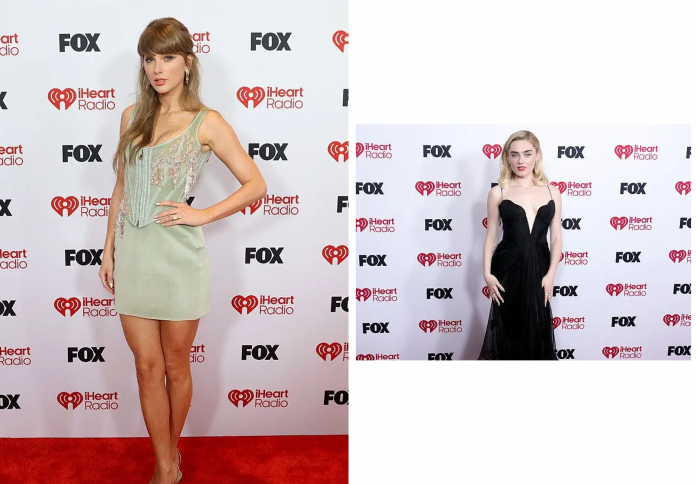
The red carpet at the 2026 ceremony was notable for its “pop-led edge,” where artists leaned into vibrant colors, avant-garde tailoring, and bold silhouettes. Taylor Swift, continuing her “Showgirl” aesthetic, was widely cited as the evening’s best-dressed star, wearing a seafoam-green corset with an intricately embellished matching mini-skirt. The look was more than a mere stylistic choice; it appeared to be a nuanced nod to her recent work, specifically the lyrics of her song “Honey,” which references the distinct seafoam hue of Travis Kelce’s eyes. Her presence underscored the event’s emphasis on high-concept, highly personal fashion that resonates deeply with a dedicated, digital-native fanbase.
Beyond Swift, the red carpet showcased a breadth of styles from artists including Miley Cyrus, Tinashe, Raye, and the breakout pop sensation Sombr. The event’s visual language was characterized by a move away from the muted tones of the previous year toward a more saturated, energetic palette. Whether through the sleek suits worn by rising stars or the theatrical, storied ensembles of legacy acts like TLC, Salt-N-Pepa, and En Vogue, the 2026 carpet reinforced the idea that for today’s musicians, the red carpet is not just a venue for fashion—it is a visual component of their musical identity.
Honoring Innovation and Legacy
The ceremony was anchored by several major awards that bridged the gap between music’s past and its future. Miley Cyrus was honored with the 2026 iHeartRadio Innovator Award, a recognition of her ongoing ability to redefine her artistic boundaries, while host Ludacris received the iHeartRadio Landmark Award, celebrating a career that has shaped hip-hop culture across multiple decades. The night also saw a massive celebration for Alex Warren, who took home the Breakthrough Artist of the Year Award following a record-shattering year on the Mediabase charts. His rise from a social-media-native artist to a dominant radio presence encapsulates the changing landscape of how hits are made and sustained in the current digital era.
The nominations list for 2026 reflected the genre-spanning nature of the modern airwaves, with heavy hitters like Bad Bunny, Sabrina Carpenter, and Kendrick Lamar competing alongside a diverse array of new talent. The ceremony successfully balanced these “industry standard” accolades with a robust lineup of fan-voted categories, which allowed the audience to have a direct hand in celebrating the most impactful moments in music video, lyrics, and even TikTok-adjacent choreography. This integration of fan culture into the formal awards structure is a defining feature of the iHeartRadio brand, acknowledging that in 2026, the listener is as vital to the success of a song as the artist themselves.
The Pulse of the Industry
Ultimately, the 2026 iHeartRadio Music Awards acted as a vital pulse-check for the industry. Performances by the likes of Lainey Wilson, RAYE, and a highly anticipated collaboration between various genre-defying acts kept the energy at the Dolby Theatre at a consistent high. As the show concluded, the atmosphere left behind was one of transition—a feeling that the industry is entering a new chapter characterized by the rapid rise of digital-first stars and the enduring power of legacy artists to reinvent their sound. For those in attendance and the millions watching across the globe, the evening was a reminder that even as the platforms through which we consume music shift, the collective need to celebrate the “road to number one” remains as strong as ever.