In Chengdu, the capital of Sichuan province, centuries-old teahouses are experiencing an unexpected renaissance. Once humble gathering places for pensioners and mahjong players, they’re now attracting crowds of tourists, foodies, and social media influencers. Behind the viral fame is a deeper movement: a renewed appreciation for heritage, community, and Chengdu’s famously laid-back way of life.
Old chairs, new fame
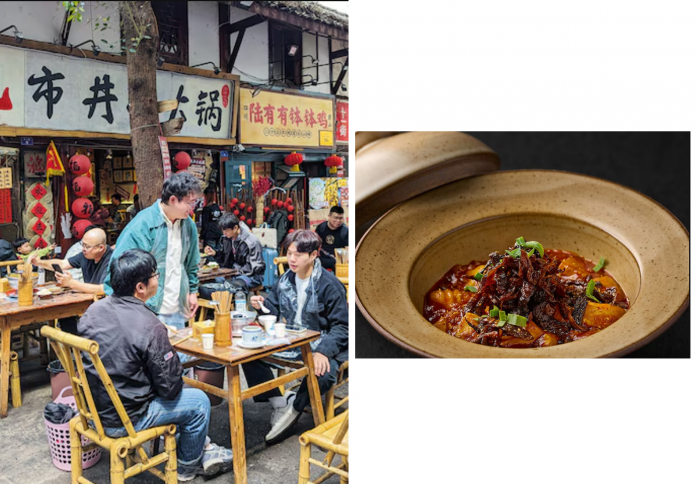
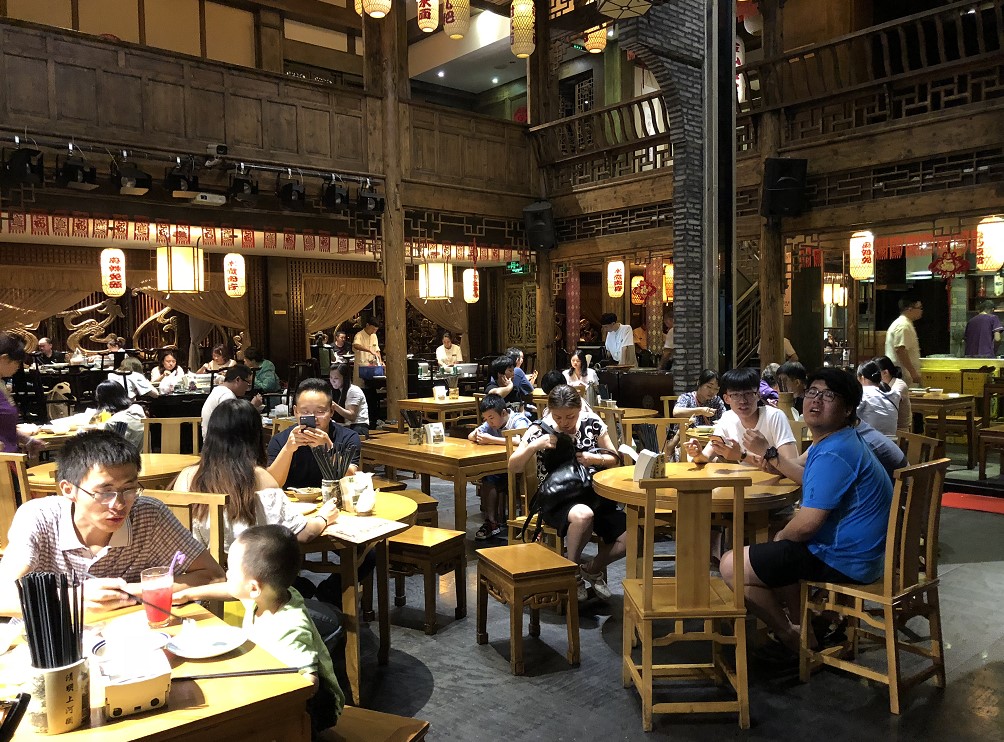
It’s just after 9 a.m. when I slip into a creaky bamboo chair at Heming Tea House in Chengdu’s People’s Park. Around me, the scene feels unchanged from my childhood: pensioners cracking sunflower seeds, friends deep in card games, and the earthy scent of green tea hanging in the air. But there’s something different now—dozens of tourists stream through the open-air pavilion, phones at the ready, documenting every pour, slurp, and ray of morning light.
Heming, one of the city’s oldest teahouses, has recently become wang hong—Chinese internet slang for a viral sensation. For today’s travelers, it’s not just the tea that draws them here, but the layered nostalgia, the aesthetics, and the promise of a “real” Chengdu moment. College students huddle around card games, cameras forgotten. Grandparents chat while bowls of dan dan mian—spicy, tangy shoulder pole noodles—are served with flair. What was once ordinary is now Instagram gold.
A taste of the past, updated

Later that day, I joined my uncle at a quiet neighborhood favorite, Lao Chuzi Sichuan Restaurant, tucked into the top floor of a nondescript building. Like many teahouses and eateries around Chengdu, it balances modern taste with traditional flavors: poached pork in sesame chili sauce, aubergine with garlic, and fragrant fish dishes share space with spicy skewers and mapo tofu.
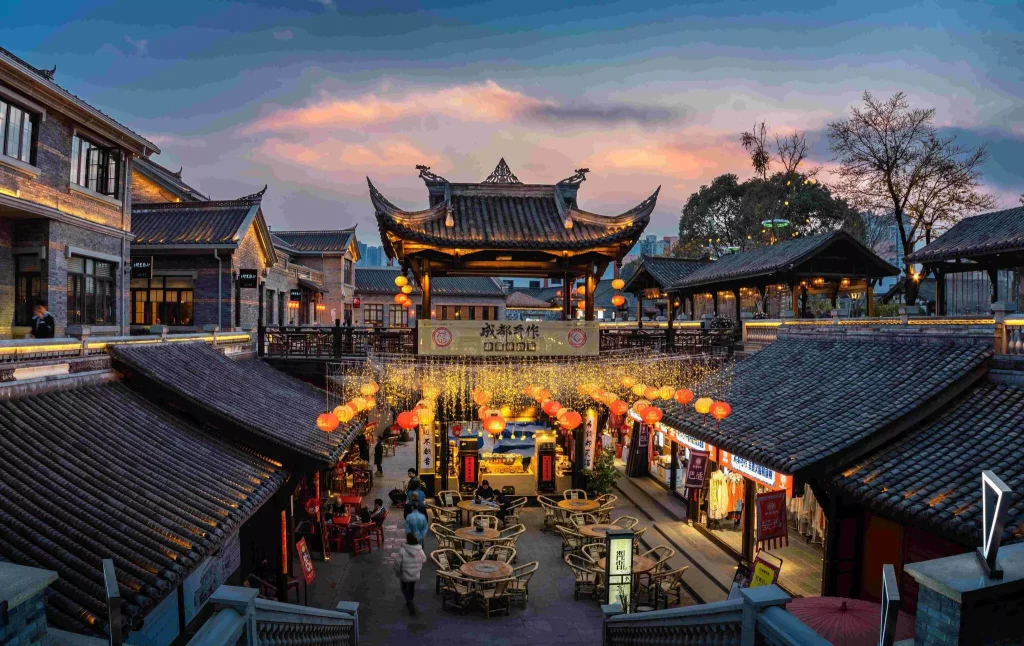
My uncle points out that we’re just blocks from 11th Street, a former row of teahouses that have been reborn as bustling noodle joints and spicy snack spots. The structures—low-rise with exposed wood beams and sloped tiled roofs—were once homes built in the uncertain years between dynasties and revolutions. Somehow spared from the redevelopment that swept much of the city in the 1990s and 2000s, they’re now thriving as hip culinary landmarks, where food meets heritage and history meets hashtags. “These buildings survived because they were too worn down to matter,” my uncle says, “but now, that’s what makes them special.”
Saving the soul of Chengdu
This accidental preservation has grown into something more intentional in recent years. Local and national efforts have begun to recognize and protect Chengdu’s vernacular architecture—buildings that might not be grand temples or palaces but are steeped in cultural memory. One notable example is Taikoo Li, a high-end shopping complex downtown that carefully restored several 19th-century courtyard homes near Daci Temple. Here, amid luxury boutiques and modern towers, you’ll find Mi Xun Teahouse, a Michelin-starred vegetarian restaurant hidden behind grey-brick walls and shaded by a single courtyard tree.
Mi Xun began as a simple tea lounge, but demand quickly grew. Executive chef Tony Xu tells me that the menu expanded with customers’ tastes, eventually becoming a full-service vegetarian destination inspired by Buddhist culinary traditions. His reinventions are thoughtful and creative: egg-free noodles dyed green with spinach juice, and mushroom-spiced mapo tofu that swaps pork for umami-rich fungi. The food is modern, but unmistakably Sichuan.
Tea, of course, remains at the heart. Mi Xun offers carefully sourced varieties like da hong pao from Fujian and aged Pu’er from Yunnan, served with a pared-down version of the traditional gongfu ritual. “We’ve simplified things so everyone can enjoy the experience and focus on the taste,” says manager Yvonne Du.
A drink for everyone
Tea in Chengdu is democratic. “It doesn’t matter if you’re rich or poor,” says Susan Yin, a guide from the food tour company Lost Plate. “In Chengdu, tea is for everyone.” As we zip through neighborhoods in a tuk-tuk—stopping for sesame-filled pancakes, hand-cut noodles, and spicy wontons—it’s clear that this is a city with food at its center. But beyond the heat and flavor, there’s a rhythm here: slow, communal, rooted.
We end our tour with jiang hu cuisine, a bold, earthy street-style cooking that captures Sichuan’s taste for the intense. As we pull chicken from a tangle of dried chilies and sip buckwheat tea, Yin reflects on why she’s made Chengdu her home. “The lifestyle is slower,” she says. “And the best way to experience it is in a teahouse.”
Where tradition meets today
In the heart of modern China, Chengdu’s teahouses have become more than nostalgic nods to the past. They’re symbols of a city learning to preserve what matters—its tastes, its buildings, its spirit—while welcoming the future. Whether served in a bamboo chair or a Michelin-starred dining room, tea remains the anchor. It’s the common thread connecting locals and visitors, generations and influences, the old city and its new chapters.
And as more travelers search for places that feel real and rooted, Chengdu’s teahouses remind us that some of the most meaningful moments happen when we pause, pour a cup, and simply sit.