For over 50 years, the UNESCO World Heritage program has stood as a beacon of global collaboration, a venerable list recognizing places of “outstanding universal value” for protection. From ancient villages to sprawling natural wonders, these sites are meant to be a legacy for all of humanity, shielded from the ravages of time, conflict, and economic pressure. However, as the program celebrates its half-century anniversary, it faces an increasingly complex set of challenges that threaten its very mission. From the development controversies in Vienna to the destructive forces of climate change, the question remains: Is World Heritage status enough to truly save the world’s most endangered treasures? The program’s true power, it seems, lies not just in its ability to protect, but in its capacity to serve as a global conscience.
The Vienna Dilemma: Development vs. Preservation

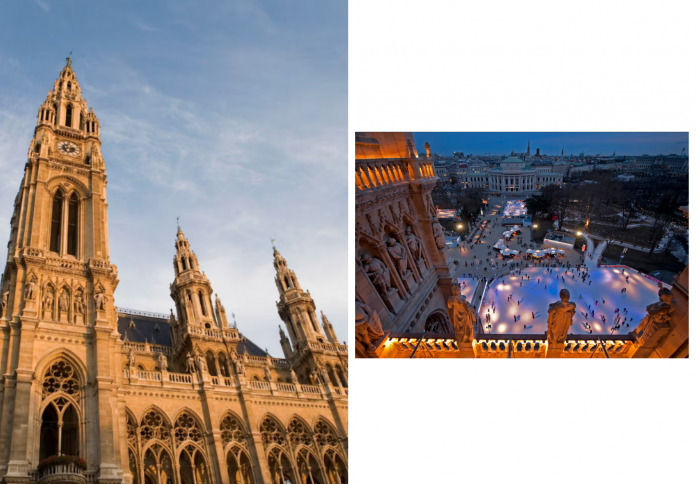
In December 2016, the city government of Vienna, Austria, announced plans for a new high-rise complex that would house a permanent ice-skating rink. For a city known for its love of winter sports and its annual, popular seasonal rink, the “Eistraum” or “Ice Dream,” the news sounded like a perfect blend of modern convenience and beloved tradition. However, the project was met with immediate and forceful opposition from the UNESCO World Heritage Committee. The committee argued that the new complex would undermine the historic city center’s “outstanding universal value” by marring its architectural dreamscape of baroque palaces and neo-Gothic landmarks.
The conflict between a living city and a heritage designation is an inherently fraught proposition. Since announcing its objection in 2017, the World Heritage Committee has placed Vienna on its “in danger” list, joining a roster of over 50 other imperiled sites. The city now faces the risk of being permanently “de-listed” as a UNESCO landmark if it fails to address the committee’s concerns. This high-profile controversy highlights a central paradox of the program: how to protect a historic site from inappropriate development while allowing it to evolve and meet the needs of its residents.
Overtourism: A Double-Edged Sword

The World Heritage designation has been remarkably successful in drawing global attention to culturally significant locations, often bringing much-needed economic benefits to isolated and disadvantaged regions. However, this success is often a double-edged sword, as the flow of visitors can quickly become a “deluge” that threatens the very heritage it was meant to protect. The once-somnolent village of Hoi An, Vietnam, for example, now faces a crush of visitors that its narrow streets were never designed to accommodate. Similarly, the 12th-century temples at Angkor Wat in Cambodia have seen an explosion in tourism, with annual visitors skyrocketing from 22,000 in 1992 to five million today.

The organization itself has at times been forced to concede that this mass tourism has threatened the region’s water table, which, in turn, imperils the stability of the temples themselves. While some locales, like Dubrovnik, Croatia, have taken steps on their own to manage the crowds by capping visitor numbers, overtourism remains a major challenge. The World Heritage program’s success in promoting cultural awareness has, in many cases, created a new threat to the very sites it was founded to protect, raising difficult questions about sustainable tourism and the limits of a designation designed to celebrate but not necessarily control a site’s popularity.
The Face of Conflict and Climate Change

In its 50-year history, UNESCO has been forced to confront malevolent actors and global forces that are often beyond its capabilities. The deliberate targeting of cultural treasures as a show of military belligerence has been all too common in recent history. From the ancient villages of northern Syria to the historic city of Sana’a, Yemen, monuments on the World Heritage list have been damaged or destroyed by civil conflict. Famously and tragically, UNESCO could do nothing to halt the Taliban’s destruction of the towering Bamiyan Buddhas in Afghanistan in 2001.

Of late, the program has had to confront an even newer and more pervasive enemy: climate change. This threat is both direct and insidious, affecting everything from glaciers and biodiversity hotspots to archaeological landmarks. The Great Barrier Reef in Australia, a World Heritage site since 1981, is a prime example. In 2021, UNESCO threatened to place the vast coral ecosystem on the “in danger” list due to its vulnerability to greenhouse gas emissions—the first time in the program’s history that climate change factored so prominently into a warning. While UNESCO has considerable influence in some less wealthy countries, its tools are limited when dealing with global-scale threats and sovereign nations.
A Conscience for the World: The Enduring Relevance
Though its influence has its limits, the World Heritage program is not without teeth. Throughout its history, it has de-listed only three sites, each instance following a government’s persistence with a development project over UNESCO’s repeated objections. The Arabian Oryx Sanctuary in Oman, Germany’s Elbe Valley, and Liverpool’s historic center were all removed from the list, proving that the designation is not an empty title. While UNESCO could not prevent a dam from being built in Laos or fully address the overtourism in Venice, its repeated warnings and lobbying efforts still play a vital role in the global conversation around heritage preservation.

Ultimately, the World Heritage program remains relevant, if not for its power to halt all threats, then for the fundamental principle it espouses. It serves as a focal point where a global conscience can be summoned, reminding the world that its diverse treasures require protection. It matters to say, as UNESCO did in Vienna, that a single development project can endanger a historic city. Even if its influence is at times indistinct and inconclusive, the very act of a World Heritage Committee existing to object, to warn, and to advocate makes it more important than ever.