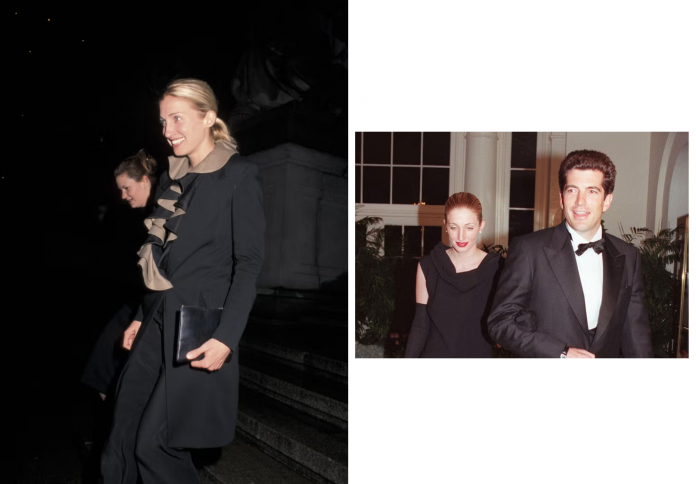
Few figures in modern fashion evoke the kind of quiet magnetism that Carolyn Bessette-Kennedy does. Her devotion to Japanese designer Yohji Yamamoto wasn’t a matter of trend but of temperament. Theirs was a dialogue of form and philosophy, restraint and radicalism. In choosing Yohji, Bessette-Kennedy didn’t just dress differently—she lived differently, curating an image that felt both protected and powerful. Now, decades later, the myth of Carolyn continues to shape how we imagine minimalism at its most meaningful.
A private muse for avant-garde restraint
To those who knew her, Carolyn Bessette-Kennedy wasn’t simply a client of Yohji Yamamoto—she was a disciple. Regular visits to the designer’s boutique in New York weren’t about chasing new arrivals but about deepening an ongoing relationship with a design language that suited her emotional interior. She gravitated toward sharply tailored coats, voluminous skirts, and monochromatic palettes—pieces that concealed as much as they revealed.

This wasn’t minimalism for the sake of simplicity. It was armor. In a life scrutinized at every turn—as John F. Kennedy Jr.’s wife and the reluctant face of a modern-day Camelot—Bessette used fashion not to court attention but to control it. Yohji gave her that control, not through invisibility but through intention.
Signature looks that distilled a personal philosophy
While popular memory tends to freeze Carolyn in jeans, a white tee, and a camel coat, those close to her recall an arsenal of Yohji pieces worn to art openings, fundraisers, and private dinners. She preferred garments with movement and mystery—jackets with asymmetric lapels, bias-cut dresses with quiet drama, skirts that shifted silhouette depending on the light.
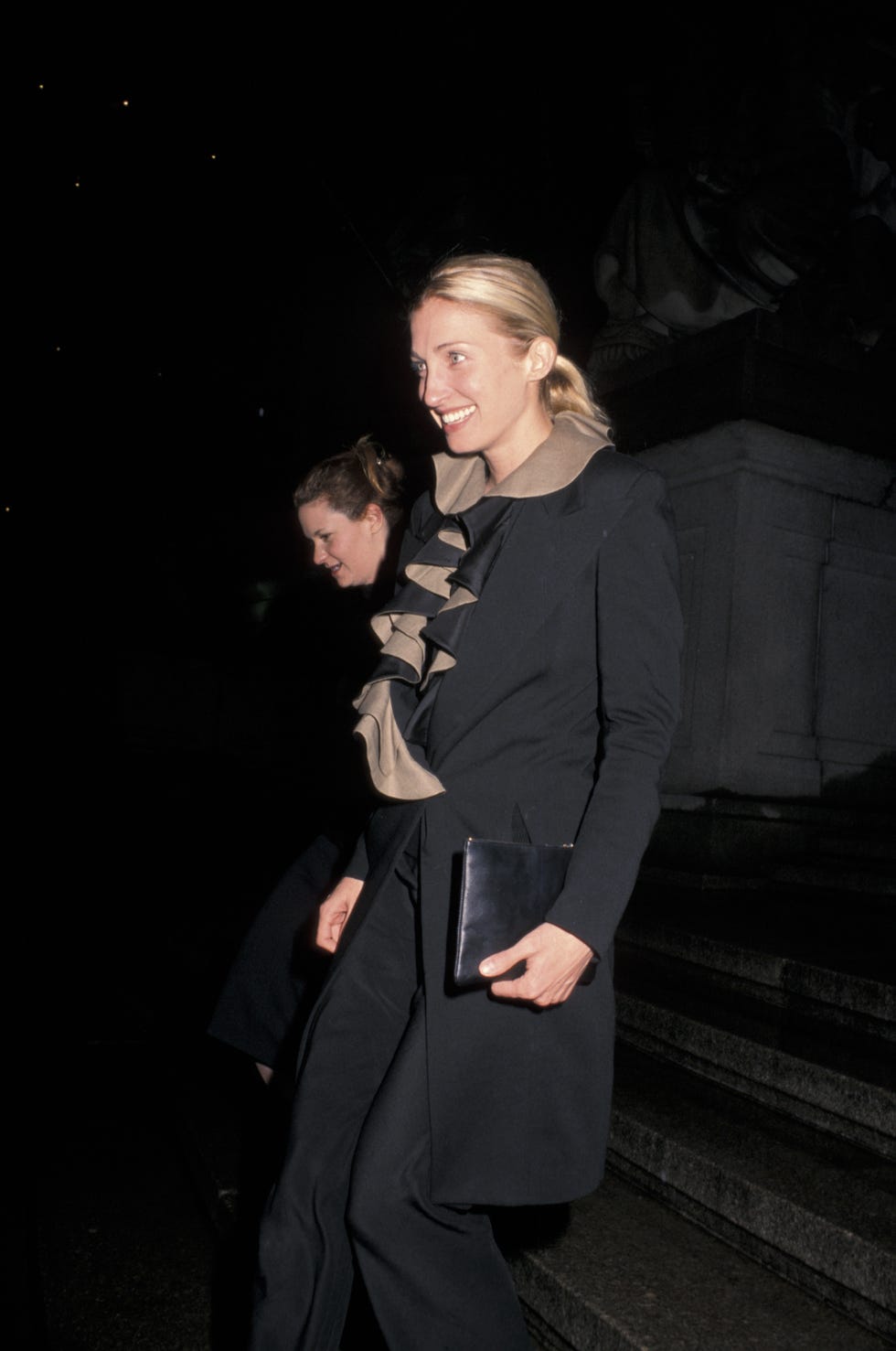
There was a conceptual elegance in how she approached fashion: repetition was a virtue, not a limitation. She wore certain looks again and again, not because she lacked options, but because they worked. Her wardrobe wasn’t about novelty. It was about refinement.
Recreating Carolyn, and why it’s so difficult
The upcoming Ryan Murphy series American Love Story, centered on the Bessette-Kennedy romance, has reignited interest in her style—and controversy over how it’s being portrayed. Early images of the costumes sparked criticism for missing the essence of her look: the cut of the clothes was wrong, the materials too shiny, the attitude off. Fans—many of them fashion insiders—didn’t just notice; they revolted.
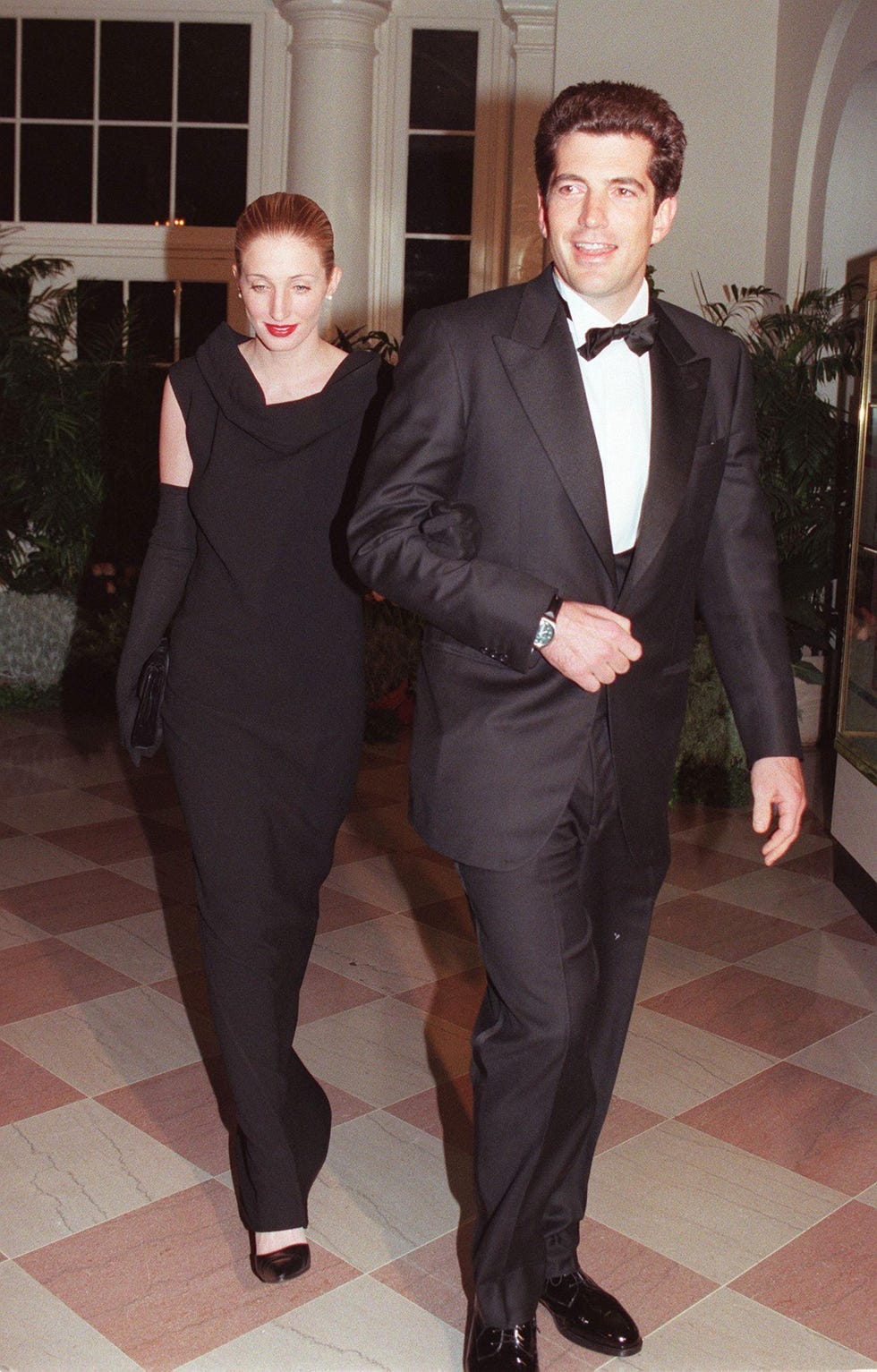
To address the backlash, the show’s team has reportedly enlisted fashion historians and stylists to re-create iconic pieces with greater accuracy, including key Yohji ensembles and her legendary Narciso Rodriguez wedding dress. But replicating Carolyn’s wardrobe isn’t just a matter of sourcing the right clothes—it’s about capturing her discipline, her restraint, her refusal to play the game.
A legacy written in silhouette and silence
More than two decades after her death, Carolyn Bessette-Kennedy has become an emblem of minimalist grace. Her influence reverberates through today’s fashion landscape, from the structured silence of The Row to the stealth-wealth ethos overtaking luxury brands. Yet her style legacy is more than aesthetic—it’s philosophical.
Choosing Yohji Yamamoto wasn’t simply about fit or flattery. It was about aligning with a vision of womanhood that rejected spectacle and embraced autonomy. She wore clothes that asked questions rather than gave answers. In doing so, she became not a fashion icon in the traditional sense, but something rarer: a fashion enigma. One whose impact, like her favorite silhouettes, lingers in the space she left behind.