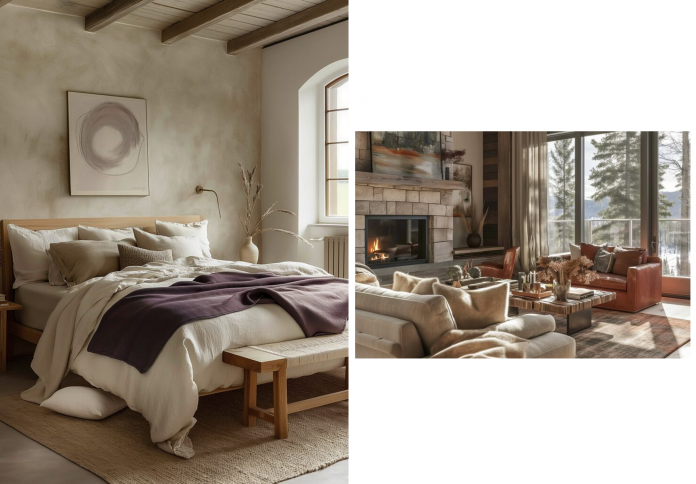
Rustic interior design captures something increasingly rare in our digital age: warmth, authenticity, and connection to the natural world. Rooted in tradition and driven by simplicity, this style celebrates organic textures, natural materials, and imperfect beauty. From countryside cottages to urban lofts, the rustic aesthetic is making a strong return—proving that charm, comfort, and craftsmanship never go out of style.
Understanding rustic interior design
Rustic interior design is more than just a visual style—it’s a philosophy that honors nature, craftsmanship, and history. Inspired by rural living and timeless traditions, it embraces raw materials like wood, stone, clay, and metal. Think of exposed wooden beams, creaky wide-plank floors, and hand-thrown ceramics. Unlike modern minimalism, rustic spaces don’t strive for perfection; they thrive on character, with every knot in timber or scratch on leather telling a story.
This design approach has its roots in traditional country homes—American mountain lodges, alpine cabins, and European cottages. Yet its relevance has grown in our hyper-digital world. In an age dominated by sleek surfaces and smart tech, rustic interiors offer emotional grounding. Their textures, colors, and lived-in atmosphere bring peace and permanence, creating sanctuaries that feel personal and timeless.
The essential elements of rustic style

At the heart of rustic interior design are natural, unrefined materials. Reclaimed wood is a standout—whether used for floors, beams, or furniture, it introduces depth, warmth, and authenticity. Every imperfection—grain, knot, or crack—adds soul. Complementing wood are earthy stones, handmade tiles, wrought iron accents, and patinated metals, all contributing to a tactile, grounded environment.
Fabrics play a key role too. Rather than polished or synthetic finishes, rustic interiors rely on natural textiles like linen, wool, burlap, and jute. These materials soften the look while maintaining the organic appeal. Rough textures are embraced, from handwoven throws to vintage rugs, creating a layered, touchable ambiance that invites relaxation.
Crucially, the rustic style doesn’t chase symmetry or sleekness. Weathered paint, uneven surfaces, and mismatched furniture are not flaws but features—proof of history, durability, and life. It’s a style that values story over shine.
Why rustic design resonates

In a fast-paced, constantly connected world, rustic interior design provides something rare: a pause. It invites you to slow down and reconnect—with your space, your senses, and nature. Sitting by a stone fireplace, running your hand over a rugged wood table, or lighting a room with the glow of aged copper evokes feelings of safety, nostalgia, and peace.
Rustic style also taps into a universal desire for authenticity. It’s not about following trends or chasing perfection—it’s about creating spaces that feel real. That’s why high-end designers and everyday homeowners alike have embraced the style, integrating rustic touches into even the most modern environments. A reclaimed wood wall, an antique farmhouse sink, or a weathered leather armchair can instantly anchor a sleek room in warmth and character.
Another strength of rustic design is its versatility. Whether you’re decorating a country retreat, a downtown apartment, or a beach bungalow, rustic elements can be adapted to suit the space. It can stand alone or blend with contemporary, industrial, or even minimalist design, offering balance and texture wherever it’s used.
How to bring rustic charm into your home

Incorporating rustic interior design into your home doesn’t require a full renovation—just a thoughtful mix of materials, textures, and tones. Start with architectural elements if possible: reclaimed timber beams, stone walls, or wide-plank flooring provide a strong rustic base. But even smaller updates can make a big impact.
Choose furniture that feels solid and storied—think farmhouse tables, handcrafted bed frames, or vintage leather chairs. Avoid anything too polished or ornate. Instead, favor simplicity and durability. Add cozy layers with chunky knit throws, linen cushions, and wool rugs in muted, earthy tones.
Accessorize with items that feel personal and hand-touched. Aged mirrors, hand-thrown pottery, vintage lanterns, or antique wooden crates can all add rustic flair. Remember, each item should feel like it belongs and has a purpose—even if that purpose is simply to add soul.
Color, light, and atmosphere
The color palette in rustic design leans heavily on nature. Soft, warm neutrals like ivory, taupe, and sandy beige create a welcoming foundation. Earthy hues—moss green, burnt orange, ochre, rust, and charcoal—echo outdoor landscapes and bring emotional warmth into the space.
Lighting is another crucial element in setting the mood. Instead of harsh overheads, layer warm-toned light sources at different heights. Wrought iron chandeliers, reclaimed wood pendants, and lantern-style sconces provide both character and illumination. Use linen or burlap shades to soften the glow and keep the ambiance intimate.
A rustic interior should feel like it grew organically over time. The play of light across uneven stone, the shadows cast by rough timber, and the gentle flicker of candlelight all contribute to an atmosphere that’s deeply comforting and deeply human.
Rustic design for every space
What makes rustic interior design truly timeless is its adaptability. In a large country home, it can be expansive and dramatic, with grand fireplaces and exposed beams. In a smaller city apartment, it can be subtle and refined—a reclaimed wood coffee table here, a wool throw there, and maybe a vintage lantern hanging in the hallway.
It’s also a style that grows with you. Because it’s rooted in longevity and authenticity, rustic spaces age gracefully. Scuffs become stories, and each new piece adds to the room’s evolving narrative. You don’t have to finish a rustic room—you just have to start it.
Final thoughts
Rustic interior design isn’t about replicating a log cabin or living off the grid. It’s about creating spaces that feel real, grounded, and warm. Whether you adopt the style in full or just borrow a few key elements, the result is the same: a home that embraces imperfection, honors nature, and feels deeply personal. In a world of fleeting trends and digital overload, rustic design offers something refreshingly permanent—a place to slow down, breathe deep, and feel at home.