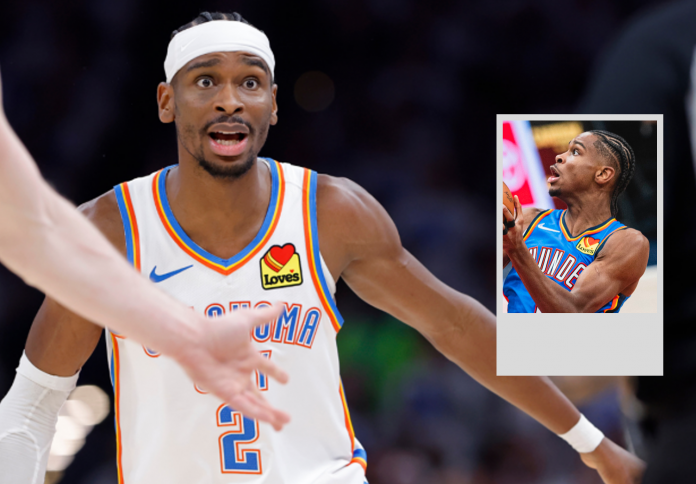
Shai Gilgeous-Alexander’s uncanny ability to draw fouls and get to the free-throw line has become one of his most potent weapons—and one of the NBA’s biggest challenges. While foul-baiting is a savvy skill that helps him dominate games, it exposes gaps in the league’s rules and enforcement that threaten the integrity and entertainment value of the sport. As fans grow increasingly frustrated, it’s up to the NBA to rethink how it handles foul calls, flopping, and the fine line between smart play and exploitation.
Foul-Baiting: A Skill or a Flaw in the Game?
Shai Gilgeous-Alexander (SGA) is no stranger to controversy when it comes to his style of play. His mastery of drawing fouls—some might call it foul-baiting—has made him one of the most efficient scorers in the league and a front-runner for MVP honors. To put it plainly, foul-baiting refers to players deliberately exaggerating contact or creating situations to earn free throws. While SGA is far from the only player to use these tactics—Jalen Brunson and others have similar reputations—SGA’s success in doing so has elevated the debate around this issue.
It’s important to note that the blame shouldn’t fall on Gilgeous-Alexander himself. Drawing fouls is a legitimate part of basketball strategy and understanding how referees call games is a skill that adds value. His job is to help the Oklahoma City Thunder win games, and he executes that job exceptionally well by exploiting the rules as they are currently enforced. The real problem lies with the NBA, which must create an environment where players are incentivized to compete fairly rather than manipulate the system.
This was painfully evident in Game 1 of the Western Conference Finals, where despite the Thunder’s dominant defense, much of the postgame conversation centered on how many fouls Gilgeous-Alexander drew and how easily he got away with borderline or outright questionable moves.
A History of Rule Changes That Have Failed to Keep Up
This is not a new problem. In fact, the NBA has repeatedly attempted to crack down on foul-baiting and related tactics over the past few years. Before Gilgeous-Alexander and Brunson, players like James Harden and Trae Young became infamous for their ability to draw fouls with unconventional moves. The league responded by announcing interpretive changes to officiating, particularly before the 2021-22 season, aimed at penalizing “overt, abrupt, or abnormal non-basketball moves” designed to draw fouls.
Yet, as Game 1 illustrated, players like SGA still confidently execute such moves. A notable example was when Gilgeous-Alexander got Rudy Gobert in the air, leaned into him, and flung the ball up, earning free throws despite the questionable nature of the contact. This exposes a clear gap between the league’s intended enforcement and what actually happens on the court.
Flopping—another major issue—has also been addressed with mixed success. The NBA introduced a technical foul for flopping on a trial basis in 2023-24 and made it permanent the following season. However, referees can only call flops during replay reviews, and only if the flop occurs during a challenge. This limitation rendered the rule largely ineffective in practice.
In Game 1, for instance, Gilgeous-Alexander’s cousin Nickeil Alexander-Walker was called for a foul that, upon replay, showed no illegal contact. Gilgeous-Alexander ended up on the floor, clearly exaggerating the contact to secure the whistle—a flop by definition that went unpunished. The NBA’s flopping rule, though well-intentioned, now largely serves as a deterrent rather than an enforceable penalty, arguably emboldening the best floppers to act with near impunity.
The Impact on the Game and the Path Forward
The victim of Gilgeous-Alexander’s tactics in Game 1 was Minnesota’s Jaden McDaniels, arguably the Timberwolves’ best perimeter defender. McDaniels maintained a legal guarding position, yet SGA drove into him, pushed off with his off-arm, stepped back, and earned a foul call. This wasn’t an isolated incident—SGA has repeatedly gotten away with such off-arm pushes throughout the season. The stakes of such calls are enormous. Not only do they send SGA to the line, but they also put defenders in foul trouble. McDaniels fouled out late in Game 1, effectively removing Minnesota’s primary defensive weapon against Gilgeous-Alexander in a game the Thunder won by 26 points.
From a purely strategic standpoint, SGA’s approach makes perfect sense. Why wouldn’t he try to force the Timberwolves’ best defender off the floor? Why wouldn’t he capitalize on every opportunity to get to the free-throw line? His tactics fall within the practical boundaries of the game as it is currently officiated, maximizing his team’s chance to win. However, this strategy comes at the cost of the game’s entertainment and fairness. Fouls are supposed to keep defenses honest—not act as a loophole for offensive players to escape tough defensive pressure. The league’s responsibility is to strike the right balance, but currently, that balance favors exploitation over competition.
The NBA faces a challenge similar to tanking—a problem it has also struggled to resolve. Tanking undermines the spirit of competition, but addressing it requires fundamental changes to the league’s structure, particularly the draft. Similarly, as long as fouls and free throws remain integral, players will continue searching for ways to exploit them. The 2021 officiating changes helped reduce blatant foul-baiting techniques, such as the stop-and-go moves popularized by Trae Young. But Gilgeous-Alexander has mastered older tactics that still fly under the radar. To maintain the game’s integrity, the NBA must not only enforce existing rules more rigorously but also continuously update them each offseason to stay ahead of evolving player strategies.
SGA’s job is to win games. The NBA’s job is to ensure the game remains entertaining, competitive, and fair for its fans. Regardless of your stance on the ethics of foul-baiting, one fact is undeniable: fans dislike it. And until the league takes decisive steps to address this growing problem, it will continue to undermine the product that the NBA offers its millions of viewers worldwide.