*In a world often defined by monumental projects and signature styles, the Aga Khan Award for Architecture stands apart. This prestigious prize, awarded every three years, celebrates not just beautiful buildings, but those that profoundly improve the lives of people in communities across the Muslim world. The 2025 winners, selected from a diverse field of groundbreaking projects, are a testament to this unique mission. They represent a powerful collection of works—from a resilient, amphibious home in Bangladesh to a vibrant community hub in rural China—that demonstrate how architecture can be a tool for social, cultural, and environmental transformation. This year’s recipients share a common thread: a deep commitment to adapting local materials, honoring heritage, and empowering the people they serve. They prove that the most meaningful architecture is often that which is most deeply rooted in its community. *
A New Urban Fabric and Community Empowerment

The 2025 Aga Khan Award celebrates architecture that has revitalized urban centers and empowered local communities. The Revitalisation of Historic Esna in Egypt, by Takween Integrated Community Development, is a prime example. This project went beyond traditional conservation, transforming a historic city into a thriving cultural and economic hub. By restoring public squares, rehabilitating historic buildings, and upgrading infrastructure, the project created a new sense of pride and purpose in a community that had been facing decline. It’s a powerful model for how a holistic approach to heritage preservation can lead to meaningful, community-led change.

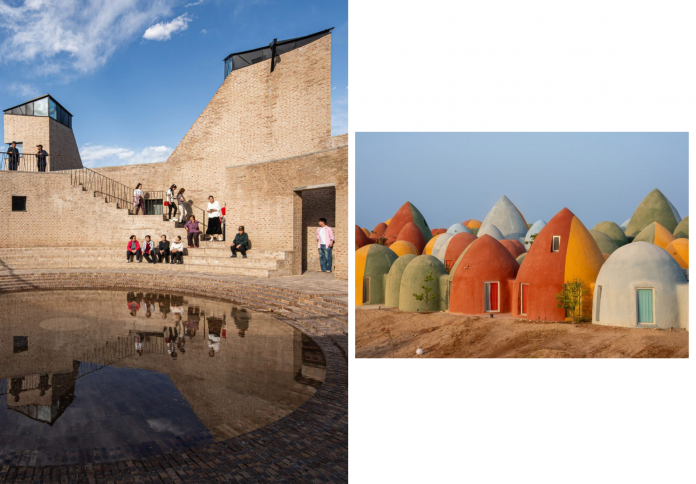
Similarly, the Majara Residence and Community Redevelopment on Hormuz Island, Iran, by ZAV Architects, is a beacon of social design. This project created affordable housing and public spaces that are both architecturally innovative and culturally resonant. By using local materials and involving the community in the building process, the architects not only constructed a series of beautiful homes but also fostered a deep sense of belonging and collective ownership. The project demonstrates that housing can be more than shelter; it can be a catalyst for social cohesion and economic development.
The Future of Education and Culture

Several of this year’s winning projects highlight how architecture can create a new platform for education and cultural expression. The West Wusutu Village Community Centre in Hohhot, China, designed by Inner Mongolian Grand Architecture Design, is a remarkable example of this. The center serves as a vibrant social hub for a rural community, providing a space for learning, cultural events, and communal gathering. Its design, which sensitively integrates traditional forms with modern functionality, showcases a deep respect for local heritage while looking toward the future. It’s a powerful lesson in how to create a public building that genuinely serves the needs of its people, fostering education and collective life.

In Palestine, the Wonder Cabinet, designed by AAU Anastas, is a project that redefines cultural space. The building, located in Bethlehem, is a hub for art and education, created with a commitment to local craftsmanship and materials. The design is a series of interlocking volumes that creates a playful and engaging environment for visitors. It’s a testament to the power of architecture to create spaces of inspiration and cultural exchange, even in regions facing immense challenges. The project stands as a symbol of hope and creative resilience.
A Commitment to Sustainability and Adaptability

Sustainability and adaptability are central to the spirit of the Aga Khan Award, and this year’s winners are a perfect reflection of that commitment. The Khudi Bari, a project by Marina Tabassum in Bangladesh, is a truly groundbreaking piece of adaptive architecture. The design is a low-cost, modular, and amphibious home that can withstand the extreme flooding that is common in the region. Built with simple materials and traditional techniques, the house is a dignified and practical solution for a community facing the realities of climate change. It is a powerful example of how architecture can be both beautiful and a crucial tool for survival.

In Pakistan, Vision Pakistan by DB Studios is another winning project with a strong environmental focus. While the details of the project may vary, it is celebrated for its commitment to creating a sustainable and resource-efficient development. The project showcases how modern design principles can be applied to large-scale urban planning to create a healthier, more livable environment. It is a hopeful vision for the future of urban growth in the region, one that is rooted in a deep respect for the environment and a commitment to long-term sustainability.
Redefining Urban Mobility and Public Space
Finally, the award recognized projects that have fundamentally reshaped urban mobility and public space. The Jahad Metro Plaza in Tehran, Iran, by KA Architecture Studio, is a stunning example of this. The project transformed a previously chaotic and functional metro station into a vibrant, multi-functional public plaza. By creating a beautiful and organized space, the architects have improved the daily lives of thousands of commuters. The design integrates public art, green spaces, and seating areas, turning a simple transit hub into a civic destination.

This project, along with the other winners, proves that the Aga Khan Award for Architecture is unique in its celebration of a holistic approach to design. It is not about the grandest or most expensive buildings, but about the ones that solve real-world problems and enrich the human experience. The 2025 winners represent a powerful and inspiring look at the future of architecture—a future where design is a force for good, a catalyst for social change, and a testament to the enduring power of community.