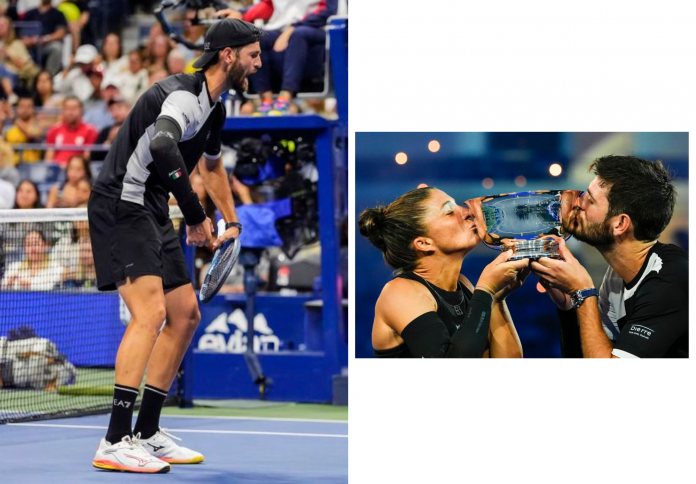
For Sara Errani and Andrea Vavassori, their US Open mixed doubles victory was more than a title defense—it was a statement. The Italian duo, who entered the controversial, reimagined competition as the only doubles specialists, triumphed over some of the game’s biggest singles stars, including Iga Świątek and Casper Ruud, to claim their second consecutive US Open title. Their victory, which came with a fivefold increase in prize money, felt like a triumph for the entire doubles community, a moment of vindication against a format they had previously branded a “profound injustice.”
Defying a “Profound Injustice”: A Win for the Doubles Community
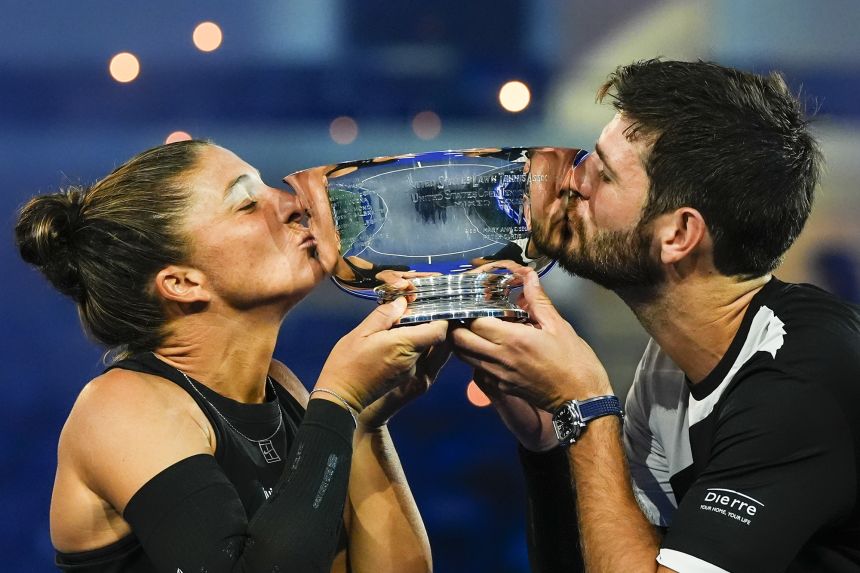
The US Open’s new mixed doubles format has been a source of heated debate. Historically, the event was a 32-team draw that unfolded throughout the two weeks of the tournament. However, to attract high-profile singles players and create a high-energy spectacle, organizers condensed the event to a two-day, 16-team knockout played on the week before the main tournament. The rules were also shortened, with first-to-four games sets, no-ad scoring, and a 10-point tiebreaker in a decisive third set. When the format was first announced, Errani and Vavassori released a joint statement calling it a “pseudo-exhibition” and a “profound injustice” that “disrespects an entire category of players.” Their victory, therefore, was a powerful vindication, proving that doubles players are “great players” who can beat the biggest names in the sport.
The Art of Doubles: Smarter, Not Just Harder
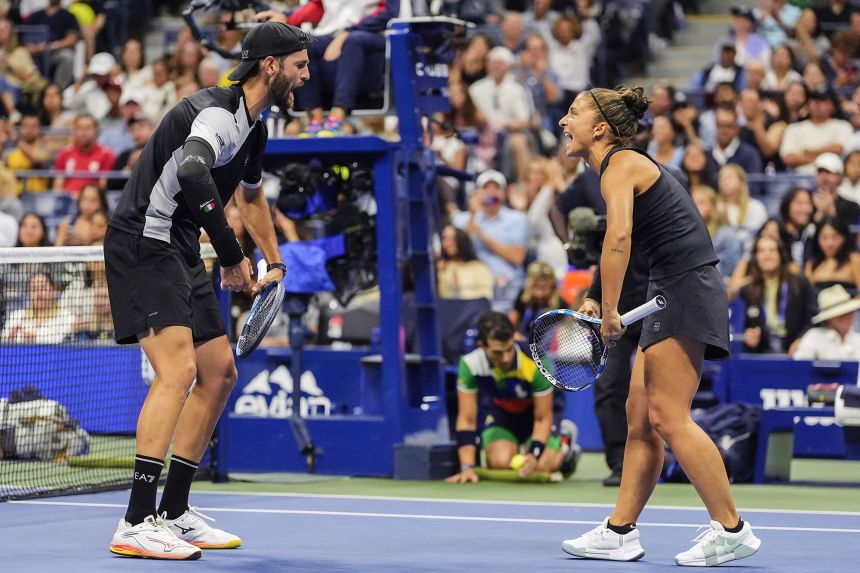
Errani and Vavassori’s victory was a masterclass in the art of doubles strategy. While their opponents relied on raw power and athleticism, the Italians showcased the unique skills of their discipline. As Errani explained, “it’s not just serving good, hitting good, returning good. There are many other things that are not easy.” She emphasized that success in doubles requires players to “think, be smart.” This tactical superiority was on full display in the final against Świątek and Ruud, where the Italians outsmarted their opponents with precision and strategic positioning at the net to close out the final-set tiebreaker and secure the championship.
A Winning Spectacle: The Audience Responds
Despite the controversy, the new format was, by many accounts, a success in its goal of drawing a crowd. A packed-out Arthur Ashe Stadium, filled with fans eager to see all-star pairings like Carlos Alcaraz and Emma Raducanu, and Jessica Pegula and Jack Draper, created an electric atmosphere. Pegula described the vibe as “super loud,” while Draper said the entire event was “a bit of a spectacle.” Both players felt the crowd’s enthusiasm was a testament to their love for watching competitive tennis. The presence of fashion industry icon Anna Wintour in the stands further highlighted the event’s success in attracting high-profile attendees and media attention, proving that a high-energy, condensed format has a strong appeal.
Looking Ahead: What’s Next for Mixed Doubles?
With their win, Errani and Vavassori have added a third Grand Slam mixed doubles title to their resume, following their 2024 US Open and 2025 French Open victories. Their victory has cemented their place in history and put a spotlight on the value of the doubles specialist. While the future of the format remains uncertain, Vavassori has suggested a possible compromise: expanding the draw to 32 teams while keeping the condensed schedule, which would allow for more doubles players to participate. He believes this would create an even more compelling narrative of singles versus doubles. While the debate over the format continues, Errani and Vavassori have proven that their skills and legacy are more than deserving of a spot in the spotlight.