In the Norwegian capital, sustainability, style, and smart design come together to create a city break unlike any other.
A city built for ease, not excess
If your ideal city break balances culture, comfort, and quiet innovation, Oslo may be Europe’s best-kept secret. Just two hours from London by plane, Norway’s capital is neither brash nor bustling—but that’s precisely the point. Oslo offers a calm, clean, and surprisingly cutting-edge urban escape, where nearly every element of daily life feels considered. From its walkable streets and all-electric transport to its low-key cool neighbourhoods like Vulkan, the city is built around the people who live—and visit—there.
Unlike many European city breaks that come with sensory overload, Oslo trades chaos for coherence. The city centre feels calm even at peak hours, thanks in part to the absence of petrol-powered vehicles, which have been banned since 2017. Streetcars glide by quietly, cyclists crisscross broad avenues, and taxis hum along—always electric. The result is a breathable, human-scale city that encourages you to slow down and truly engage.
Vulkan: Oslo in miniature
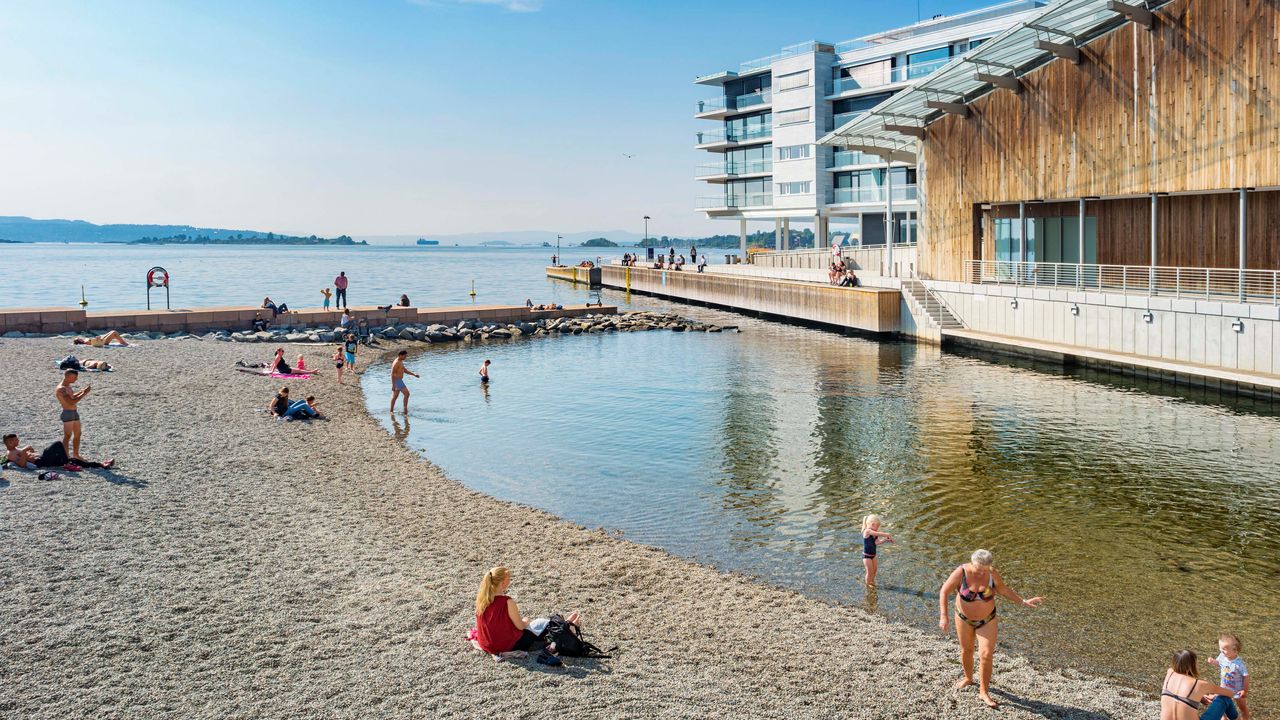
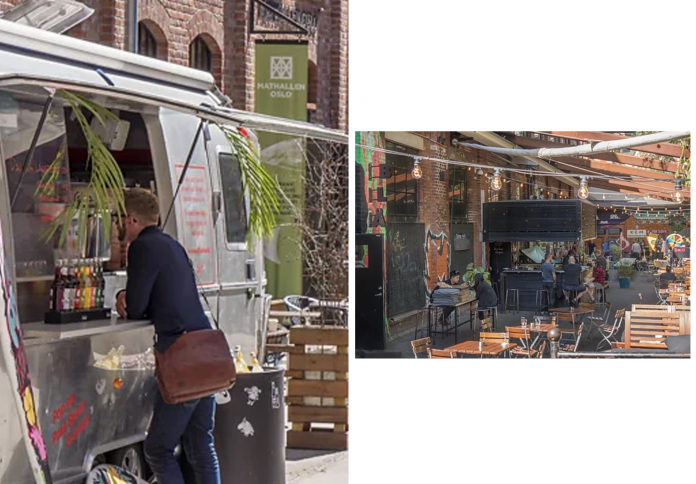
My own 24-hour immersion began in the Vulkan neighbourhood—a compact, culture-rich district set along the banks of the Akerselva River. Once a derelict industrial zone, Vulkan has been transformed into one of Europe’s most forward-thinking urban developments. It’s a place where sustainability meets community, where you can eat fresh oysters, catch a concert, or sip locally brewed beer, all within a few hundred metres.
Originally an industrial hub in the Middle Ages and later a manufacturing centre during the 19th century, the area languished in decay by the early 2000s. But in 2004, developers Aspelin Ramm and Anthon B Nilsen bought the site with an audacious vision: to turn it into a “city within a city,” redefining what urban life could look like. What followed was a total reinvention. By 2008, Dansens Hus—the national contemporary dance theatre—opened its doors. In 2012, Mathallen, Norway’s first food hall, launched inside a repurposed cast iron factory.
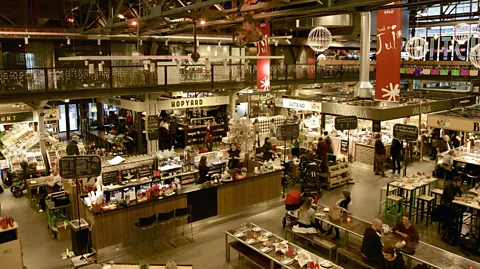
Today, Mathallen is the neighbourhood’s culinary heart, home to more than a dozen eateries, bars, bakeries, and specialty shops. During my visit, I sampled a dozen fresh oysters, devoured delicate pork bao, and sipped house-made cacio e pepe, all washed down with local craft beer. Just around the corner, Vulkan Arena—an intimate music venue—has hosted everyone from Kim Gordon to Mercury Rev, adding an unmistakable buzz to the cultural landscape.
Sustainability with soul
But Vulkan is more than a hotbed of cool cafés and creative spaces. It’s also a prototype for sustainable urban living. Beneath the square lie 300-metre-deep geothermal wells that provide nearly all the heating for the district in winter—and cooling in summer. Rooftop solar panels power much of the neighbourhood, including a standout office building whose façade doubles as a solar water heater.
Then there’s the Scandic Vulkan hotel: a sleek, design-focused property that was the first in Norway to be awarded Energy Class A—the EU’s highest sustainability rating. Even the rooftops are part of the green mission. In 2014, a pair of three-metre-high beehives were installed to support Oslo’s dwindling bee population. Their honey is served fresh just metres away at Mathallen.
What’s remarkable is how all of this fits into a single 9,400-square-metre plot—roughly one city block. Vulkan doesn’t shout its green credentials; it simply works. It’s a model of how modern urban life can be stylish, smart, and sustainable—all without feeling forced or overly polished.
A blueprint for Oslo—and beyond
Vulkan isn’t an isolated experiment. It’s the fingerprint of a wider ethos running through Oslo. The entire city centre reflects a similar commitment to thoughtful design and environmental consciousness. In neighbourhoods like Bjørvika, reclaimed industrial spaces have been reimagined as dynamic, multifunctional hubs featuring museums, residential towers, and public saunas floating on the fjord.
Oslo’s approach is aspirational but grounded. The city is part of a national vision: Norway has committed to becoming carbon-neutral by 2030 and achieving net-zero emissions by 2050. In this context, Vulkan is less a novelty than a prototype—a slice of what a sustainable, human-centric future might look like.
As I wrapped up my 24 hours, I joined locals in one of the city’s most iconic modern rituals: alternating between the searing heat of a wood-fired floating sauna and the icy waters of the Oslofjord. The experience—simple, elemental, invigorating—felt like the perfect metaphor for Oslo itself: clean, intentional, and quietly transformative.
Life-seeing, not sightseeing

Oslo may not have the grand boulevards of Paris or the pulsing nightlife of Berlin, but it offers something rarer: the chance to live well, even if only for a weekend. It’s a city that doesn’t ask you to rush, but instead invites you to pay attention. To “life-see” rather than just sightsee, as its clever 2024 tourism campaign suggests.
By the time I left, barely 12 hours after arriving, I felt a subtle kinship with the city. Maybe it was the fresh air or the sense of ease that permeated everything from street life to dinner plates. More likely, it was the way Oslo gently but confidently offers a glimpse of the future: sustainable, balanced, and deeply human. In an age when travel often feels like a race against time, Oslo makes the case for slowing down—and rethinking what a city break can be.