
For decades, humanity’s search for extraterrestrial life has been guided by a single principle: follow the warmth of a star. The traditional “habitable zone” is defined by the narrow band where a planet’s surface is neither too hot nor too cold, allowing for liquid water and a source of energy for life via photosynthesis. But a groundbreaking new study is challenging this conventional wisdom, suggesting that a far more widespread and abundant energy source could be available to life across the galaxy: high-energy radiation from dying stars. This radical theory expands the potential for life to exist in the cold, dark void of interstellar space or on worlds far from the warmth of a sun, opening up an entirely new frontier in the quest to find life beyond Earth.
The New Frontier of Habitability: Redefining Life’s Energy Source
The concept of the Habitable Zone has long been a cornerstone of astrobiology, a kind of cosmic real estate guide for where to look for life. But this new study, which explores the possibility of organisms living off galactic cosmic rays, proposes a vastly different kind of energy-rich environment. This is a profound shift from a model where life relies on starlight to one where it could thrive on a constant bombardment of high-energy particles. It redefines not just where life could exist, but how it could sustain itself, offering a compelling new answer to one of science’s oldest questions.

The prospect of life powered by radiation is a powerful one, as galactic cosmic rays are found throughout the Milky Way. This would mean that a planet’s or a moon’s distance from a star would no longer be the primary limiting factor for its habitability. The new “Radiolytic Habitable Zone” could include rogue planets thrown from their star systems, asteroids traveling through interstellar space, or icy moons like Jupiter’s Europa or Saturn’s Enceladus, where life could flourish beneath a protective icy crust, using the energy from cosmic shrapnel to fuel a vibrant ecosystem. It is a stunning, paradigm-shifting idea that suggests the universe is far more teeming with potential life than we once imagined.
The Cosmic Shrapnel: An Introduction to Galactic Cosmic Rays
Galactic cosmic rays are a particularly violent and energetic form of radiation, born from the spectacular deaths of giant stars in supernovas. These charged particles—mostly protons—are accelerated to incredible speeds, allowing them to zip through the galaxy with billions of times the energy of a light particle from the sun. If they were to hit an ordinary organism on Earth, they would tear through its cells like “ultra-fast subatomic bullets,” causing irreparable damage.
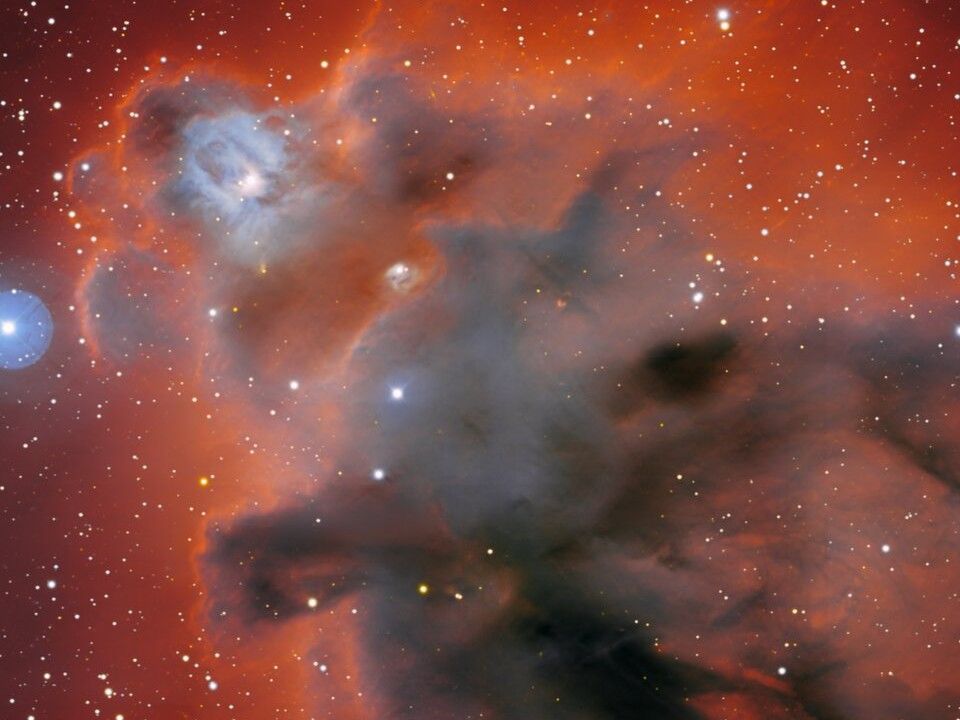
On Earth, we are largely protected from this bombardment by two powerful shields. Our planet’s giant magnetic field deflects the majority of the rays, and our thick atmosphere acts as a second line of defense, causing the remaining particles to smash into molecules, creating showers of less energetic particles. But on celestial bodies that lack these protections—such as Mars, which has a thin atmosphere, or moons like Europa, which have none—galactic cosmic rays would pummel the surface, a constant, powerful, and, as this study suggests, potentially life-giving barrage.
The Earthly Precedent: Lessons from a South African Gold Mine
The idea of life eating radiation is not just a speculative theory; it has a compelling precedent right here on Earth. In the deep, dark confines of a South African gold mine, scientists discovered a microbe named Desulforudis audaxviator. Living a couple of kilometers underground, far from any sunlight, this tiny organism survives on the chemical byproducts of radiolysis, a process where radioactive minerals in the surrounding rocks decay. For this microbe, the radioactivity is not a threat; it is an invisible chef, “cooking food” for it in the darkness.

This remarkable example got astrobiologists thinking about what would happen if galactic cosmic rays, a powerful form of radiation, hit the surface of other worlds. Through computer simulations, the researchers found that these incoming rays would generate cascades of particles, releasing electrons that could be used as an energy source. The team calculated that potentially thousands of microbes could flourish just a few meters below the surface of Mars, Europa, and Enceladus, where they would be protected from the harsh surface environment but still have access to the energy from the cosmic rays. This terrestrial precedent provides a powerful proof of concept for a theory that was once confined to the realm of science fiction.
The Hunt for the Unseen: The Challenge of Finding Radiolytic Life
The possibility of life thriving on cosmic rays is an optimistic and profound idea, but it also presents a new challenge for the search for extraterrestrial life. Unlike photosynthetic organisms, which produce a lot of oxygen and other detectable gases, these organisms would likely be living deep within rocks or ice, making them difficult to detect from afar. Their existence would be a quiet, subtle one, not necessarily producing any obvious signs that could be seen by our telescopes.
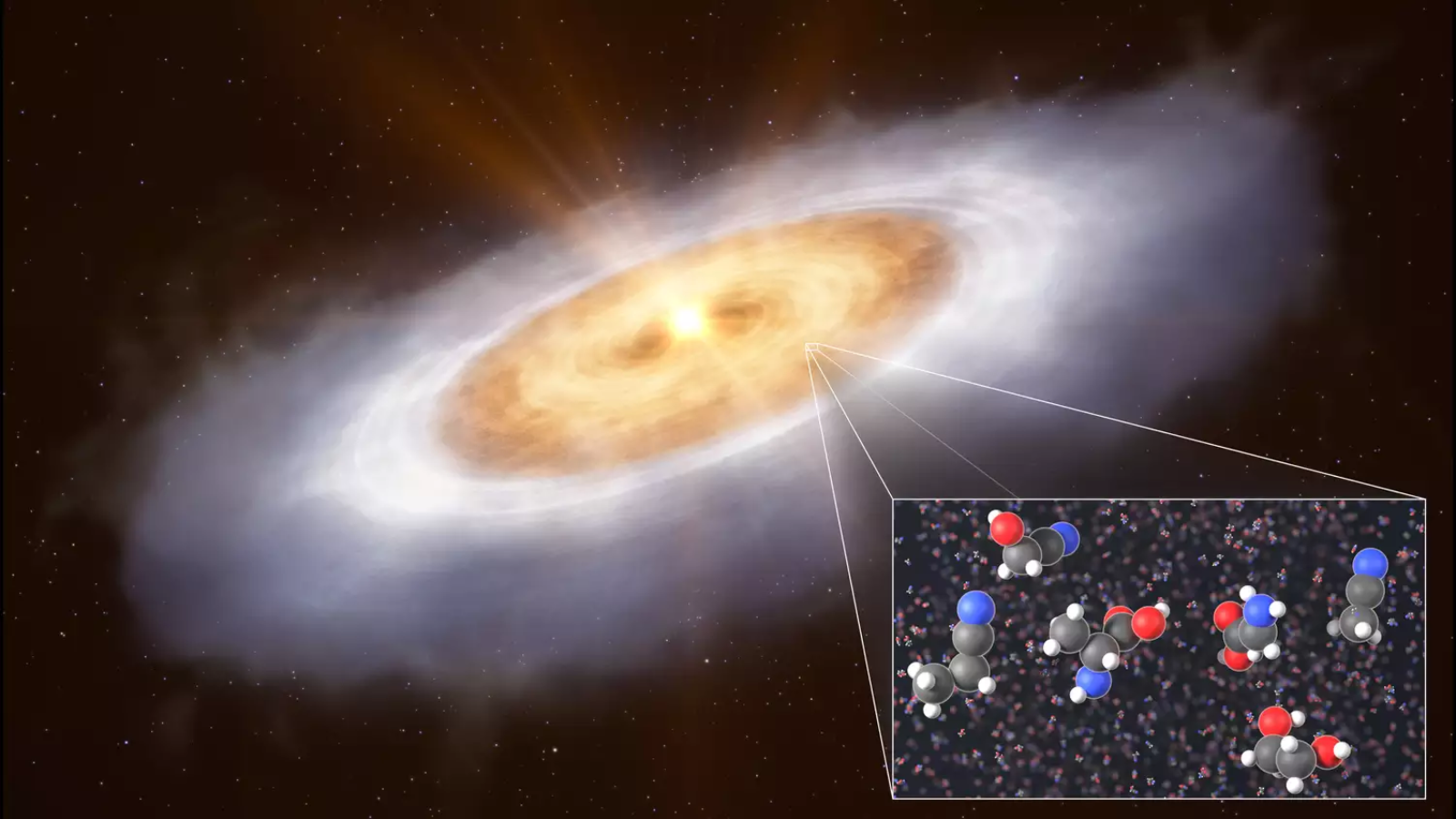
This means that the best way to find such creatures would be to get up close and personal. Missions like the European Space Agency’s Rosalind Franklin rover and China’s Tianwen-3 mission to Mars, both set to launch in the near future, will carry drills designed to search for biomolecules from underground microbes. This new theory gives these missions a powerful new purpose and a new reason to look beneath the surface. It is a powerful reminder that our search for life is constantly evolving, guided not just by what we know but by what we are only just beginning to imagine.