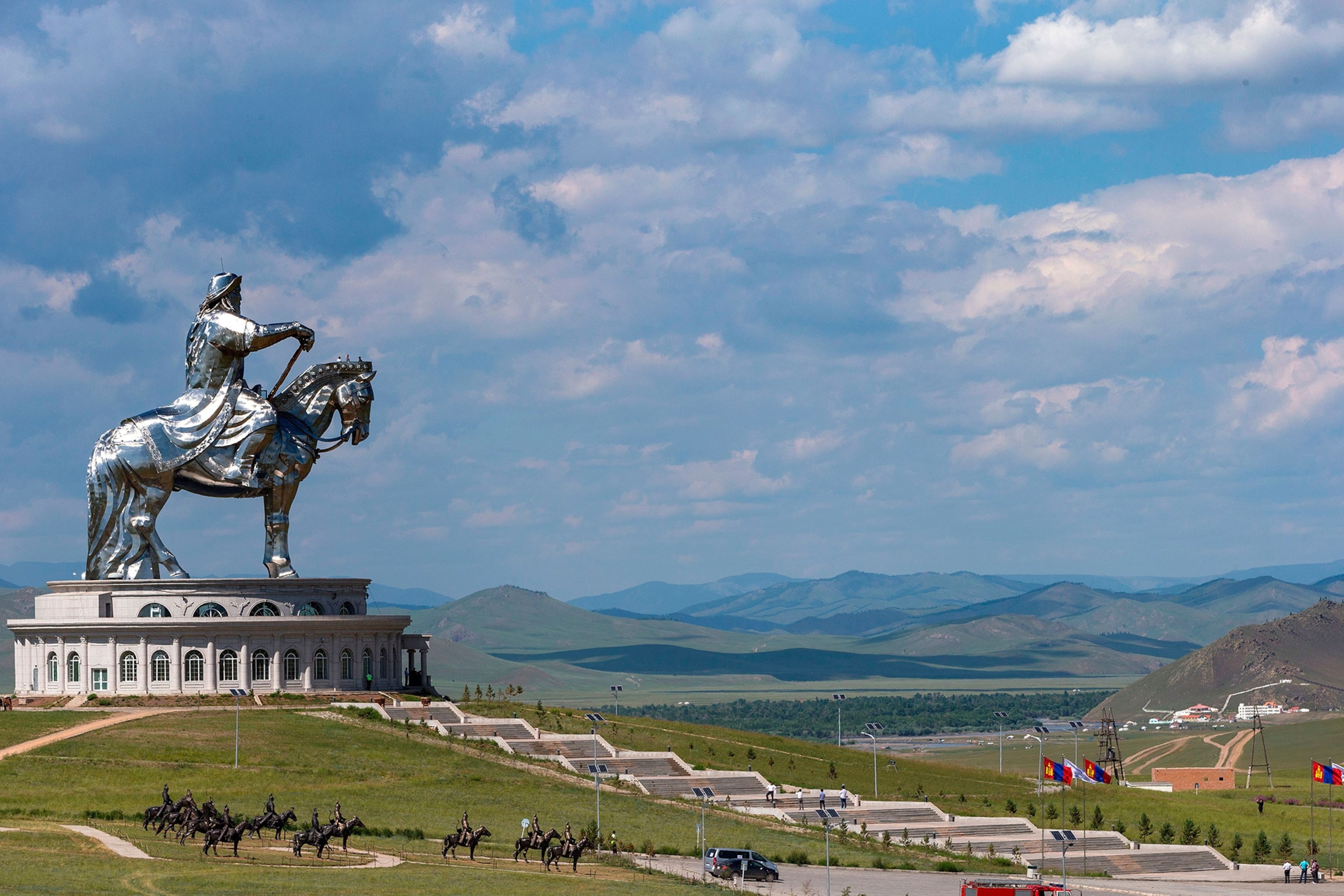
Emerging from the harsh, windswept steppes of Central Asia, the Mongols were a force that irrevocably altered the course of world history. Under the visionary and ruthless leadership of Genghis Khan (Temüjin), a collection of disparate, warring nomadic tribes was forged into the most formidable military machine the world had ever seen. Beginning in 1206, the Mongol armies exploded outward, ultimately creating the largest contiguous land empire in history, stretching from the Pacific Ocean to Eastern Europe. More than just conquerors, the Mongols initiated a period of unprecedented cross-cultural exchange known as the Pax Mongolica, dramatically linking East and West and laying the groundwork for global trade, technology transfer, and even the European Age of Exploration.
From Temüjin to Genghis Khan: The Unification of the Steppe
The man who would become the “Universal Ruler” of the Mongols, Genghis Khan, was born Temüjin, a member of a minor tribal aristocratic family around 1162. His early life was marked by brutal hardship, including the poisoning of his father and subsequent abandonment, forcing his family to live as outcasts and subsist by hunting and scavenging. This formative period instilled in him a relentless drive, resilience, and a deep understanding of tribal politics and survival.

Temüjin’s slow, methodical rise involved forming strategic alliances, engaging in fierce blood feuds, and displaying a tactical brilliance that allowed him to defeat and assimilate rival clans. Crucially, he did not simply slaughter the enemies he defeated; he often incorporated them into his own army and command structure, fostering loyalty based on merit rather than bloodline. In 1206, a kurultai (a council of Mongol chiefs) formally recognized his achievement, proclaiming him Genghis Khan—a title that signaled the birth of a unified nation and the beginning of a world-altering imperial project.
The Military Machine: Superior Strategy and Mobility
The astonishing success of the Mongol conquests was not due to overwhelming numbers, but to their superior organization, mobility, and sophisticated tactics. The Mongol army was primarily composed of highly skilled mounted archers—men and often women who lived and breathed the equestrian life. Their composite bows were powerful enough to pierce armor, and their ability to shoot accurately while riding at a gallop gave them a devastating advantage over static, heavy infantry forces.

Genghis Khan pioneered a highly effective military structure based on the decimal system, dividing troops into units of 10 (arbans), 100 (zuuns), 1,000 (mingghans), and 10,000 (tumens). This system ensured rapid communication and flexible command. Their most feared tactic was the feigned retreat, where a lighter cavalry force would pretend to break ranks and flee, drawing the enemy’s heavy cavalry into a disorganized pursuit before a waiting Mongol force would suddenly wheel around and surround the entrapped enemy. They also quickly mastered siege warfare by importing and utilizing engineers and technology from conquered peoples, notably the Chinese and Persians, allowing them to breach the walls of sophisticated urban centers.
The Pax Mongolica: Forging a Eurasian Highway
Despite their brutal reputation for conquest, which often involved the wholesale slaughter of resistance, the Mongols quickly established a period of enforced peace and relative stability across their vast domain known as the Pax Mongolica (Mongol Peace). This stabilization, lasting from the mid-13th to mid-14th centuries, effectively created a Eurasian superhighway.

The khans heavily subsidized and protected trade routes, reducing the cost and danger of overland travel, which revitalized the ancient Silk Roads. Goods like silk, porcelain, spices, and precious stones flowed between East and West, but more importantly, so did ideas, technologies, and knowledge. Chinese innovations like gunpowder, paper-making, and printing techniques traveled westward, while Islamic advances in mathematics and astronomy moved eastward. The Mongols also established the Yam, a sophisticated postal relay system of horse stations, which ensured rapid communication across the entire empire, essential for governance and military control.
Religious Tolerance and Administrative Adaptability
A crucial factor in the Mongols’ long-term governance was their policy of religious tolerance. Unlike many contemporary empires, the Mongols did not force conquered subjects to adopt their indigenous shamanistic beliefs. They exempted religious leaders, including Buddhists, Muslims, Christians, and Daoists, from taxation and military service, encouraging diverse spiritual traditions to coexist. This pragmatic approach helped to minimize religious friction and secure the loyalty of diverse populations.
Administratively, the Mongols were remarkably adaptive. They recognized their limitations as a purely nomadic people when it came to governing settled, bureaucratic societies like China or Persia. Consequently, they adopted the administrative systems of the conquered states, often placing a handful of Mongols in top military posts while relying heavily on Uyghur, Persian, and Chinese bureaucrats to handle the day-to-day affairs. This adaptability reached its zenith under Kublai Khan, Genghis’s grandson, who founded the Yuan Dynasty in China and established a cosmopolitan capital in Daidu (modern-day Beijing), blending Mongol, Chinese, and foreign cultures.
The Fragmentation and Enduring Global Legacy
Genghis Khan’s death in 1227, followed by the deaths of his successors, ultimately led to the disintegration of the monolithic empire. Disputes over succession among his sons and grandsons eventually fragmented the empire into four major, separate khanates: the Golden Horde in the northwest (Russia), the Chagatai Khanate in Central Asia, the Ilkhanate in Persia, and the Yuan Dynasty in China. While they often warred with each other, they maintained their common Mongol heritage and continued to guarantee the safety of merchants, ensuring the Pax Mongolica persisted for decades.
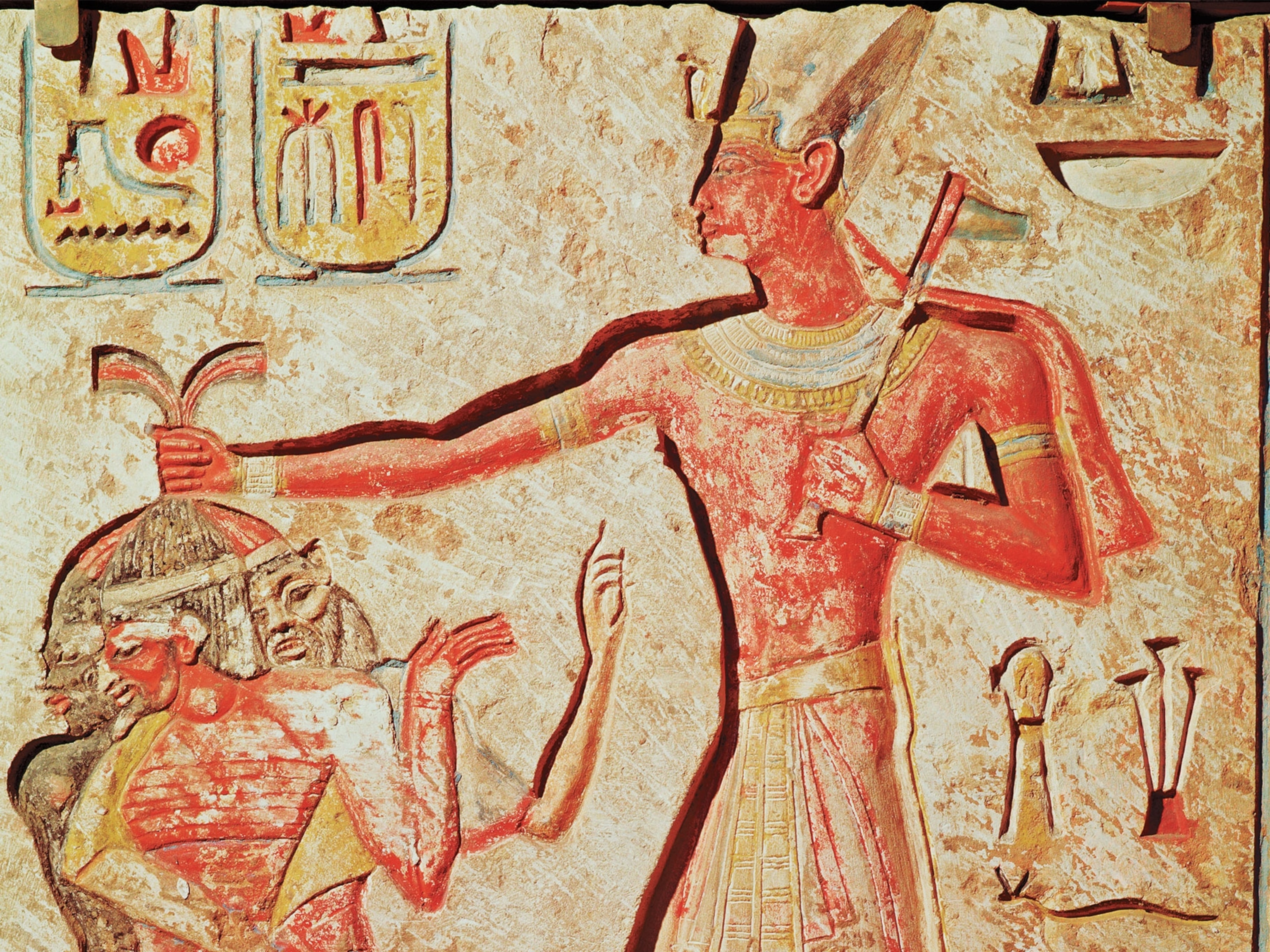
Although the Mongol Empire dissolved entirely by 1368 (with the fall of the Yuan to the Ming Dynasty), its legacy is indelible. The unprecedented interconnectedness it fostered helped spur the Renaissance by introducing Europe to Asian wealth and knowledge. The search for a sea route to avoid the unstable overland trade routes established by the Mongols indirectly fueled the Age of Exploration. Ultimately, the Mongols left behind not just a trail of conquests, but a world fundamentally, and permanently, more interconnected than ever before.