Regenerative design has become the design world’s latest buzzword, hailed as the next frontier beyond sustainability. But despite the growing chorus of thought leaders and innovators embracing the term, few can actually explain what it looks like in practice. In this candid exploration, industrial designer Jo Barnard breaks down the confusion surrounding regenerative design, explains why product designers may be hitting a philosophical wall, and proposes how we can begin to adopt regenerative thinking—even if perfect application still feels out of reach.
Moving beyond sustainability
“Sustainability is dead; long live regenerative design.” It’s a bold claim making the rounds in design circles, but for many designers—especially those working in physical products—the shift from sustainability to regeneration raises more questions than answers.
As an industrial designer, I’ve spent years grappling with the uncomfortable truth that our work depends on extracting finite resources from the Earth to produce items that will, more often than not, never return to the natural system. Even when applying circularity strategies like recyclability or modularity, the environmental toll remains significant.
At least with sustainability, we’ve developed a shared language and some measurable goals: reducing carbon, limiting waste, minimizing extraction, and keeping materials in circulation. The frameworks may be complex—LCAs, SDGs, Scope 1, 2, and 3 emissions—but they’re becoming familiar. Regenerative design, on the other hand, remains a conceptual fog. Ask 30 designers to define it, and you’ll likely get 30 different, often contradictory, responses.
The elusive definition of regeneration
Curious to clarify how regenerative design might apply in practice, my team at Morrama sought out definitions. Arup, the global engineering firm, defines regenerative design as “an approach in which human and natural systems are designed to co-exist and co-evolve over time.” Poetic—but not exactly actionable.
ChatGPT offered another take, contrasting regeneration with sustainability: while the latter aims to “do less harm,” regeneration asks how we might actively restore ecosystems and communities. That sounds more concrete—until you ask for a real-world example. A common answer: mushroom-based packaging that composts into soil. It’s an elegant idea, but how many consumers are truly burying their boxes in the backyard?
After speaking with others in the field, a consensus emerged: regenerative product design in the truest sense might not be possible—at least not under our current capitalist system, which prizes growth, profit, and efficiency over ecological balance and community wellbeing. That’s a fundamental conflict.
Regeneration as a mindset, not an end state
So where does that leave us? If sustainability is an outcome, regeneration may be better understood as a mindset. Regenerative thinking begins by acknowledging that human-made systems are inseparable from the natural systems they rely on. Right now, value flows in one direction—from nature to industry. Regeneration challenges us to reverse that flow, to design in ways that give back to the ecosystems and communities we touch.
This doesn’t always translate into physical products that heal the Earth, but it can inform how we work. For example, at Morrama, we designed Kibu headphones for children with longevity in mind. They’re made-to-order, customizable, and must be assembled by the user. Inspired by the “IKEA effect”—where people value items they’ve helped build—we hope to foster a new generation of consumers who care for and repair, rather than replace.
Rethinking materials and systems
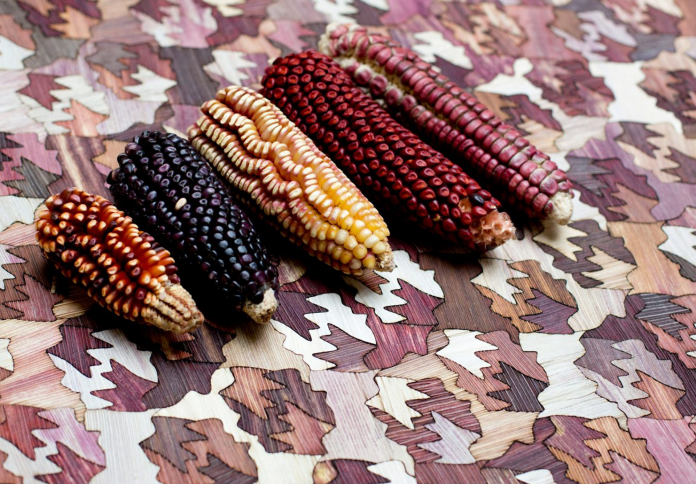
True regenerative design also demands deeper interrogation of our material choices. Where do they come from? Who extracts them? How are they processed? And what happens at the end of their life? That means designers must ask more questions, seek supply chain transparency, and learn more about local waste systems. It also means collaborating with local materials and communities whenever possible. A powerful example is Mexican designer Fernando Laposse’s Totomoxtle project, which transforms heirloom corn husks into marquetry while supporting indigenous Mixte farmers and restoring biodiversity.
This type of work—where material innovation is paired with cultural and ecological restoration—offers a glimpse into what regenerative design might one day become.
A call for systemic and cultural change
At the business level, regeneration asks more of us, too. We must embed the intention to do good—not just less harm—into every project. That includes holding conversations with clients about impact, pushing for long-term thinking, and challenging the norms of the industry itself.
Movements like B Corp, Design Declares, and Business Declares are helping shift the conversation toward responsibility, transparency, and systems change. But for now, we’re still operating within the confines of a system that doesn’t fully support regenerative ideals. And that’s the paradox: even brands as committed as Patagonia remain tethered to consumerism and growth.
Learning through practice
The truth is, we don’t yet have clear examples of regenerative product design. That makes it hard to teach, and harder still to implement. But we can—and must—begin somewhere. At Morrama, we’re treating regenerative design not as a fixed goal but as a lens. It’s an adjective, not a noun. Can this material be more respectful of its origin? Can this product invite care rather than disposability? Can this business decision benefit the people and places it affects?
These may be small steps, but they move us in the right direction.