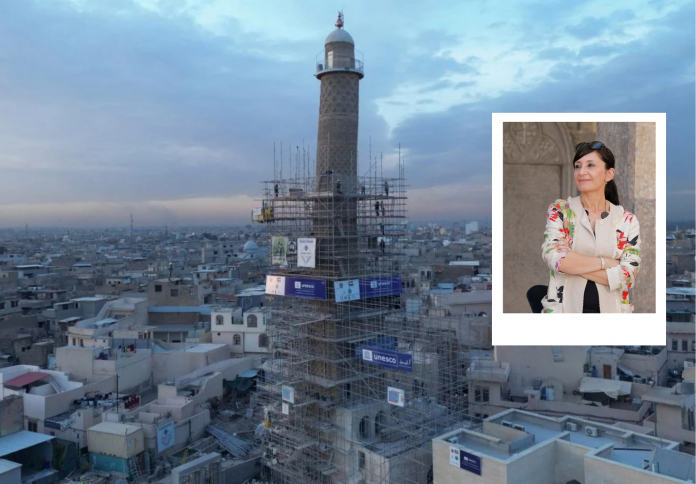
Mosul is a city scarred by conflict yet defined by layers of history. In a candid conversation with UNESCO coordinator Maria Rita Acetoso, a deeper vision emerges—one of reconstruction not just in stone, but in memory and resilience. The project goes beyond rebuilding monuments: it’s about restoring social fabric, honoring diverse cultural narratives, and empowering local communities to reclaim Mosul’s collective heritage.
Mosul’s architecture as testimony and terrain

Once an architectural crossroads, Mosul’s urban landscape reflected centuries of coexistence: Ottoman mosques, Assyrian ruins, Armenian quarters, a vibrant Christian presence. Conflict has shattered that tapestry. Rather than imposing a sterile restoration, UNESCO’s approach is to honor each fragment, each ruin, as signifiers of lived stories. Preservation here navigates both absence and survival—where a missing courtyard, a scarred minaret, or a reconstructed arch serve as reminders and markers of collective past.

Rather than freeze sites in time, the reconstruction seeks symbiosis—where traditional craftsmanship, archaeologic integrity, and community care converge. Local artisans are not only renovating stonework, but narrating histories. The architecture is not just preserved; it’s inhabited and reinterpreted as a platform for social cohesion.
Reconstruction as reconciliation and regeneration

Acetoso emphasizes that rebuilding Mosul isn’t just technical—it’s therapeutic. The focus lies on layered restoration, where architecture, civil life, and memory interlock. Public consultations, youth-led mapping, and oral history projects accompany masonry and roof repairs. Workshops train former artists, carvers, and builders to repair their neighborhoods. The act of rebuilding becomes a civic act—a reclaiming of agency as much as bricks.

Sites like Al‑Nouri Mosque, once a site of destruction, are framed in the restoration not just as spiritual centers, but as stages for dialogue and reclaiming dignity. The restored spaces encourage multifunctional use—traditional worship side by side with communal gardens, exhibitions, and local bazaars. It’s a model of culturally anchored reparative justice.
Sustainability woven into heritage resilience
Rather than importing foreign materials, the program emphasizes local sourcing: Mosul basalt, recycled white marble, hand-fired brick, and local lime mortar—reconnecting restoration to geology and traditional technique. Such choices create continuity and reduce carbon footprint. They align with ecologically conscious thinking: traditional materials regenerated responsibly, structures repaired to withstand seismic events and climate extremes, all while respecting original form and materials.

Acetoso points out that sustainability here isn’t just environmental—it’s cultural. Restored neighborhoods thrive only if they empower locals to remain, to look after sites, and to pass stewardship to the next generation. When rebuilding becomes localized, so does ownership.
Mosul beyond conflict: a model of placemaking

UNESCO’s efforts speak to global lessons: restoration shouldn’t romanticize heritage, but iterate on it; public memory should be cared for—not curated. Refugee return, youth leadership, workplace revival and religious pluralism are all parts of the bigger effort. The case of Mosul is not just about reconstructing mosques or museums—it’s about resurrecting pluralism as a civic ethic.

As Acetoso frequently states, “heritage is not only bricks—it is the invisible architecture of identity.” In Mosul today, restoration is more than brickwork—it’s making space for future narratives to unfold, in the shade of what once was, and in the hope of what might be.