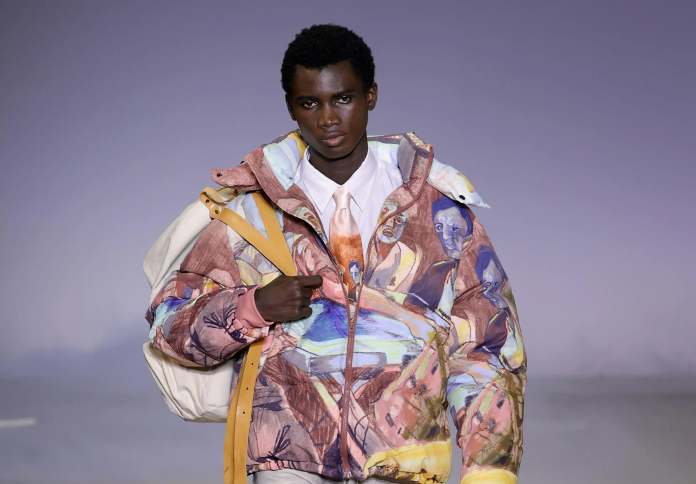
From June 24 to June 29, Paris became the global stage for the Spring/Summer 2026 menswear season, bringing together legacy maisons, rising designers, and a creative energy that blurred the lines between tradition and radical experimentation. With artistic shifts, debut moments, and cultural crossovers, Paris Fashion Week proved once again why it remains the crown jewel of the men’s fashion calendar.
A week shaped by contrasts
Under Paris’s blazing early-summer sun, fashion’s most influential week opened not with megawatt spectacle, but with the fresh energy of the next generation. The first show—hosted by the students of Institut Français de la Mode (IFM)—set a contemplative, experimental tone. These emerging voices presented collections that were conceptually rich, highlighting sustainability, gender fluidity, and socio-political expression.
This same exploratory spirit flowed through early shows from Études Studio and Auralee, while the evening belonged to the giants. Saint Laurent delivered sleek silhouettes in desert hues, paired with razor-sharp tailoring that walked the line between sensuality and control. Louis Vuitton, meanwhile, offered a more theatrical vision, complete with sculptural accessories and cinematic showmanship—underscoring its continuing fusion of streetwear cool and couture precision.
Front rows were graced with buzzy celebrity appearances: Jeremy Allen White, Aaron Taylor-Johnson, and a swirl of global tastemakers helped turn the opening night into a cultural event as much as a fashion one.
Midweek reflections: intimacy, eccentricity, and tension
Wednesday and Thursday traced the emotional breadth of menswear today. Christophe Lemaire led with subtlety—his presentation full of slouchy shapes, layered neutrals, and an air of timeless effortlessness. Lemaire’s quiet rebellion felt like an antidote to fashion’s louder corners.
Then came 3.Paradis, whose politically charged designs tackled themes of migration and memory. Graphic storytelling and heartfelt casting gave the show a resonance that lingered well beyond the runway. Later, Walter Van Beirendonck embraced the opposite extreme: technicolor chaos, cartoonish prints, and sculptural silhouettes—all wrapped in satire. His message? Fashion can still be fun, fierce, and unapologetically weird.

By nightfall, Wales Bonner and AMI created a perfect juxtaposition. Bonner’s Caribbean-inspired tailoring shimmered with handwoven detail and soft, earthy tones—a hymn to cultural heritage and elegance. In contrast, AMI offered Parisian romance at its finest, full of crisp blazers, unbuttoned shirts, and candlelit sex appeal. If one was a love letter to identity, the other was a postcard from the Left Bank.
Sculptural poetics and radical forms
Thursday delivered some of the season’s most emotionally rich collections. Issey Miyake presented clothing as choreography—models in motion showing off fabrics that twisted, pleated, and glowed like wearable poetry. Dries Van Noten, in one of his final seasons before stepping back from the brand he founded, showed a dreamlike palette of pastels and prints that felt at once nostalgic and forward-facing.
Then, Yohji Yamamoto and Rick Owens took the night into darker, moodier territory. Yamamoto offered deconstructed suits and ink-stained silhouettes that evoked the romance of decay. Owens, always the provocateur, presented brutish elegance through spiked boots, angular leather, and dystopian tunics. His runway, veiled in smoke, was less about clothing and more about building a universe—one that’s both primal and visionary.
The future in motion: Anderson, Nigo, and beyond
Friday marked a major shift for Dior Homme. For the first time, the collection came under the direction of Jonathan Anderson, who brought a sculptural playfulness to the house’s historically sleek tailoring. There were jackets with twisted seams, asymmetrical pleats, and subtle nods to Anderson’s Loewe tenure—signaling a new, bold era for Dior menswear.
Later, Kenzo, helmed by Nigo, offered a kaleidoscopic mix of Japanese street style and Western references. The collection pulsed with energy: varsity jackets reworked with kimono fabrics, pleated shorts styled with platform sandals, and embroidered bombers that nodded to 90s nostalgia. The atmosphere was electric—a love letter to cross-cultural identity in motion.
The weekend: experimentation and emotional depth
As the weekend arrived, Paris showed no signs of slowing down. Saturday’s lineup was a masterclass in creative freedom. Kiko Kostadinov delivered cerebral minimalism, where garments unfolded like architectural puzzles. Hermès, on the other hand, provided a sensual palette cleanser: breezy linen suits, equestrian motifs, and sun-washed silks in a collection that whispered luxury rather than screamed it.
Kidsuper continued to merge fashion with performance art. The show felt like a surreal theatre piece—models danced, painted, and interacted mid-runway. While chaotic at times, it perfectly embodied founder Colm Dillane’s youthful energy and rejection of fashion’s fourth wall. It was messy, brilliant, and deeply human.
On Sunday, Jacquemus brought the week to a poetic close. Against a warm Provençal backdrop, models walked barefoot on sand-colored runways, wearing crisp cotton suiting, romantic shirting, and sheer fabrics that caught the light like ocean spray. It was the fashion equivalent of a summer breeze—both dreamy and deliberate.
What this season told us
Paris Men’s Fashion Week Spring/Summer 2026 didn’t define one “look” for the season—it offered a thousand perspectives. From soft tailoring to radical form, from quiet rebellion to maximalist play, the week confirmed that men’s fashion today is less about rules and more about range.
It was also a season of transition. With major artistic shifts—like Anderson at Dior—and rising names continuing to earn their place, Paris felt like a city in creative renewal. The tension between legacy and future was palpable, and thrilling to witness. What remains unchanged is Paris’s power to move us, to inspire, and to reflect not just what men wear, but who they are—and who they’re becoming.