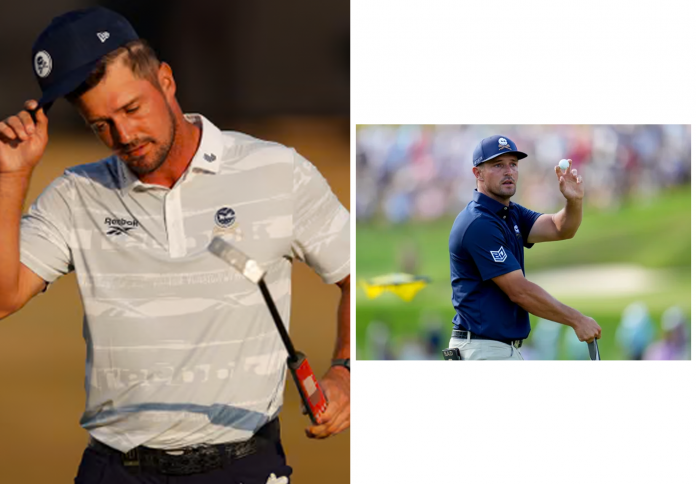
Bryson dechambeau's growing youtube presence alongside elite golf captures the part of elite sport that a scoreboard alone cannot explain. Tournament golf is built from measurable outcomes—shots, positions, cuts, trophies—but the meaning of a week often comes from less tidy elements: pressure, reputation, crowd behavior, preparation, money, identity, and the relationships that surround a player. Those forces can become especially visible when a major championship or a wider institutional dispute compresses them into a few decisive days. Rather than treating the event as a sequence of isolated moments, it is more revealing to read it as a snapshot of the professional game itself: intensely individual, highly commercial, historically conscious, and still dependent on routines and judgments that happen far from the cameras.
The Competitive Frame
Elite golf is unusually exposed to small swings in circumstance. A single bad lie, a missed putt, a crowd interruption, or a difficult stretch of holes can change the emotional shape of a round without fully explaining the quality of the performance. Bryson DeChambeau's growing YouTube presence alongside elite golf should therefore be read within the larger competitive frame. Majors, tour politics, and Ryder Cup debates concentrate attention, but players still have to solve immediate problems one shot at a time. That contrast—between enormous narrative stakes and tiny technical decisions—is central to the sport's appeal.
For fans, this complexity can be frustrating, yet it also explains why the sport now produces arguments that extend far beyond technique. Bryson DeChambeau's growing YouTube presence alongside elite golf becomes a case study in what professional golf is trying to become. The answer remains unsettled. That uncertainty is worth preserving rather than smoothing away, because it is part of the real story of the game in this period.
Pressure Beyond the Scorecard
Pressure is not distributed evenly. Leaders manage the fear of losing position; chasers balance aggression against patience; established stars carry public expectations that younger players may not yet face. In Bryson DeChambeau's growing YouTube presence alongside elite golf, the visible action is only part of the story. Preparation, fatigue, course setup, media obligations, and the noise around professional golf all shape the environment in which decisions are made. A useful account leaves room for that complexity instead of treating every outcome as proof of character.
Context also protects analysis from hindsight bias. Once an outcome is known, every earlier decision can look as though it pointed inevitably toward the finish. Bryson DeChambeau's growing YouTube presence alongside elite golf is more instructive when uncertainty is restored. Players did not know what the leaderboard would become; officials did not know which controversy would dominate; spectators did not know which shot would matter most. Reconstructing that uncertainty is essential to understanding pressure rather than merely narrating a result backward.

Reputation, Routine, and Response
Reputation matters in golf because careers unfold in public over many seasons. Players acquire identities—worker, showman, tactician, grinder, favorite, outsider—and those labels can influence how each new result is interpreted. Bryson DeChambeau's growing YouTube presence alongside elite golf is a reminder that reputation can illuminate behavior but also oversimplify it. Routines are more concrete. Practice habits, equipment choices, travel, coaching relationships, and responses to setbacks offer a better sense of how professional performance is sustained than personality shorthand alone.
Golf's peculiar pace magnifies that psychological space. There are long walks between brief actions, creating time for momentum to be imagined, lost, or rebuilt. In Bryson DeChambeau's growing YouTube presence alongside elite golf, those intervals matter because they separate reaction from execution. A player may feel anger, relief, or doubt, yet still has to return to a repeatable process on the next shot. That is one reason composure is often discussed so much in the sport, even though it is difficult to measure directly.
The Wider Game Around the Game
The modern professional game also extends well beyond tournament ropes. Media platforms, sponsorships, rival tours, governing bodies, fan culture, and questions about access all affect what players are asked to represent. Bryson DeChambeau's growing YouTube presence alongside elite golf belongs to that wider ecosystem. A disagreement about crowds, money, schedule, team competition, disability sport, or digital media is rarely just an off-course distraction; it often reveals how the business model of golf is changing and who is expected to adapt.
Crowds and media add another variable. Spectators can create energy, tribalism, humor, and at times hostility; broadcasters can elevate a minor exchange into the defining image of a day. Bryson DeChambeau's growing YouTube presence alongside elite golf shows how professional athletes operate inside a public arena they cannot fully control. The fair response is neither to dismiss emotion nor to treat every reaction as a moral referendum. Behavior matters, but so do the conditions in which it occurs.

What the Moment Leaves Behind
What remains after a major sporting moment is rarely only the final number. Fans remember gestures, pressure, composure, conflict, surprise, and the stories that make an outcome feel connected to a longer career. Bryson DeChambeau's growing YouTube presence alongside elite golf matters because it adds another layer to that collective memory. The fairest reading resists turning one week into a permanent verdict. Sport is compelling precisely because the next round can complicate the story that seemed complete the day before.
Economics is increasingly difficult to separate from competition. Prize money, tour membership, sponsorship, content creation, and access to elite events all affect career choices. Bryson DeChambeau's growing YouTube presence alongside elite golf belongs to that changing landscape. The traditional image of a golfer simply chasing trophies is incomplete when players are also media properties, independent businesses, and participants in institutional disputes that can shape where and against whom they compete.