Croissants may have been born in France, but a Korean bakery empire is proving they can thrive far beyond Paris. With ambitious global expansion, innovative flavors, and a cultural strategy as precise as its pastries, Paris Baguette is baking up a new bread narrative—one that’s as Korean as it is international.
A bakery with Paris in its name—and Seoul in its soul
Step into any bustling shopping mall in Asia—Singapore, Seoul, or even Tokyo—and you’re likely to smell the rich aroma of buttery pastries wafting through the air. And often, that scent leads you to a branch of Paris Baguette, the flagship bakery brand of South Korea’s SPC Group.
At first glance, Paris Baguette leans heavily into European aesthetics: tricolor signage, Eiffel Tower logos, and café-style seating that evoke the charm of a Parisian boulangerie. But make no mistake—it’s a Korean brand through and through. “I wouldn’t limit our bread to everything from France. We are an international brand,” says Jin-soo Hur, president and CEO of SPC Group. “Croissants may be European in origin, but I would say they are now universal.”
Founded in 1988, Paris Baguette was born out of a modest family-run bakery business that began over 80 years ago in South Korea. Today, the company employs over 20,000 people and reported $5.6 billion in sales last year. Its global footprint spans more than 4,000 stores across 14 countries, with plans to open 1,000 more branches internationally by 2030—many of them in the United States.
Exporting efficiency and flavor
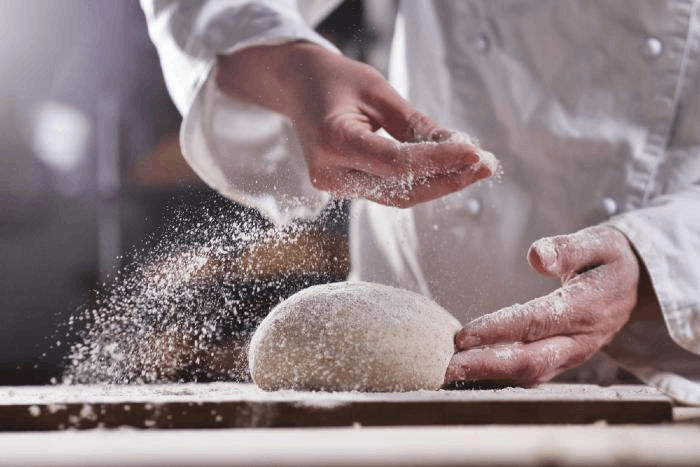
Central to Paris Baguette’s global strategy is its ability to scale without sacrificing consistency. The company has pioneered a system of frozen dough production that allows it to ship partially prepared pastries to franchise locations, where they are finished on-site. This model improves shelf life, maintains product uniformity, and addresses a more practical problem: “Workers don’t like to wake up early to knead dough by hand,” Mr. Hur says with a smile.

The strategy is pragmatic and ambitious. A new factory currently under construction in Texas—scheduled to open in 2027—will become SPC’s largest overseas production facility, supplying products to the U.S., Canada, and Latin America.
But convenience doesn’t come without trade-offs. When chef and pastry expert Saverio Busato from the Culinary Institute of America in Singapore participated in a blind tasting of a croissant made from frozen dough, he didn’t mince words. “This is quite bad. There’s no honeycomb structure, the lamination is weak, and the flavor is flat. It’s gluey and dense,” he remarked. Still, Busato acknowledges the challenge of balancing artisanal quality with industrial scale. “You can’t demand perfection if you’re baking for millions. But when it comes to traditional Asian baked goods, some of them are absolutely delightful.”
Food, culture, and football
Beyond production logistics, Paris Baguette is investing heavily in cultural capital. The brand has positioned itself at the intersection of food and sport through strategic partnerships with global football clubs. A recent collaboration with English Premier League team Tottenham Hotspur has allowed the bakery to reach a wider audience, especially in London, where fans can now enjoy Paris Baguette offerings on match days.
“I think food is culture,” says Mr. Hur. “Sports brings people together, and there’s always good vibes in a stadium.” The choice of Tottenham is particularly symbolic. South Korean football star Son Heung-min, captain of both Spurs and the national team, recently led his club to a Europa League victory—its first major trophy in 17 years. For Mr. Hur, the partnership is not just about national pride. “Tottenham is a top club, and Paris Baguette wants to be best in class too,” he says.
K-mania meets bakery innovation
Paris Baguette’s global appeal is also riding the wave of “K-mania”—the worldwide fascination with Korean culture, from K-pop and K-dramas to skincare and cuisine. This cultural momentum has helped fuel interest in Korean food products, including pastries that combine traditional Asian ingredients with Western forms.
From matcha croissants to red bean buns and pandan cream rolls, Asian bakeries are no longer niche outposts—they’re trendsetters. Paris Baguette has leaned into this with the launch of a halal-certified plant in Malaysia, ensuring it can cater to growing demand in Southeast Asia and the Middle East. Chef Busato notes that the popularity of Asian flavors abroad is tangible. “I was recently in Italy and saw several Asian bakeries. Locals were lining up to try their offerings. That says something.” He was especially impressed by a classic Korean milk bread. “It’s fluffy, aromatic, and nostalgic. Honestly, I think it would do very well in Europe.”
Expanding amid uncertainty
Despite its growth trajectory, Paris Baguette faces challenges—especially as it tries to penetrate the volatile U.S. market. Inflation, shifting consumer habits, and rising operational costs have forced global competitors like Pret A Manger to experiment with subscriptions and rethink their store models. Some have closed outlets altogether.
Mr. Hur is aware of the headwinds, but insists the company is playing a long game. “If we were only focused on profit, we’d just stay in Korea,” he says. “But we want to change bread culture around the world. We want to open more bakeries, not fewer. That’s good for our brand, good for our country, and good for people.”
From Seoul to Singapore, Paris to New York, Paris Baguette is no longer just chasing French elegance—it’s crafting a unique, globally resonant flavor all its own. In doing so, it’s proving that the future of bread doesn’t belong to any one country—it belongs to those bold enough to bake it differently.