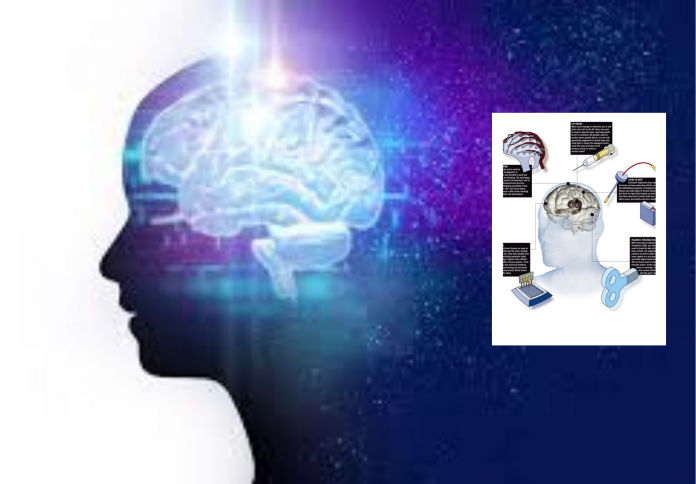
Have you ever stopped to wonder how your brain creates the endless stream of thoughts that fill your day? Or why a random memory might suddenly pop into your head without warning? It may seem like pure magic, but the human brain is actually a biological supercomputer, tirelessly working to help you think, learn, and make decisions. As a professor of psychology and neuroscience, I’ve spent almost 20 years studying this fascinating organ. While neurologists, neuroscientists, and neurosurgeons continue to unlock its secrets, we have come to understand that the brain operates much like a busy, bustling city, with messages traveling along vast networks to give rise to everything you think and feel.
The Architecture of Thought
At the most fundamental level, the key players in your brain are tiny cells called neurons. You have somewhere between 80 billion and 100 billion of them, and their primary job is to send and receive signals. These neurons tend to group together to form neural tracts, which you can think of as the streets and highways of your brain’s city. When a thought occurs, neurons fire up, creating electrical impulses that travel along these pathways.
As these impulses move, they release microscopic chemicals called neurotransmitters, which are like a construction crew paving the roads. You can imagine a message starting on a dirt path, but as more signals travel the same route, the road gets upgraded to a paved street, and then eventually to a superhighway. This process is fundamental to learning and skill development. The more you practice a new skill, such as riding a bike or playing the piano, the more the neurons involved in that task fire together. This repeated activity forms and strengthens neural networks, making the action much easier over time. Scientists in this field have a famous saying that perfectly captures this concept: “Neurons that fire together, wire together.”
Consciousness, Memory, and Creativity
You are consciously aware of only a small fraction of the information your brain processes every day. Your brain is a master collector, constantly receiving input from all your senses: sights, sounds, tastes, smells, and touch. When you see a cute puppy or smell a delicious apple pie, your senses send signals that trigger a chain reaction of thoughts and emotions. These reactions are often shaped by your memories, which your brain stores like files in a computer, ready to be accessed at any time.
Memories help influence how you see the world and why certain things make you feel a certain way. If you remember a fun day at the beach, that memory might make you feel happy and relaxed. If the smell of apple pie reminds you of your grandmother’s baking, it’s because a pleasant association has been formed and strengthened in your brain over time.
Your brain’s creativity is another incredible superpower. It’s what allows artists, writers, and scientists to come up with new ideas and solve problems. You’ve probably experienced a “eureka” moment—that sudden flash of a brilliant idea—and that’s your brain’s way of connecting disparate dots to come up with a novel solution.
Fueling Your Brain for Optimal Performance
Just like a high-performance car needs the right fuel and maintenance, your brain needs care to function at its best. Most scientists agree that sleep is incredibly important. It gives your brain a chance to process the day’s information, rest, and form new connections. Many people find that they have their best ideas after a good night’s sleep, while a lack of sleep can make it feel impossible to think straight.
In addition to adequate rest, your brain needs proper nutrition and oxygen to function. Eating healthy foods and getting regular exercise are crucial for boosting your thinking power. Activities that challenge you mentally, such as reading, solving puzzles, making art, or playing music, are also excellent for your brain. It’s also important to be mindful of what you consume. Things like cigarette smoke, alcohol, and drugs can kill brain cells, as can head injuries. Wearing a helmet during sports like biking, football, or soccer can make a significant difference in protecting your brain from harm.
Ultimately, the brain is a remarkable organ that works tirelessly to create every thought, memory, and idea you have. As technology advances, scientists are getting closer to fully understanding how these biological processes give rise to conscious experience. The quest to fully map the brain is the ultimate neuroscientific challenge, and while we still have a long way to go, we are continually learning more about the incredible supercomputer that resides within each of us.