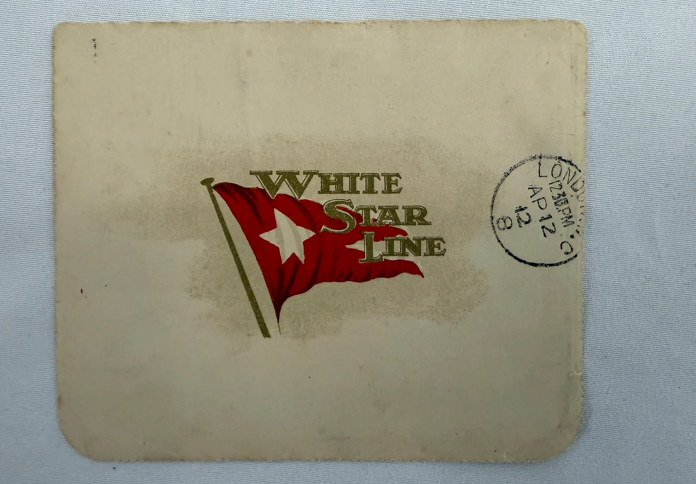
A rare letter written onboard the RMS Titanic by one of the ship’s most famous survivors, just days before the tragic sinking, has sold at auction for an astonishing £300,000 (approximately $399,000). This extraordinary artifact offers a deeply personal glimpse into the experience of Archibald Gracie, a first-class passenger whose poignant words now echo through history as a haunting prelude to one of the most infamous maritime disasters.
A unique glimpse into the last days of the Titanic
The letter was penned on April 10, 1912, the very day the Titanic set sail from Southampton on its ill-fated maiden voyage. Addressed to the seller’s great-uncle, the note captures Gracie’s initial impressions of the vessel: “It is a fine ship but I shall await my journey’s end before I pass judgment on her.” Little did he know that the journey’s end would come so suddenly and tragically.
This letter is believed to be the only known correspondence written by Archibald Gracie while onboard the Titanic. Its discovery and subsequent sale by Henry Aldridge & Son, a respected auction house based in Wiltshire, England, generated enormous interest. The final hammer price — five times the pre-sale estimate of £60,000 — highlights the immense historical and emotional weight attached to this single piece of paper.
The letter’s postmark from Queenstown, Ireland, confirms it was mailed during one of Titanic’s two port stops before the ship met its fate off the coast of Newfoundland. After colliding with an iceberg late on the night of April 14, 1912, the Titanic sank in the early hours of April 15, leading to the loss of more than 1,500 lives in one of history’s deadliest peacetime maritime disasters. Andrew Aldridge, the auctioneer who handled the sale, described the letter as an “exceptional museum-grade piece,” underscoring its rarity and significance not only to collectors but also to historians and enthusiasts of Titanic lore. More than a mere collectible, the letter is a tangible thread linking us directly to a man who witnessed the disaster firsthand.
The story of archibald gracie: survivor and chronicler
Archibald Gracie was a first-class passenger who boarded the Titanic with high hopes on that April morning in 1912. Assigned cabin C51, he settled in for what was supposed to be a luxurious transatlantic journey. However, after the Titanic struck the iceberg, Gracie’s survival story turned harrowing. He jumped into the freezing Atlantic waters and found refuge clinging to an overturned collapsible lifeboat.
Rescue eventually came aboard the R.M.S. Carpathia, the ship that responded to Titanic’s distress calls and picked up survivors from the lifeboats. Though he survived the night and was brought safely to New York, the experience left lasting scars. Gracie suffered from severe hypothermia and never fully recovered from the ordeal. Later that year, complications related to diabetes led to his untimely death.
But Gracie’s contributions to Titanic history did not end with his survival. In 1913, he authored The Truth about the Titanic, a comprehensive and detailed account of the sinking. His firsthand narrative remains one of the most respected and insightful sources about the night the great ship went down. The letter auctioned recently gains even more significance knowing it came from a man who documented history so vividly.
A cherished relic of maritime history
The sale of this letter shines a spotlight on the enduring fascination with the Titanic and the human stories woven into its legacy of tragedy and courage. Artifacts like this letter are much more than collectibles; they are emotional touchstones that connect us to the past and to those who lived through one of the 20th century’s most tragic moments.
For the private collector who acquired the letter, it is more than an object of historical interest — it represents a deeply human story of hope, survival, and the fragility of life. Titanic memorabilia continues to command a passionate following worldwide, with items directly linked to survivors such as Gracie holding a particularly special place in the preservation of history. This letter does more than capture a moment before catastrophe — it immortalizes the voice of a witness to history. Through Gracie’s words, the Titanic’s story transcends the headlines and statistics, becoming a testament to resilience, humanity, and the complex emotions tied to that fateful voyage.
As decades pass, the fascination with Titanic endures, fueled by artifacts like this letter that bring the past into sharp, vivid focus. It reminds us that history is not just dates and events, but the lived experiences of individuals whose stories continue to resonate.