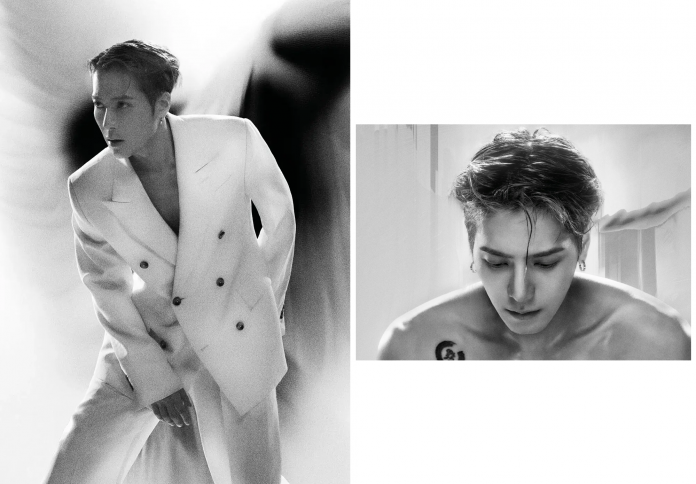
Jackson wang in the era of magic man 2 offers a useful way to look past the polished machinery of celebrity and toward the choices that shape a public career over time. Interviews, campaigns, performances, and screen roles can appear separate, yet together they reveal a recurring question: how does a recognizable figure keep evolving without becoming unrecognizable to the audience that follows them? The answer is rarely one dramatic reinvention. More often, it is a sequence of decisions about work, taste, identity, collaboration, and the degree of control a person wants over their own narrative. That makes this story larger than a profile. It is about the modern public figure as both artist and editor—someone continually deciding what to reveal, what to protect, and what to make next.
A Public Persona, Built in Layers
A public career is assembled from fragments: roles, interviews, campaigns, performances, appearances, and the quieter intervals between them. Jackson Wang in the era of MAGIC MAN 2 becomes more interesting when those fragments are read together rather than treated as isolated publicity moments. Repetition can reveal values. So can contrast. A performer who moves between different formats may be testing range; a long-term relationship with a brand may signal continuity; a carefully bounded interview may show how much control the person wants over a narrative that can otherwise grow beyond them.
This is especially important in an era when personality itself can be monetized. Social platforms reward immediacy, while film, music, and fashion still depend on longer production cycles. Jackson Wang in the era of MAGIC MAN 2 sits between those tempos. The challenge is to remain present enough to sustain connection without allowing the feed to become the only place where identity is produced. Work needs time that publicity does not always respect.
Work as a Form of Self-Definition
Modern celebrity asks people to be visible and legible at the same time. Audiences want personality, but too much access can flatten mystery. Jackson Wang in the era of MAGIC MAN 2 sits inside that tension. The strongest public figures often learn to separate disclosure from exposure: they can speak clearly about process, ambition, doubt, collaboration, or taste without turning every private detail into content. That distinction matters because longevity is easier to sustain when a career has interior space—room for work to change before the audience is told exactly what the change means.
Collaboration is another form of authorship. Actors, musicians, models, directors, stylists, photographers, and designers all work inside systems where credit is distributed across teams. Jackson Wang in the era of MAGIC MAN 2 makes sense when that collective structure is acknowledged. Individual charisma matters, but so does the ability to choose partners who extend an idea rather than merely decorate it. The strongest careers often look coherent because the collaborations are coherent.

Style Without Becoming a Costume
Style is one of the quickest ways a public figure communicates before speaking. Yet effective style is rarely about wearing the loudest thing in the room. It can be a method of continuity, a way to signal a new chapter, or a practical collaboration with designers and image-makers. In Jackson Wang in the era of MAGIC MAN 2, clothing and presentation are best understood as part of a broader creative vocabulary. They work when they support the person's presence rather than replacing it, giving the audience a visual cue without closing down interpretation.
Vulnerability can also be misread as a branding device, especially when audiences are accustomed to highly managed confession. In Jackson Wang in the era of MAGIC MAN 2, the more useful distinction is between honesty and performance. A person can acknowledge uncertainty, ambition, or fear without turning those emotions into a marketable identity. That restraint often creates more depth than endless access because it lets the work, not disclosure alone, carry part of the meaning.
The Value of Control
Control is not the opposite of spontaneity; it is often what makes spontaneity possible. Careers that move across industries require choices about timing, partnerships, formats, and the kinds of attention worth accepting. Jackson Wang in the era of MAGIC MAN 2 highlights how contemporary artists and actors increasingly operate as producers of their own context. Even when they are working inside large institutions, they are also shaping the frame around the work—deciding which collaborations deepen the story and which would simply add noise.
A mature public image can therefore become broader while feeling more precise. The person may take on more formats, but the audience understands the connective tissue: a way of choosing projects, an attitude toward craft, or a recurring interest in certain questions. Jackson Wang in the era of MAGIC MAN 2 points toward that kind of continuity. It is less about staying the same than about changing in a way that still feels authored.

A Career Measured in Continuity
Longevity is easier to recognize in retrospect than to manufacture in advance. It comes from a mixture of adaptability and recognizable intent. Jackson Wang in the era of MAGIC MAN 2 suggests that reinvention does not always require a clean break. Sometimes the more compelling move is cumulative: keep certain values, expand the scale, change the medium, and let the audience notice the pattern over time. That slower form of evolution may be less dramatic than a total makeover, but it often creates a more durable public identity.
The most revealing parts of a profile are often not declarations but patterns. Which collaborators return? Which themes recur? Which kinds of work are accepted, and which are avoided? Jackson Wang in the era of MAGIC MAN 2 becomes richer when those choices are treated as evidence of an evolving practice rather than proof of a fixed personality. Public figures change, and a strong editorial frame leaves room for contradiction instead of forcing every new project to confirm an old image.