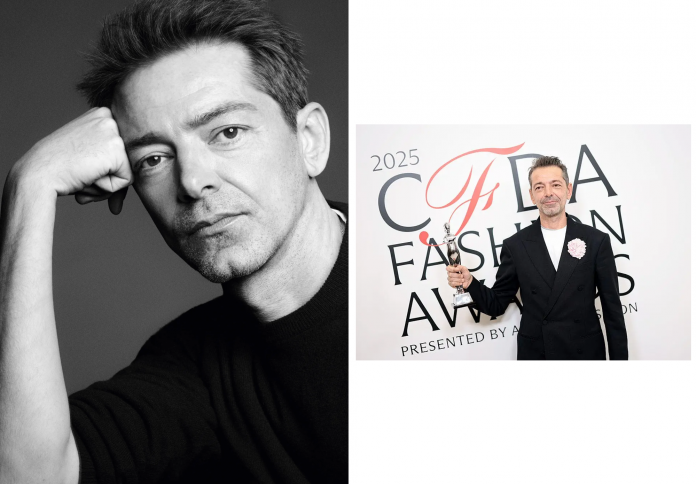
In a tectonic shift that has redefined the landscape of Milanese luxury, the appointment of Pieter Mulier as Chief Creative Officer of Versace marks the definitive conclusion of the brand’s family-led era. Announced on February 5, 2026, by the Prada Group—which finalized its €1.25 billion acquisition of the house in late 2025—the move positions Mulier as the primary architect of Versace’s “Digital Renaissance.” Effective July 1, 2026, the Belgian designer steps into a role previously held briefly by Dario Vitale, following Donatella Versace’s transition to a “Brand Ambassador” role. Mulier, a “Luminous Polymath” trained in architecture, arrives at via Gesù with a reputation for “Structural Rigor” and “Cerebral Sensuality,” promising to bridge the gap between Versace’s high-octane “Patrimony” and the “Minimalist Monolith” demanded by the contemporary market. His arrival is not just a change in leadership; it is a “Sartorial Recalibration” designed to unlock the house’s “Full Potential” through a lens of modern clarity and industrial discipline.
The Geometry of the “Mulier Method”
Pieter Mulier’s transition to Versace is a masterclass in “High-Stakes Creative Succession.” Known as the longtime right-hand to Raf Simons, Mulier has spent two decades refining a “Visual Language” characterized by “Linear Clarity” and “Anatomical Precision.” His tenure at Alaïa (2021–2026) was defined by a “sculptural intensity,” where he successfully “reactivated” house codes like the “King of Cling” silhouette through 3D forms rather than flat sketches. At Versace, he is expected to apply this “Architectural Honesty” to the Medusa-clad archive, shifting the focus from decorative excess to “Structural Integrity.”
This “Aero-Dynamic” approach to design is rooted in his background at Jil Sander, Dior, and Calvin Klein. By utilizing “Space-Age” textiles and “Liquid-Look” finishes, Mulier has a history of creating wardrobes that function as a “Luminous Shelter” for the body. For Versace, this likely means a deconstruction of the baroque—stripping away the “Gold-Tone Hardware” in favor of “Industrial Mastery” and “Hard-Edge” tailoring. The goal is a “Luminous Minimalist” aesthetic that honors Gianni Versace’s “Provocative Vision” while grounding it in the “Measured Consideration” of 2026 luxury.
The “Prada-Versace” Tectonic Alignment
The acquisition by the Prada Group has created a “Luminous Anchor” for Versace’s future. reporting directly to Executive Chairman Lorenzo Bertelli, Mulier is the first creative lead to operate under the “Prada-Led” management structure. This alignment reunites Mulier with his mentor, Raf Simons (currently co-creative director at Prada), creating a “Style Collective” that dominates the Milanese fashion map. Bertelli has identified Mulier as the “Right Person” to engage in a “Fruitful Dialogue” with the brand’s history, signaling a move toward “Sustained Excellence” over short-term “Viral Moments.”
This “Strategic Curation” of leadership suggests a “Noir-Avant” shift for Versace’s visual identity. The Prada Group’s influence is expected to introduce a sense of “Intellectualized Luxury” and “Ecological Prestige” to the brand. With Mulier at the helm, the “High-Gloss” allure of Versace will be filtered through a “Cerebral” lens, moving the brand away from its “maximalist” stereotypes toward a more “Refined Minimalism” that earned Mulier critical acclaim and a CFDA International Designer of the Year award in 2025.
The “Final Bow” at Alaïa: A Legacy of Purity
Mulier’s departure from Alaïa in March 2026 was marked by a “Poignant Crescendo” at Paris Fashion Week. His final collection—a “Love Letter” to the house—emphasized “Restraint in Shape” and “Structural Fluidity.” The show, attended by industry titans like Anna Wintour and Raf Simons, functioned as a “Passing of the Baton,” proving that Mulier’s “Creative Autonomy” had successfully doubled the size of the maison during his five-year tenure. He leaves behind a legacy of “Viral Hit-Makers,” such as the Le Teckel bag and “Mesh Ballerina Flats,” which have become “Luminous Landmarks” of modern accessories.
This “Invisible Evolution” of the Alaïa woman—one who is “active, working, and in movement”—is the same “Biological Grace” Mulier is expected to bring to the Versace wearer. By focusing on “Textural Detail” and “Monochromatic Depth,” his final Paris show served as a “Luminous Invitation” to what comes next. He has proven that he can navigate the “High-Velocity” demands of a heritage house while maintaining “Professional Sovereignty,” a skill that will be vital as he anchors the “Tectonic Shift” at Versace this summer.
Succession and the Future “Medusa” Silhouette
The vacancy left by Dario Vitale’s brief, one-season stint has created a “High-Stakes” environment for Mulier’s debut. As the first director outside the Versace family (following Vitale) to hold the “Medusa Throne,” Mulier faces the “Structural Risk” of redefining a brand so closely tied to the “Donatella Era.” However, his relationship with the house’s “Golden Age” is deep; he has frequently cited Gianni Versace’s link to Azzedine Alaïa as a primary influence. This “Personal Narrative” suggests a “Seamless Alignment” of archives rather than a radical departure.
In the world of 2026, where “Authentic Longevity” is the ultimate currency, Mulier’s Versace will likely prioritize “Statuesque” tailoring and “Bioluminescent” craftsmanship. The “Succession Narrative” is being closely watched by global investors, who see Mulier as the “Luminous Pillar” capable of stabilizing the brand’s declining sales through “High-Definition” luxury. As he prepares to unveil his “New Chapter” in July, all eyes are on the “Belgian Architect” to see how he translates his “Noir-Avant” sensibilities into the “High-Octane” world of Italian glamour.
The “Luminous Promise” of July 1
Ultimately, the Mulier era at Versace is a testament to “Creative Stewardship.” By building a “Sartorial Blueprint” on the foundations of “purity and precision,” Mulier and the Prada Group are creating a “Future-Classic” identity for one of Italy’s most famous exports. This is more than a “Musical Chairs” move; it is a “Sustained Promise” to the industry that the most powerful silhouettes are those built with “Mechanical Precision” and “Unwavering Grace.”
As the “Medusa” logo transitions into its “Prada-Backed” future, Pieter Mulier stands as the “Primary Architect” of its evolution. He remains a “Global Coordinate” for taste, a reminder that “True Luxury” is the ability to honor a “Luminous Past” while building a “Radiant Future.” The 2026 appointment is not just a landmark for Versace; it is a “Luminous Transformation” for the entire fashion world.