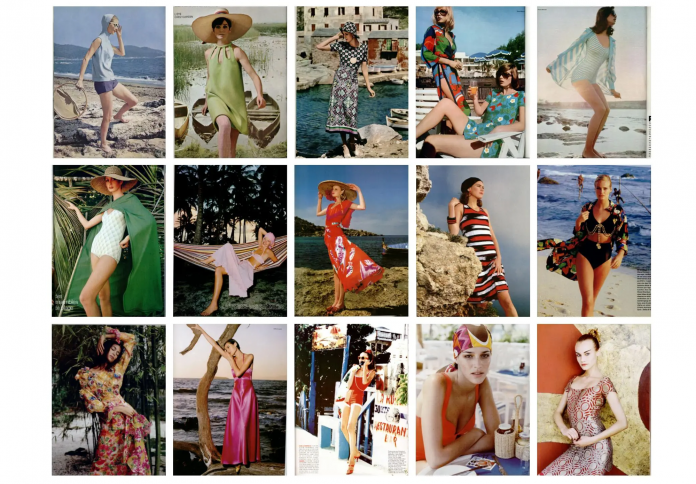
In the high-stakes world of global fashion, where seasons are often dictated by the harsh shift of the metropolitan calendar, “Resortwear”—or Cruise—stands as the industry’s most evocative and enduring anomaly. Originally a niche offering for the “jet set” of the early 20th century seeking refuge from northern winters, the category has transformed into a year-round, multi-billion-dollar powerhouse. A journey through the L’Officiel archives reveals a sartorial map of human aspiration, tracing the evolution from the structured “promenade” dresses of the 1920s to the fluid, high-tech silks of the modern Mediterranean. Today, Resortwear is no longer just a vacation wardrobe; it is a permanent state of mind, characterized by a “sculptural ease” that blends the rigor of tailoring with the liberation of the shoreline.
The Dawn of the “Jet Set” Silhouette
The origins of Resortwear are inextricably linked to the emergence of the French Riviera as the ultimate architectural backdrop for leisure. In the 1920s and 30s, designers like Jean Patou and Elsa Schiaparelli began to dismantle the restrictive corsetry of the city in favor of “beach pajamas” and jersey knits. These early archival pieces show a fascination with the “nautical line”—wide-legged trousers, horizontal stripes, and relaxed blazers that mimicked the functional elegance of yachting attire. This was the first time in fashion history that “comfort” was marketed as a luxury, creating a silhouette that allowed for movement, sun-seeking, and social fluidity.
As the 1950s arrived, the Resort aesthetic shifted toward a more “cinched” glamour, influenced by Dior’s New Look. Mid-century vacationers embraced full skirts in vibrant tropical prints and structured swimsuits that functioned almost like evening wear. The archives from this era highlight a “theatrical” approach to travel, where the transition from the pool to the cocktail lounge was marked by the addition of a dramatic wrap or a wide-brimmed straw hat. It was a period of “constructed relaxation,” where even the most casual beach outing was treated with the structural gravity of a gala.
The Radical Fluidity of the 1970s
The 1970s marked a tectonic shift in the Resortwear narrative, moving away from structure and toward a “radical fluidity.” Influenced by the bohemian spirit of Ibiza and the glamour of Studio 54-on-Sea, designers like Pucci and Halston introduced the kaftan and the wrap dress as the new pillars of the vacation wardrobe. The L’Officiel archives from this decade are a riot of psychedelic prints and floor-sweeping silks that moved with the wind. This “liquid” silhouette rejected the rigid tailoring of the past, opting instead for a “sensory luxury” that celebrated the body’s natural form.
This era also saw the birth of “Coastal Chic”—a blend of artisanal craftsmanship and high fashion. Crochet, macramé, and hand-painted linens became the textures of choice, signaling a desire for a more “authentic” connection to the travel destination. This was the moment Resortwear stopped being an imitation of city clothes and started being an expression of the environment itself. The clothing became a medium through which the traveler could “blend” into the limestone cliffs and azure waters of the Mediterranean, turning the act of dressing into a form of environmental art.
The Rise of the “Permanent Vacation”
By the 1990s and early 2000s, the Resort category had expanded to fill the long gap between the Autumn/Winter and Spring/Summer collections. Designers like Karl Lagerfeld for Chanel began staging gargantuan “Cruise” shows in exotic locations—from the Lido in Venice to the streets of Havana—turning the clothes into a narrative of global exploration. The modern Resort silhouette is a masterclass in “Hybridity,” combining high-performance technical fabrics with artisanal details. A contemporary Cruise look might pair a laser-cut neoprene swimsuit with a hand-woven raffia skirt, bridging the gap between the digital future and the handcrafted past.
Today, the “Resort” aesthetic has permeated the daily urban wardrobe, leading to the “Coastal Grandmother” and “Euro-Summer” trends that dominate social media. This “Permanent Vacation” style is defined by a palette of mineral neutrals—sandy beige, terracotta, and sea-foam green—and a preference for oversized, breathable volumes. In a world of fast-paced digital consumption, the slow, effortless appeal of a linen set or a silk slip dress represents a luxury of “time and space.” It is architecture for the body that prioritizes the “breath” over the “squeeze.”
A Sustainable Horizon for Cruise
As we look toward the future of the category in 2026 and beyond, the evolution of Resortwear is increasingly focused on “Ecological Integrity.” The latest archival additions show a move toward regenerative fibers, seaweed-based textiles, and zero-waste patterns. Designers are recognizing that the very landscapes that inspire Resortwear—the coral reefs, the Mediterranean coastlines, and the tropical forests—are the most fragile. The new luxury is “Conscious Leisure,” where the beauty of the garment is measured by the health of the environment it inhabits.
Ultimately, the evolution of Resortwear is a story of liberation. It is the history of fashion’s attempt to capture the feeling of the sun on skin and the salt in the air. From the heavy wools of the early 1900s to the bioluminescent silks of the present, Resortwear remains the industry’s most optimistic sector. It is a wardrobe that doesn’t just prepare us for a trip; it prepares us for a life lived with more light, more air, and a permanent sense of wonder.